For a pre-workout rice-cake snack, start with an uncoated variety and compare fat, carbohydrate and salt per 100 g: Kallo lists 2.7 g fat and 82.3 g carbohydrate per 100 g for both its Organic Unsalted and Organic Lightly Salted rice cakes. Do not assume a flavoured or high-protein variety has the same balance; Marks & Spencer lists 16.2 g fat per 100 g for its Barbecue High Protein Rice Cakes. Portion and timing also matter, rather than the choice of rice cake alone.
Who is comparing these rice cakes?
People planning a snack before training
Compare the carbohydrate and fat figures for the portion you expect to eat, as well as when you last ate. University College London Hospitals NHS Foundation Trust describes pre-workout snacks 60–90 minutes before exercise as containing carbohydrate, protein and minimal fat; a rice cake on its own should not be assumed to provide all three.
Shoppers comparing fat and salt
Plain, unsalted and lightly salted rice cakes can have different salt figures. Comparing fat and salt per 100 g on the current pack is more useful than treating those descriptions as interchangeable.
What should you check on the pack?
Choose the format you would eat, then compare its nutrition panel and allergen statement with the portion you have in mind.
| Priority |
What to check |
Your needs |
| Fat and carbohydrate |
Read both values per 100 g on the exact variety. Kallo lists 2.7 g fat and 82.3 g carbohydrate per 100 g for each of its Organic Unsalted and Organic Lightly Salted rice cakes; Marks & Spencer lists 16.2 g fat and 49.4 g carbohydrate per 100 g for its Barbecue High Protein variety. |
I want a carbohydrate-containing snack and would rather choose by the nutrition panel than assume every rice cake has the same fat content. |
| Salt and flavour |
Compare salt per 100 g, keeping unsalted and lightly salted separate. Kallo lists trace salt for Organic Unsalted and 0.25 g per 100 g for Organic Lightly Salted. |
If salt matters to me, I can compare the labelled figures instead of treating a lightly salted cake as unsalted. |
| Allergens |
Read the current ingredients and precautionary allergen wording for the exact pack. Kallo says its Organic Unsalted rice cakes may contain milk, sesame and soya. |
I need to check possible cross-contact warnings as well as the main ingredients before choosing a variety. |
| Portion and timing |
Use the serving information to work out what your intended number of cakes represents. University College London Hospitals NHS Foundation Trust describes pre-workout snacks 60–90 minutes before exercise as including carbohydrate, protein and minimal fat. |
A single cake may not match the snack I have planned, so I need to consider the portion and what else I intend to eat. |
Common buying mistakes
-
Assuming every rice cake has little fat
Rice-cake format and a high-protein description do not establish the fat content. Marks & Spencer lists 16.2 g fat per 100 g for its Barbecue High Protein Rice Cakes.
Check fat per 100 g on the particular variety, especially when comparing plain cakes with coated or flavoured ones.
-
Choosing by the figure for one cake alone
A per-cake figure does not describe the nutrition of the portion you will actually eat. It also does not tell you whether the snack includes the protein mentioned in University College London Hospitals NHS Foundation Trust’s pre-workout guidance.
Compare the carbohydrate figure with your intended number of cakes, and consider the rest of the snack rather than relying on one front-of-pack number.
-
Treating lightly salted as unsalted
Kallo lists trace salt for Organic Unsalted rice cakes and 0.25 g salt per 100 g for Organic Lightly Salted rice cakes. They are different choices for someone comparing salt.
Read the salt line per 100 g on the variety you plan to buy.
-
Overlooking the current pack information
Ingredients and precautionary allergen statements can affect whether a particular rice cake is an option. For example, Kallo says its Organic Unsalted variety may contain milk, sesame and soya.
Check the current ingredients, allergen statement and nutrition panel for the exact variety before purchase.
Brand and product-line references
Kallo
Kallo lists Organic Unsalted and Organic Lightly Salted wholegrain rice cakes with the same fat and carbohydrate figures but different salt figures.
- Both varieties list 2.7 g fat and 82.3 g carbohydrate per 100 g.
- Organic Unsalted carries a precautionary statement for milk, sesame and soya; check the statement on the variety you buy.
Sainsbury's
Sainsbury's No Added Salt Rice Cakes offer another labelled salt figure to compare with unsalted and lightly salted varieties.
- Sainsbury's lists 2.4 g fat, 81.5 g carbohydrate and less than 0.01 g salt per 100 g for this product.
- Check current availability before planning to buy this particular variety.
M&S
The M&S Lightly Salted and Barbecue High Protein rice cakes illustrate why the variety matters more than the brand name when comparing fat and carbohydrate.
- Marks & Spencer lists 2.5 g fat and 79.6 g carbohydrate per 100 g for its Lightly Salted Rice Cakes.
- Its Barbecue High Protein Rice Cakes list 16.2 g fat and 49.4 g carbohydrate per 100 g, so they are not interchangeable with the lightly salted variety on those measures.
Snack a Jacks
Snack a Jacks offers flavoured rice cakes, including a Salt & Vinegar Jumbo variety.
- Snack a Jacks lists 0.6 g fat and 0.26 g salt per cake for the Salt & Vinegar Jumbo variety.
- Use the current pack’s per-100-g panel to compare it directly with the plain varieties above; a per-cake figure uses a different basis.
Rice cakes on Joybuy
These options cover a lightly salted rice cake and a Marmite-flavoured rice cake for shoppers considering a pre-workout snack. Compare their current packs if fat, carbohydrate, salt or allergens will determine your choice.
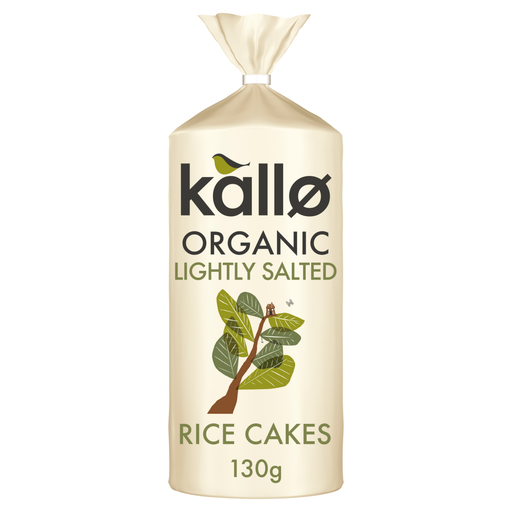 Image unavailable
Kallo Organic Lightly Salted Rice Cakes 130g
A lightly salted option for comparing an uncoated rice cake with flavoured varieties. Kallo lists 2.7 g fat and 82.3 g carbohydrate per 100 g for this variety; check the current pack for its salt and allergen information.
View on Joybuy
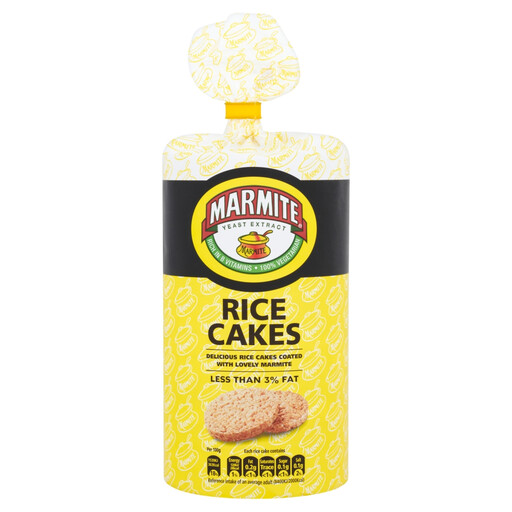 Image unavailable
Marmite Rice Cakes 110g
A Marmite-flavoured alternative if you prefer a savoury rice cake to a lightly salted one. Check the current pack’s fat, carbohydrate and salt figures per 100 g, along with its ingredients and allergen statement, before comparing it with the plain options.
View on Joybuy
Questions about pre-workout rice cakes
Does a lower-fat rice cake contain no fat?
No. Kallo lists 2.7 g fat per 100 g for its Organic Unsalted and Organic Lightly Salted rice cakes. Read the fat figure on the exact pack rather than treating a lower-fat description as meaning fat-free.
When might a rice cake fit into a pre-workout snack?
University College London Hospitals NHS Foundation Trust describes pre-workout snacks 60–90 minutes before exercise as containing carbohydrate, protein and minimal fat. A rice cake can be the carbohydrate-containing part of a snack, but check the portion and what else you plan to eat rather than assuming the cake alone matches that description.
Is a gluten-free rice cake suitable for every allergy?
No. Kallo describes its Organic Unsalted rice cakes as gluten free but says they may contain milk, sesame and soya. The Food Standards Agency explains that precautionary allergen wording communicates possible unintended presence, so check the current statement for the exact product and the allergens relevant to you.


