Newsletter organisers with little desk space
You need a printer that fits without making paper loading, output collection or maintenance awkward. Measure the usable desk surface and the space available around the printer, not just its closed body.


Start with an automatic-duplex colour printer that leaves enough room on the desk to load paper, collect output and open its covers. A refillable ink-tank all-in-one suits a club that also needs scanning and copying; a print-only colour LED model such as the Brother HL-L3240CDW offers a 250-sheet tray for newsletter batches, but requires separate scanning equipment and planning for toner and drum supplies.
You need a printer that fits without making paper loading, output collection or maintenance awkward. Measure the usable desk surface and the space available around the printer, not just its closed body.
You want to plan replacement ink or toner purchases and avoid interruptions during repeat runs. Treat stated page yields as a starting point: the colour coverage of your newsletter affects how far supplies will go.
You care about automatic two-sided printing and a tray that holds enough paper for a typical run. If scanning and copying are unnecessary, a print-only model is also worth considering.
Check usable desk space first, then compare supplies and two-sided batch printing against the club’s usual newsletter run.
| Concern | What to check | Who this matters to |
|---|---|---|
| Desk space and access | Measure the printer’s closed footprint and allow room to extend trays, retrieve pages and open covers. | If the shared desk is already crowded, I need to reach the paper and supplies without moving the printer. Around 38% of consumers would put workable desk clearance first. |
| Recurring colour supplies | Check replacement ink or toner for the exact model and compare stated yields with the colour coverage of your newsletters. | When each issue uses colour, I want to know what needs replacing and how often printing might pause for it. Roughly 31% of consumers would make recurring supplies their primary concern. |
| Two-sided batches | Confirm automatic duplex on the exact model; compare its two-sided speed and tray capacity with a normal issue run. | On issue day, I need copies to print on both sides without repeatedly turning pages or refilling the tray. Around 31% of consumers would prioritise batch handling. |
A two-sided newsletter run can take longer than a headline one-sided speed suggests. Brother specifies up to 26 pages per minute one-sided but up to 10 sides per minute two-sided for the HL-L3240CDW.
Confirm automatic duplex and look for a two-sided speed for the exact model you are considering.
HP gives the Smart Tank 7005 a maximum monthly duty cycle of 5,000 pages, but recommends 400 to 800 pages per month for ongoing use.
Work out pages per newsletter, copies per issue and issues per month, then compare that workload with the recommended monthly range.
Manual two-sided printing means someone must turn and reload the paper. HP lists manual duplex for its Smart Tank 5100 series and automatic duplex for the Smart Tank 7000 series.
Check the duplex specification for the exact model rather than relying on its printer family or ink system.
Manufacturer page yields do not fix how many image-heavy colour newsletters a set of supplies will produce.
Check the exact replacement supplies and use your newsletter layout and expected print volume when planning refills.
The Brother HL-L3240CDW is relevant when the club mainly needs to print A4 colour newsletters, without scanning or copying.
The Epson EcoTank ET-2950 is a refillable ink-tank all-in-one for clubs that also want to scan and copy.
The HP Smart Tank 7005 is relevant to clubs considering a refillable ink-tank multifunction printer for regular use.
These colour printer choices are relevant to newsletter printing where desk space, two-sided output or shared use may affect the decision. Check each model’s operating clearance and replacement supplies against your club’s setup.
 No image available
For recurring club newsletters, compare this model’s two-sided printing, paper handling and supplies with the size of a typical issue run.
Measure the space needed for paper loading, output and maintenance before placing it on a small desk.
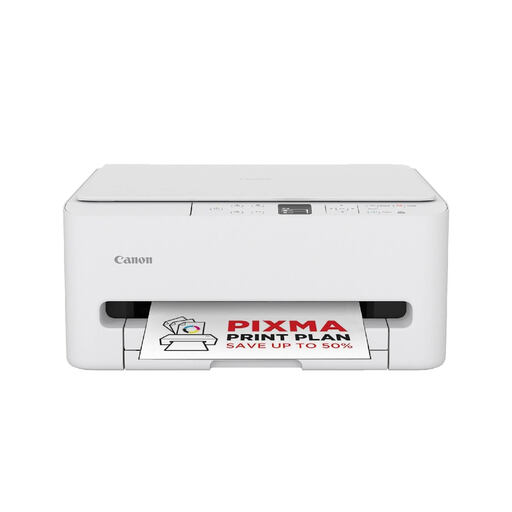 No image available
For newsletters produced on a shared desk, check whether this model’s paper capacity and two-sided printing suit your normal batch size.
Allow room to handle paper and check replacement cartridge options before planning recurring colour runs.
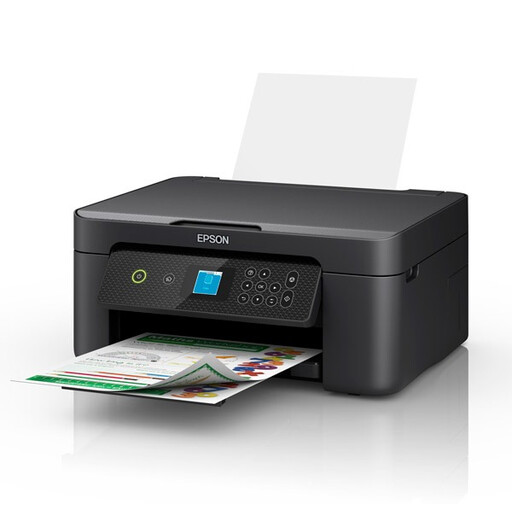 No image available
For A4 colour newsletters on a desk also used for other tasks, this model offers print, scan and copy functions, Wi-Fi and automatic duplex.
Its product title also specifies a 1.44-inch LCD. Check the space needed to operate it and its replacement ink options before choosing it for regular batches.
It is worth prioritising if you regularly print multi-page, two-sided newsletters and want to avoid turning sheets by hand. Check the exact model: HP lists manual duplex for its Smart Tank 5100 series but automatic duplex for the Smart Tank 7000 series.
Compare the desk with the exact model’s width, depth and height, then allow additional room for loading paper, collecting output and opening covers. A closed-body measurement alone does not show whether the printer will be convenient to use.
Use the recommended monthly volume for that decision, not the maximum duty cycle. HP specifies a 5,000-page maximum monthly duty cycle for the Smart Tank 7005 but recommends 400 to 800 pages per month for ongoing use.
Ask the retailer about electrical-equipment take-back when buying a replacement printer. GOV.UK says retailers must offer to take back waste equipment of the same type as the item purchased; check that retailer’s arrangements for handing yours over.