What matters when choosing?
Start with the condition of the handwritten pages: a feeder is useful only for originals suitable for feeding. Then match batch size, operating space and printing needs to the shared desk.
| Concern |
What to check |
Who this matters to |
| Protecting originals |
Confirm a flatbed and its maximum document size; use it for bound, thick or questionable pages. |
If my stories include keepsakes or pages that may not feed safely, I need to place them individually on the glass. Around 33% of consumers put protecting originals first. |
| Loose-page batches |
Compare ADF capacity and supported document sizes; check whether you need double-sided scanning. |
When I have many suitable loose sheets, I want fewer stops to place pages by hand. Roughly 27% of consumers prioritise batch handling. |
| Shared-desk use |
Measure clearance for the lid and trays, and check connection options and paper capacity. |
I need the printer to remain accessible to other desk users without taking over the work surface. About 20% of consumers place shared-desk practicality first. |
| Ongoing printing |
Check compatible ink, the conditions behind stated page yields and maintenance needs. |
If I will print copies of the stories regularly, I need an ink system I can keep using and maintaining. Around 20% of consumers make ongoing printing their primary concern. |
Relevant brands to consider
These model-specific examples show which features to compare; a feature on one printer should not be assumed to apply across its brand.
Canon
Canon’s MAXIFY GX4050 illustrates a setup with both flatbed and ADF scanning for mixed originals.
- Canon lists a 35-sheet ADF, Wi-Fi, Ethernet and 350-sheet paper capacity for the GX4050.
- Its approximately 399 × 417 × 251 mm dimensions are measured with trays retracted; allow additional working clearance.
Epson
Epson’s EcoTank ET-4900 and ET-4950 are A4 multifunction examples with refillable ink tanks and ADFs.
- Epson describes the ET-4900 as space-saving and specifies a double-sided ADF on the ET-4950.
- Check each model’s working space and use a flatbed rather than feeding bound or thick originals.
Brother
Brother’s MFC-J4540DWXL is an example for households that combine scanning with regular shared printing.
- Brother lists a 20-sheet ADF, 400-sheet paper capacity and wireless or mobile connectivity for this model.
- Its stated ADF capacity is lower than the Canon GX4050’s 35 sheets, so compare reloads against your typical loose-page batch.
Joybuy products for this task
These multifunction printers are relevant to scanning stories and sharing printing at a desk. Before choosing one, confirm its exact flatbed and feeder arrangement against the condition of your originals; the models serve different scanning needs.
 No image available
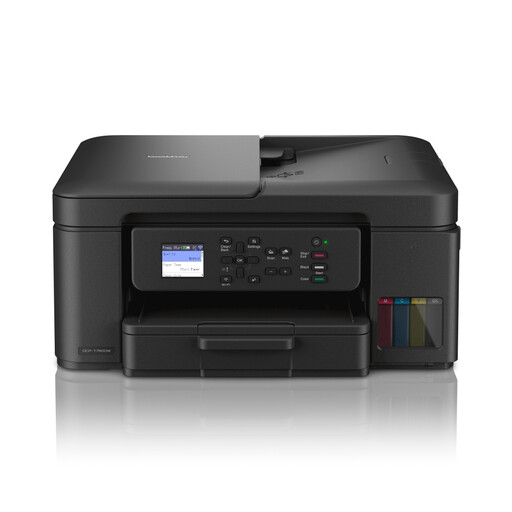
Brother DCP-T780DW 3-in-1 Wireless Ink Tank Printer
Consider this model if you need to handle individual stories and suitable loose-page batches at the same desk. Confirm the flatbed size and the feeder’s supported media before scanning valuable originals; also allow room to load pages and open the lid.
View on Joybuy
 No image available
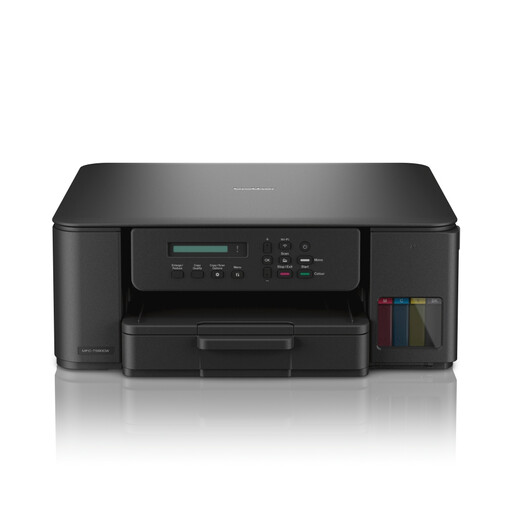
Brother DCP-T580DW 3-in-1 Wireless Ink Tank Printer
If you expect to place handwritten pages on a flatbed one at a time, check this model’s platen size against your originals. Confirm whether it has an ADF before choosing it for loose-page batches, and measure the clearance needed to open the scanner lid.
View on Joybuy
 No image available
Canon MAXIFY GX6150
Consider this model for loose-page scanning alongside shared printing, subject to its document-handling rules. Confirm feeder capacity and supported media, and check for flatbed access if your collection also includes bound or delicate stories.
View on Joybuy
Common questions
Should handwritten stories go through the ADF?
Only loose, flat originals that meet the exact model’s feeder rules should go through its ADF. For books and other thick media, use a flatbed; Epson identifies flatbeds as suitable for those originals.
What should I measure for a printer on a shared desk?
Measure the working space, not just the printer’s closed footprint: allow room for the scanner lid, trays, document loading and access to power. Canon lists the MAXIFY GX4050 at approximately 399 × 417 × 251 mm with trays retracted, so that figure alone does not establish its operating clearance.
Do refillable ink tanks eliminate ongoing printer costs?
No. You will still need ink, and maintenance may be needed over the printer’s life. If you expect to print copies regularly, compare compatible supplies and the conditions behind stated page yields rather than relying on the tank system alone.
How should I dispose of a printer I am replacing in the UK?
Check your retailer’s or local authority’s current electrical-equipment collection route rather than putting the printer out with ordinary waste. GOV.UK identifies the Waste Electrical and Electronic Equipment Regulations 2013, as amended, as the underpinning UK legislation.


