Occasional hobby-room printer
If you print a few A4 visitor sheets and only occasionally copy or scan a page, straightforward print, copy and scan functions may matter more than a feeder for document stacks.


For A4 visitor registers, start with a printer that can print, copy and scan. Choose automatic two-sided printing if the form uses both sides of a sheet, and prioritise an automatic document feeder (ADF) if you regularly copy or scan stacks of completed pages. A refillable model can reduce ink-replacement interruptions; larger feeders and paper supplies suit recurring batches but need more room.
If you print a few A4 visitor sheets and only occasionally copy or scan a page, straightforward print, copy and scan functions may matter more than a feeder for document stacks.
If each meeting produces completed sheets to copy or digitise, consider automatic two-sided printing for the blank forms and an ADF for supported stacks. Check scanning separately if both sides of completed sheets must be captured.
If you handle batches of forms repeatedly, compare paper-tray and ADF capacities with your usual batch size. Allow space to load paper and collect printed sheets, not just space for the printer itself.
Decide whether completed registers will be handled one page at a time or in batches, then match the printer’s ink system, footprint and paper support to the way you prepare the forms.
| Concern | What to check | Who this matters to |
|---|---|---|
| Ink replacement | Check the exact ink system and compatible replacement supplies. Treat stated page yields as manufacturer-rated figures, not a promise for your register design. | When I print fresh forms for repeated sessions, I want to avoid stopping frequently to replace ink. Around 33% of consumers put fewer ink-replacement interruptions first. |
| Batch scanning and copying | Check ADF capacity and supported originals; confirm the scan mode separately if both sides must be captured. | I need to digitise completed sheets after meetings without placing every page on the glass. For around 27% of consumers, handling a batch is the primary concern. |
| Room and occasional use | Measure the available space, including clearance for paper loading and output, and decide whether you need an ADF. | A small hobby-room surface makes a simple setup more useful to me than capacity I rarely use. Around 20% of consumers prioritise space and occasional use. |
| Form and paper format | Match the final sheet size and stock to the supported feed path and automatic two-sided printing conditions. | If my register has a reverse side or uses a particular stock, I need the finished form to work with the printer’s paper path. Paper-format flexibility comes first for around 20% of consumers. |
Print, copy and scan functions do not, by themselves, mean that completed register pages can be scanned together.
Check the exact model for an ADF, its capacity and whether it scans one or both sides. Automatic two-sided printing does not establish two-sided scanning.
Two-sided printing can depend on paper size, type and feed path. Canon UK specifies automatic duplex printing for A4 or Letter plain paper through the supported trays on the MAXIFY GX4050.
Choose the register stock before checking the printer’s duplex conditions, particularly if you intend to use card or specialist paper.
Unsupported stock may mean turning sheets manually or changing the form paper.
A manufacturer-rated ink yield will not necessarily match a register with your chosen layout and colour coverage.
Compare the compatible ink system and the features you will use, as well as how often you expect to print forms.
The Information Commissioner’s Office (ICO) says a name can identify a person and be personal data. Its guidance places purely personal or household activity with no professional or commercial connection outside UK GDPR scope; do not assume that exception covers an organised club or business register.
For a non-domestic register, decide what details are needed, who can access them and how long they will be kept. The ICO says a lawful basis must be determined and documented before processing personal information.
The DCP-T780DW is a reference point for A4 register printing when modest batches also need copying or scanning.
The EcoTank ET-2950 is an A4 print, copy and scan example for readers preparing forms and handling individual completed pages.
The MAXIFY GX4050 illustrates a higher-capacity route for recurring forms and completed records.
These multifunction printers offer different starting points for hobby-room registers, from occasional A4 forms to recurring document batches. Check the exact feeder, paper and room-fit requirements for your own workflow.
 No image available
Consider this model for recurring register sessions if its paper handling fits your usual batch size.
Check the ADF scan mode if you archive both sides of completed forms, and confirm the printer’s footprint and automatic-duplex paper conditions before choosing it.
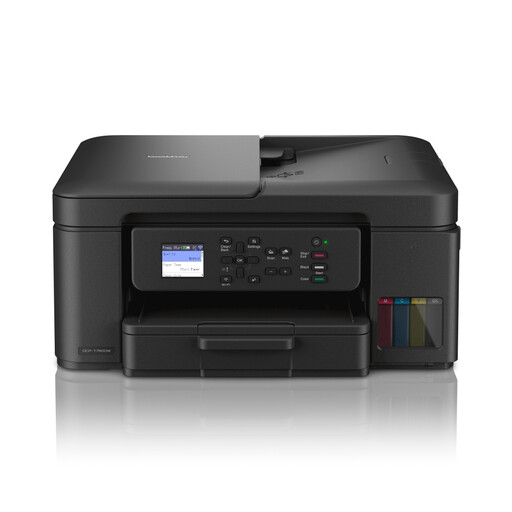 No image available
This A4 print, copy and scan model suits regular register sheets and modest batches of completed pages.
Brother UK specifies automatic two-sided printing, a 20-sheet ADF, a 150-sheet tray and refillable ink tanks. Check whether its ADF scan mode and supported duplex paper match your forms.
 No image available
Its A4 print, copy and scan functions make it relevant to preparing register sheets and handling completed pages.
If stacks or two-sided forms are part of your routine, confirm feeder capacity, ADF scan mode and supported automatic-duplex stock. Check the physical dimensions against the space available.
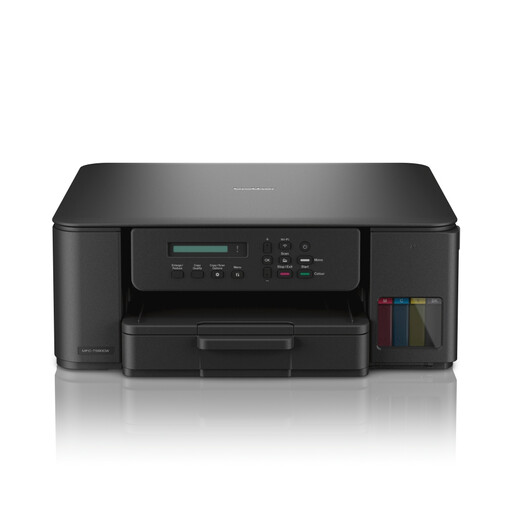 No image available
This ink-tank model is a choice to assess for occasional register printing, copying and scanning.
Its product name identifies a wireless, three-function ink-tank printer. If you regularly digitise stacks, confirm its batch-feeding capability; check paper compatibility before planning automatic two-sided forms.
 No image available
Consider this all-in-one inkjet if your register work includes repeated multi-page jobs and you have room for the machine.
Check the feeder and automatic-duplex paper specifications for your forms, along with the ink supplies for this exact model. Measure the intended placement before choosing it.
An ADF is useful if you regularly copy or scan stacks of completed register sheets; occasional single-page work can be done with a flatbed scanner. Check the feeder’s capacity and the exact scan mode if you need to capture both sides.
Use automatic two-sided printing if your form needs space or information on the reverse and your chosen paper is supported. For example, Canon UK specifies A4 or Letter plain paper in the supported trays for automatic duplex printing on the MAXIFY GX4050; that does not establish support for every type of card or specialist stock.
It depends on who runs the register and why identifiable details are collected. The ICO says purely personal or household processing with no professional or commercial connection is outside UK GDPR scope; do not assume an organised club or business activity qualifies. For non-domestic processing, the ICO says to determine and document a lawful basis before using personal information.