Frequent black-and-white worksheet printers
If you regularly print notation drills, theory sheets or homework packs, focus on A4 monochrome output, paper capacity and whether two-sided printing is automatic.


For regular black-and-white notation and worksheets, consider an A4 mono laser printer; it will not print colour-coded exercises. If colour teaching materials are a routine part of your work, compare refillable ink-tank models. A cartridge colour all-in-one may suit occasional mixed home printing, but check its replacement supplies and the exact model’s duplex-paper restrictions.
If you regularly print notation drills, theory sheets or homework packs, focus on A4 monochrome output, paper capacity and whether two-sided printing is automatic.
If colour-coded theory pages, highlighted exercises and other colour materials are routine, compare colour printers that support your required A4 paper and duplex settings.
If you print a few exercises alongside household documents, scanning and copying may matter as much as the printing route. Check the exact model’s functions and supplies.
Choose when: Black notation and text make up most of your regular worksheet batches.
Trade-off: It cannot print coloured annotations or teaching sheets.
Choose when: You repeatedly print colour exercises as well as ordinary worksheets.
Trade-off: Compare the printer and replacement bottles together; automatic duplex varies by model.
Choose when: Exercise printing is occasional and you also want colour, scanning and copying.
Trade-off: Check cartridge yields if worksheet printing becomes frequent.
| Concern | What to check | Who this matters to |
|---|---|---|
| Repeated black-and-white exercises | A4 support, automatic duplex and input-tray capacity. | I print batches of notation and theory sheets, so handling two-sided pages without repeatedly refilling paper matters most. Roughly 44% of consumers put repeated monochrome printing first. |
| Colour teaching materials | Colour supply system and automatic A4 duplex on the paper you intend to use. | Colour-coded theory or annotations are a regular part of my lessons, not an occasional extra. For roughly 33% of consumers, frequent colour-material printing is the primary need. |
| Occasional shared-home use | Print, scan and copy functions, plus replacement-cartridge yields. | I print practice sheets now and then, but the same device also needs to handle other household documents. Occasional mixed use comes first for roughly 23% of consumers. |
Automatic two-sided printing can have media restrictions. Canon specifies auto duplex for the PIXMA TS6550i on A4 or letter-size plain paper.
Check the exact model’s duplex specification against the paper you use for exercises, rather than relying on a category label.
Replacement supplies become a more important decision when occasional practice sheets turn into routine batches. Manufacturer-rated yields are not a forecast of your own page count.
Estimate how many pages you print and compare the exact cartridges and their stated yield basis with the supplies for other suitable printer types.
Repeated cartridge replacement can add a practical supply burden over the printer’s use life.
A mono printer cannot produce colour-coded sheets, while a colour printer may be unnecessary if virtually all your work is black notation and text.
Look at a representative month of exercises and identify whether monochrome worksheets or colour teaching pages drive the choice.
Relevant if regular black-and-white A4 worksheets are your main task.
Relevant for recurring colour exercises where a refillable A4 all-in-one fits the wider document workload.
Relevant to buyers comparing refillable colour printing with a cartridge all-in-one for occasional home use.
Relevant when comparing A4 all-in-one and monochrome options for a shared home printer.
These printers cover refillable colour printing, monochrome worksheets and occasional colour home use. Choose by the exercises you print most often, then check each model’s paper handling and replacement supplies.
 No image available
Consider this refillable colour model for recurring exercises and mixed teaching documents. Its listing describes A4 automatic duplex printing, a 350-sheet total paper capacity and a 50-sheet automatic document feeder. Compare replacement ink for your expected use rather than treating listed yields as your own results.
 No image available
This refillable colour all-in-one is relevant to regular A4 exercises and documents that need scanning or copying. Epson lists double-sided printing, a 250-sheet front tray and a 35-page automatic document feeder for the ET-5150. Check the listing’s exact package contents and replacement ink before ordering.
 No image available
For repeated black-and-white music exercises, the listing specifies A4 monochrome laser printing, automatic two-sided printing and a 150-sheet input tray. It cannot print colour-coded exercises; check the replacement toner for the workload you expect.
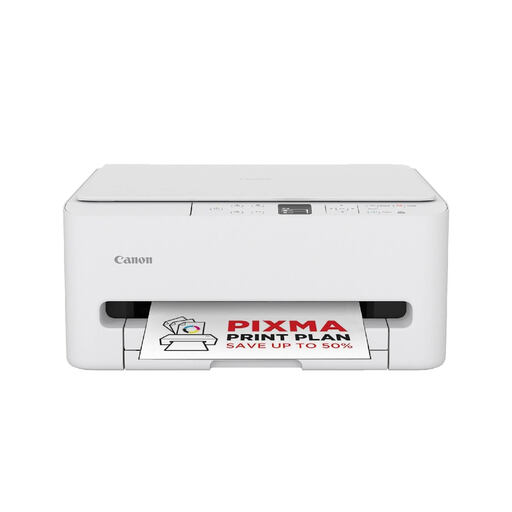 No image available
This cartridge colour all-in-one suits occasional exercises alongside scanning and copying at home. Canon specifies A4 automatic duplex on plain paper, and the listing describes a 100-sheet input capacity. Compare cartridge yields if you expect to print worksheets frequently.
 No image available
This A4 mono laser model is an option for black-and-white exercises when copying or colour scanning is also useful. Its listing specifies a 150-sheet input tray and manual duplex: two-sided worksheets require you to turn the paper yourself. Colour scanning does not mean it can print in colour.
No, but automatic duplex is useful if you regularly make two-sided worksheets or lesson packs and want to avoid turning pages by hand. Check the supported paper: Canon specifies the PIXMA TS6550i’s automatic duplex for A4 or letter-size plain paper.
Choose between them according to whether colour is a routine requirement: a mono laser serves black notation and text, while a colour ink-tank printer can produce coloured teaching materials. For either route, check the exact model’s A4 duplex support, paper capacity and replacement supplies.
Compare the exact toner, cartridges or ink bottles for each printer alongside the manufacturer’s stated page-yield conditions and your expected printing volume. Document mix, coverage and settings can make your actual usage differ from a published yield.
Check your local council’s electrical-waste instructions or ask the retailer about an applicable take-back service. For example, Oxfordshire County Council directs households towards electrical-equipment recycling rather than general household waste.