What matters when choosing?
Choose the printer route around the pages you will produce most often, then check the paper, batch size and classroom setup against a specific model.
Business ink-tank printer
Choose when: You repeatedly print colour programmes on ordinary A4 paper and want automatic two-sided output with fewer paper reloads.
Trade-off: Do not assume the automatic duplex setting also accepts heavier covers; Canon limits the MAXIFY GX6150’s specified duplex media to A4 or Letter plain paper and named office papers.
Colour LED printer
Choose when: A fixed deadline and mainly text-based pages make document speed and automatic two-sided printing important.
Trade-off: Check other classroom tasks as well: Brother’s HL-L8240CDW is print-only, so it cannot provide on-device scanning or copying.
Photo-focused ink-tank printer
Choose when: Image-rich artwork or borderless A4 covers are more important than quickly producing many two-sided interior pages.
Trade-off: Canon’s PIXMA G650 has a 100-sheet rear feed, and Joybuy describes its two-sided printing as manual.
| Concern |
What to check |
Who this matters to |
| Repeat-run supplies |
Compare the ink system and stated colour yield, then consider how much ink your actual artwork may use. |
If I print programmes repeatedly, I want to avoid running out of ink part-way through a colour batch. Around 36% of consumers would put managing repeat-run supplies first. |
| Batch deadline |
Check rated print speed, automatic rather than manual duplexing, and how many sheets the relevant tray holds. |
When programmes are needed before a performance, I need a practical way to finish and turn the pages in time; roughly 29% of consumers would make batch turnaround their primary concern. |
| Artwork and covers |
Check borderless A4 support and whether the intended cover paper is accepted by the appropriate feed. |
If the cover carries photographs or show artwork, I care most about how that design can be printed. About 21% of consumers would prioritise presentation. |
| Classroom fit |
Measure the space, confirm connection options with school IT, and plan safe access to power. |
In a small room, I need the printer to fit where it can be used and connected safely; around 14% of consumers would place classroom fit ahead of the other concerns. |
Joybuy product choices
These choices cover different ways to produce classroom programmes: a business ink-tank model for repeat batches, an artwork-oriented ink-tank option, colour document printers and a cartridge inkjet for smaller A4 runs. Check the intended paper and required functions against the exact model before ordering.
 No image available
Canon MAXIFY GX6150
Consider this refillable ink-tank model for repeated colour batches on ordinary A4 paper. Canon specifies automatic two-sided printing and 350 sheets of plain-paper input across its trays. Its automatic duplex specification applies to A4 or Letter plain paper and named office papers, so check heavier programme stock separately.
View on Joybuy
 No image available
Epson EcoTank ET-18100
Consider this model if artwork is central to the programme. Before planning a batch around it, confirm the supported paper, whether the intended pages can be printed automatically on both sides, and whether its output rate fits the deadline. Check scanning or copying separately if the classroom needs either function.
View on Joybuy
 No image available
Brother DCP-L3520CDWE Colour Laser Printer
For a text-heavy programme needed by a fixed time, compare this colour document printer’s batch handling with the number of copies you plan to make. Confirm that automatic two-sided printing accepts your chosen stock, and assess toner needs against the amount of colour in the pages.
View on Joybuy
 No image available
Brother MFC-L3740CDWE All-in-One Colour Wireless LED Printer
Consider this all-in-one colour LED model where programme printing and other classroom document tasks need to share a device. Check the duplex paper-weight limits for the programme stock and plan toner supplies around the intended colour coverage.
View on Joybuy
 No image available
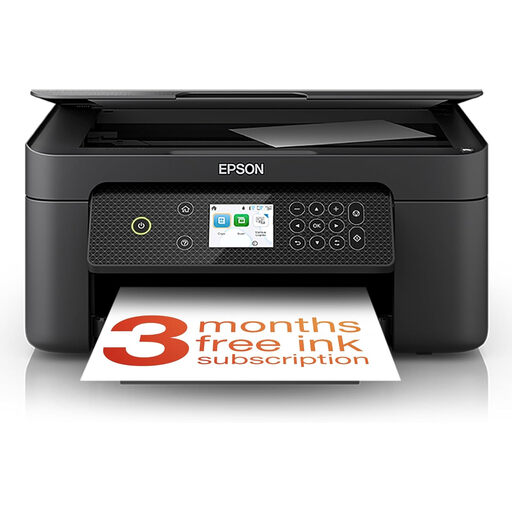
Epson Expression Home XP-4200 A4 Wi-Fi Inkjet
For a smaller A4 programme run, this cartridge inkjet is worth considering if the planned number of pages suits a smaller paper feed. Check cartridge needs for the artwork, duplex compatibility with the chosen stock and the printer’s dimensions against the available classroom space.
View on Joybuy
Frequently asked questions
Can I print both sides of a folded theatre programme automatically?
Yes, if the printer’s automatic duplex setting supports the exact paper you intend to use. Canon specifies this setting for the MAXIFY GX6150 on A4 or Letter plain paper and named office papers; check the model’s feed and duplex limits before ordering heavier cover stock.
Should I choose a photo printer for the whole programme?
Choose a photo-focused printer when artwork or borderless A4 pages take priority, not simply because the programme contains some colour. Canon’s PIXMA G650 has six dye-based inks and a 100-sheet rear feed, while Joybuy lists manual duplexing; consider how you will produce the interior pages as well as the cover.
What should I check before starting an inkjet print batch?
Print a nozzle check and a representative programme proof before making the final copies. Epson advises cleaning the print head when the nozzle pattern shows gaps or mixed colours, but warns against repeated cleanings in a short period because they consume ink.
Does a classroom printer need annual PAT testing in the UK?
Annual portable appliance testing is not a universal legal requirement. The UK Health and Safety Executive says electrical equipment that could cause injury must be maintained in a safe condition, but the law does not prescribe annual testing; follow the school’s risk-based inspection and electrical-safety arrangements.


