
24/7 Customer Support

Free returns

Same-day & Next-day Delivery

Quality Guaranteed

Unlock Your Welcome Offers: FREE Delivery | Up to 80% OFF | Free 30-day JoyPlus trial
Download the APP
Whether you are on a crowded train, in a bustling coffee shop or working in an open-plan office, the information on your phone screen is often on public display. A quality privacy screen protector is an essential accessory for safeguarding your personal data from prying eyes. However, the market is filled with options that over-promise and under-deliver.
As the Joybuy Product Recommendation Officer, my role is to help you navigate the choices and identify the features that truly matter. This guide will highlight common purchasing pitfalls and break down the key specifications to look for, ensuring you select a protector that offers both security and durability for your device.
Many consumers find themselves disappointed with their purchase due to misleading marketing claims. Before you buy, be aware of these frequent issues:
To ensure you get a product that performs as expected, focus on these three non-negotiable specifications.
The core function of a privacy filter is its viewing angle. This is typically achieved with microlouver technology, which acts like a tiny set of vertical blinds over your screen.
The material determines how well the protector will shield your screen from daily hazards.
A protector is only as good as its application.
Based on the criteria above, we have matched a few standout products to different user profiles. These recommendations are chosen for their practical features that directly address the common pitfalls.

Why This Fits Their Persona: Ideal for those using their iPhone 17 screen protector on public transport. It is designed specifically to shield screen content from side views on trains or in coffee shops, offering excellent commuter phone privacy. The use of 60% recycled materials is a bonus for the environmentally conscious user.
The included EasyAligner tool directly counters the "bubble-free promise" pitfall by ensuring a perfect fit. Its Ultra-Wide Fit is engineered to leave just enough room for a case, avoiding the lifting and peeling issue.
Features an "airbag-like" construction for impact absorption and is fully compatible with ultrasonic fingerprint readers, a common concern with privacy protectors.
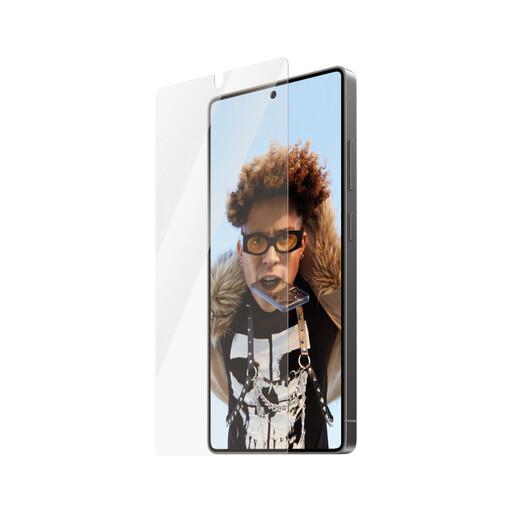
Why This Fits Their Persona: For the owner of a high-end device like the Samsung Galaxy S25 Ultra, maximum protection is paramount. This Samsung S25 screen protector focuses on durability, with claims of 3x higher scratch resistance and enhanced shock absorption for superior defence against drops and impacts.
The inclusion of an aligner and the ability to refit the protector up to 200 times removes the stress of a one-shot installation. The Ultra-Wide Fit is precisely engineered for case compatibility, preventing edge-lifting.
Its primary advantage is its focus on extreme durability and scratch resistance. The anti-smudge coating also ensures the vibrant display of the S25 Ultra remains clear.
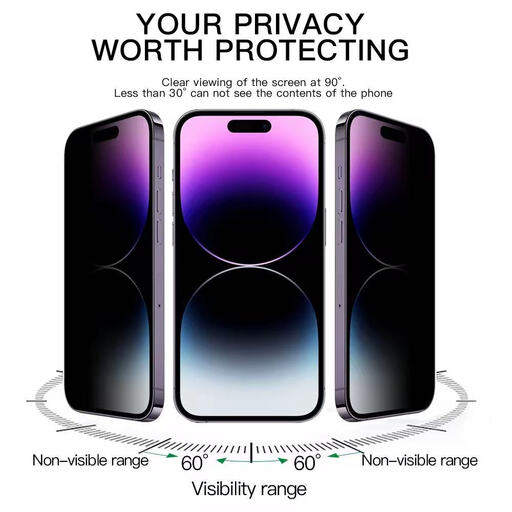
Why This Fits Their Persona: This user works with sensitive information in an open-plan office and needs to prevent visual hacking. This protector's core function is its privacy filter, which dims the screen when viewed from an angle, making it ideal for protecting confidential data.
It avoids the "unusable privacy angle" trap by maintaining high light transmittance for the user when viewed directly, preserving image quality. It also includes an applicator for automatic adsorption, simplifying installation.
Combines a strong 9H hardness tempered glass for scratch protection with an effective privacy shield. The hydrophobic and oleophobic coatings also provide a clean, anti-fingerprint film surface.
We have compiled a complete, real-time list of products that fully satisfy these strict selection criteria and UK safety regulations.
1. Will a privacy screen protector affect my phone's Face ID or fingerprint sensor? Most modern, high-quality privacy protectors are designed to be fully compatible with biometric sensors. However, it is crucial to check the product description, as some materials or thicknesses can interfere with in-display ultrasonic fingerprint sensors. If you notice reduced sensitivity after application, re-registering your fingerprint can often resolve the issue.
2. How long does a tempered glass screen protector last? The lifespan depends entirely on your usage. A quality 9H screen guard can last for years if it is not subjected to significant impacts. It is designed to be a sacrificial layer; it takes the damage so your expensive phone screen does not. You should replace it immediately if it becomes cracked, chipped or deeply scratched, as its structural integrity and protective capability will be compromised.
3. Can I reinstall a privacy screen protector if I make a mistake? Generally, this is not recommended. The adhesive is engineered for a single, clean application. Attempting to peel it off and reapply it almost always introduces dust and air bubbles, which are impossible to remove and will weaken the bond to the screen. For this reason, choosing a product with an easy installation screen protector kit, such as an alignment frame, is highly advisable.