Private-site leisure riders
You want to ride for recreation on land where you have permission, so the riding boundary and the scooter’s controls need to suit that site. GOV.UK guidance sets the private-land restriction.


In the UK, choose a privately owned e-scooter only for a route entirely on private land with the landowner’s permission; GOV.UK says privately owned e-scooters cannot be ridden in public. Match the exact model’s rider limit, tyres, brakes, dimensions and stated range to the site, then check its charger and where you can safely charge and store it. A different powered ride-on does not change the e-scooter rules and needs its own legal-use and product-safety checks.
You want to ride for recreation on land where you have permission, so the riding boundary and the scooter’s controls need to suit that site. GOV.UK guidance sets the private-land restriction.
If your permitted route has bumps or slopes, compare the exact model’s tyres, brakes, suspension and rider limit rather than assuming one feature makes it suitable. Manufacturer specifications vary by model, including those published by Pure Electric, Segway, Xiaomi and NIU.
You need to establish where the scooter and its supplied charger can be stored and charged safely. GOV.UK battery guidance and Fire Kills advice cover charger choice and charging locations.
Consider it when: you have permission for a wholly private route and the exact model’s specifications fit the rider and site.
Trade-off: range and suspension claims are model-specific, while scooter weight and folded dimensions can affect carrying and storage.
Consider it when: you prefer a different riding format and can check the rules for that particular device and location.
Trade-off: an e-scooter’s specifications, charger instructions and legal-use conditions do not automatically apply to another device.
For UK consumers considering a privately owned e-scooter for private-land use, the table focuses on the main buying priority in each scenario. GOV.UK says the scooter may be ridden only on private land with the landowner’s permission.
| Concern | What to check when buying | Who this matters to |
|---|---|---|
| Permitted riding route | Confirm permission and that the entire intended route stays on private land; advertising claims do not establish permission. | I would confirm the route and landowner’s permission before comparing models. Consumers who put route eligibility first are about 29% of this buying audience. |
| Battery and charging | Check the supplied charger and model instructions, where charging can take place safely, and how to obtain manufacturer-authorised replacements. | I need a suitable charging place that will not obstruct an escape route, as well as the correct charger. Consumers who prioritise safe home charging are about 29% of this buying audience. |
| Control on the route | Compare the exact model’s rider limit, tyres and brake arrangement with the site’s surface and slopes. | If my permitted route is uneven or sloped, I want the rider limit and controls to match the rider and ground. Consumers who put site-surface and rider fit first are about 24% of this buying audience. |
| Storage and usable range | Measure the storage space, check scooter weight and folded dimensions, and treat stated range as a manufacturer claim affected by riding conditions. | I need to know whether I can move the scooter into storage and whether its stated range suits my permitted route. Consumers who prioritise carrying, storage or trip length are about 18% of this buying audience. |
Where a privately owned e-scooter may be ridden depends on the location and permission, not the way a seller describes its intended use.
Confirm the private-land route and get the landowner’s permission before choosing a model. Do not rely on a commuting claim, lights or indicators as proof of permission.
Government battery guidance advises using genuine items authorised by the e-cycle or drive-system manufacturer when a replacement battery or charger is needed.
Check what charger comes with the exact model and how to obtain an authorised replacement before buying.
Range can be affected by rider weight, terrain, gradients and weather, and manufacturers state figures for particular models and conditions.
Compare the exact model’s range claim with your route and conditions without assuming it will cover the same distance in use.
Government guidance groups different devices as powered transporters, but an e-scooter’s specifications and charging instructions do not transfer to a hoverboard or powered unicycle.
Check the particular device’s legal-use conditions, rider instructions and charger guidance separately.
The Air⁶ range offers model-specific specifications to compare for private-site routes.
The F2 Pro E II provides a model-specific braking and suspension configuration to compare with a permitted route.
The Electric Scooter 5 Pro is one model to consider when comparing stated rider load, range and charging accessories.
The UK-listed KQi 300P offers another model-specific brake and suspension specification to compare with scooter weight.
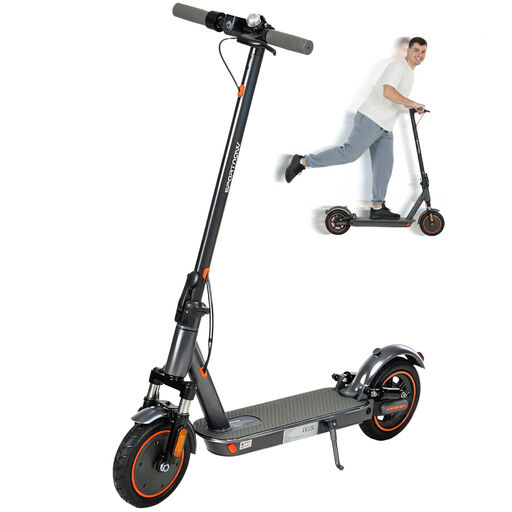
These Joybuy options are privately owned e-scooters to compare for permitted private-land routes. Check each model’s specifications against your site, rider and charging arrangements.
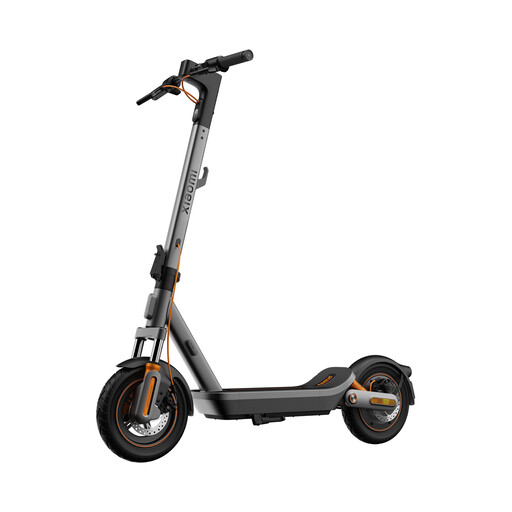 No image available
Consider it if the stated rider limit and listed tyre, suspension and brake configuration match your permitted route.
Maximum load: 130 kg. The listing specifies 12-inch tubeless tyres, front and rear suspension, and front and rear disc brakes.
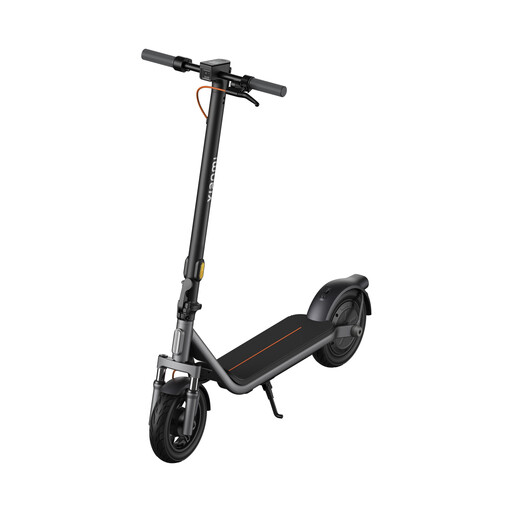 No image available
Compare its stated load limit, tyre type and range with the rider and the length of the permitted route.
Maximum load: 100 kg. The listing specifies 10-inch pneumatic tyres, front suspension, front drum and rear E-ABS braking, and a stated range of 25 km.
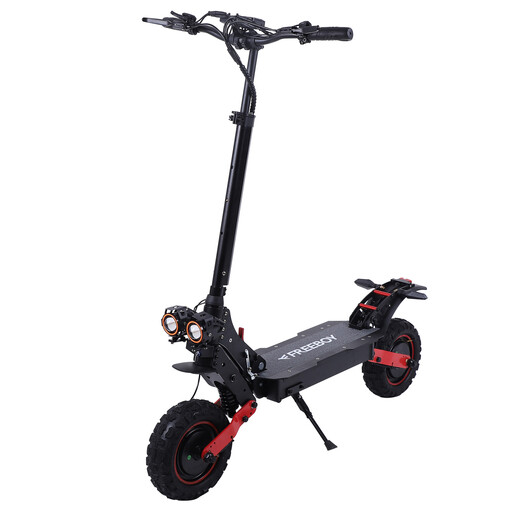 No image available
Compare the listed tyres and suspension with the permitted route, and check that the model’s size and weight work for your storage arrangements.
The product name specifies dual motors, a 48 V, 21 Ah battery, 11-inch off-road tyres and a foldable design. The listing description specifies front suspension and dual rear shock absorbers.
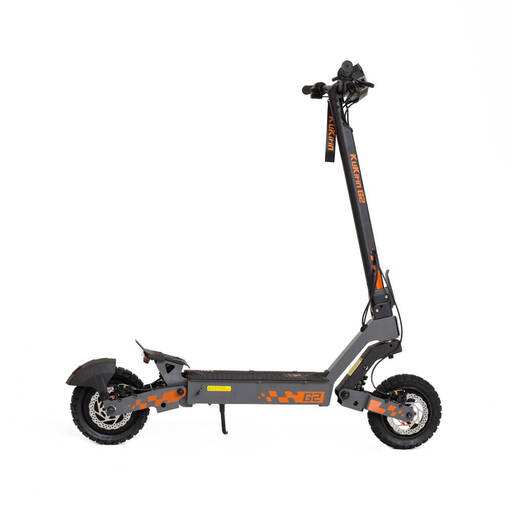 No image available
Consider the stated tyre size and foldable design when comparing a permitted route and available storage space.
The product name specifies a 48 V, 15 Ah battery, 10-inch all-terrain tyres and a foldable design.
 No image available
Compare the stated load limit and listed tyre and suspension details with the rider and permitted route.
Maximum load: 120 kg. The listing description specifies 8.5-inch pneumatic tyres, dual hydraulic suspension, a dual brake system, a foldable design and a stated range of up to 30 km.
No. GOV.UK guidance limits privately owned e-scooters to private land with the landowner’s permission. Advertising, lights and other specifications do not change that restriction; rental-scheme rules are separate.
No. The private-land guidance for e-scooters does not establish permission for a different device or location. Check the applicable rules for the particular ride-on and where you intend to use it.
Follow the instructions for the exact model and use a charger authorised for its battery system. Fire Kills advises against charging where an e-scooter could block an escape route; make sure the chosen charging place does not obstruct one.
Stop using or charging it if warning signs appear, and seek advice from the manufacturer or retailer. If it starts smoking or catches fire, Fire Kills advises raising the alarm, getting out, staying out and calling 999.
Check how to register the product, obtain authorised batteries or chargers and arrange repairs, and read the terms for the exact warranty. A manufacturer’s warranty is separate from statutory rights relating to faulty goods.