
24/7 Customer Support

Free returns

Same-day & Next-day Delivery

Quality Guaranteed

Unlock Your Welcome Offers: FREE Delivery | Up to 80% OFF | Free 30-day JoyPlus trial
Download the APP
As a professional mechanic or garage owner in the UK, selecting a new automotive diagnostic tool is a significant investment. The market is saturated with devices promising dealer-level capabilities, but the reality often falls short. Making the wrong choice can lead to wasted time, frustrated customers and a tool that becomes obsolete far too quickly. Before committing, it's crucial to understand the common pitfalls that catch out even seasoned technicians.
The most frequent issues stem from misleading marketing. Many fall for the allure of a low initial price, only to discover the tool is a financial drain in the long run. Here are the key traps to watch for:
all system OBD2 scanner, but its access can be disappointingly shallow. It may read and clear codes from modules like the ABS, SRS and transmission, but it often lacks the ability to perform the active tests or adaptations needed to actually diagnose the root cause of a fault.To ensure your investment pays off, focus on the technical specifications that deliver genuine diagnostic power. These are the non-negotiable features that separate a basic code reader from a true professional car diagnostic tool.
This is arguably the most critical function for efficient diagnostics. A standard scanner only listens to the vehicle's ECUs, reading data and fault codes. A bi-directional scan tool, however, can also send commands. This "active test" capability allows you to command a component or system to function on demand.
For example, you can command the fuel pump to turn on, cycle the A/C clutch or actuate an ABS solenoid directly from the car diagnostic tablet. This allows you to confirm if a component is faulty without having to physically remove and test it, dramatically reducing diagnostic time. Without this, you are merely a code-reader, not a diagnostician.
The term ECU coding is often used loosely. For a professional, it must mean more than just activating hidden comfort features. A capable ECU coding tool allows you to perform critical functions after a repair, such as:
Without robust coding functions, you will be forced to turn away profitable jobs or subcontract them to a main dealer.
To service the modern vehicle parc, your tool must support the latest communication protocols. CAN FD (Flexible Data-Rate) allows for much faster data transfer than traditional CAN bus, and it is now standard on vehicles from GM, Ford and others. DoIP (Diagnostics over Internet Protocol) is used by manufacturers like Jaguar Land Rover, Volvo and BMW for high-speed programming and diagnostics. A tool lacking a CAN FD scanner and DoIP compatibility is already behind the curve and will struggle with newer models.
We've filtered the market based on these critical parameters. Instead of a generic list, we've matched specific tools to the distinct needs of UK automotive professionals.
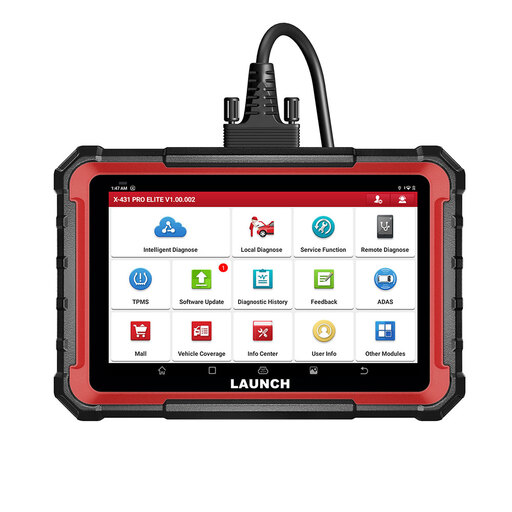
Why This Fits Their Persona: This is a piece of comprehensive garage diagnostic equipment designed to be the primary tool for a busy workshop. Its 8-inch screen, fast processor and extensive vehicle coverage handle the daily demands of servicing a wide variety of makes and models found on UK roads.
It delivers genuine OE-level, all-system diagnostics with full bi-directional control and advanced ECU coding. It also explicitly supports CAN FD/DoIP, avoiding the protocol trap and ensuring longevity.
Includes V.A.G Guided Functions and over 32+ reset functions. It is also compatible with expansion modules for TPMS, battery testing and ADAS calibration.
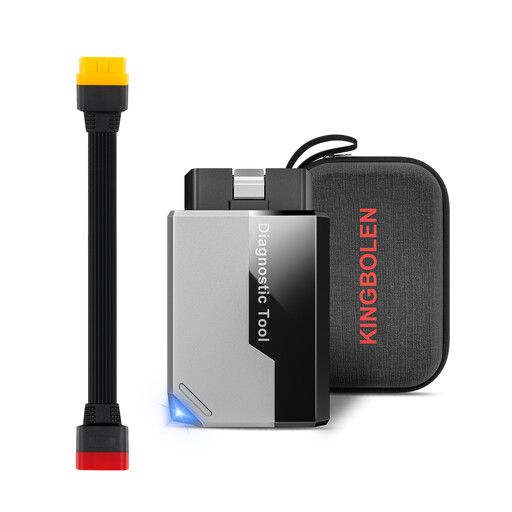
Why This Fits Their Persona: For professionals on the move or expert enthusiasts who need powerful diagnostics without the bulk of a full tablet. This compact Bluetooth device pairs with a smartphone, offering an impressive feature set in a highly portable and affordable package.
It manages expectations clearly. The "Lifetime Update" applies to its core offering of 15+ resets and bi-directional tests, providing long-term value for its intended functions without over-promising.
Offers bi-directional control and CAN FD support, features rarely seen at this price point. The included extension cable is a practical addition for accessing awkward OBD2 ports.
We have compiled a complete, real-time list of products that fully satisfy these strict selection criteria and UK safety regulations.
1. How important is CAN FD and DoIP support for a UK workshop in 2026? It is absolutely essential. A significant portion of vehicles from 2020 onwards, including popular UK models from Vauxhall (GM), Ford, BMW and JLR, use these protocols. Without this support, you will be unable to perform comprehensive diagnostics or programming on an increasing number of cars, limiting your workshop's capabilities and future revenue.
2. Can I still use a diagnostic tool after its free update subscription expires? Generally, yes. With most professional tools like the LAUNCH X431 PRO ELITE, the device will continue to function with all the software that was downloaded up to the point of expiry. You will not lose your existing diagnostic capabilities. However, you will no longer receive updates for new vehicle models, new software features or bug fixes until you renew the subscription.
3. What is the real-world difference between basic ECU coding and advanced programming? Basic coding, often called personalisation, involves changing pre-existing parameters in an ECU (e.g., activating auto-locking doors). Advanced programming or "re-flashing" is a more complex process. It involves writing entirely new software or data to an ECU, which is necessary when installing a brand new, un-programmed control unit or performing major software updates to fix drivability issues. A professional-grade tool should be capable of both.