
24/7 Customer Support

Free returns

Same-day & Next-day Delivery

Quality Guaranteed

Unlock Your Welcome Offers: FREE Delivery | Up to 80% OFF | Free 30-day JoyPlus trial
Download the APP
A professional car diagnostic tool can do far more than switch off a dashboard warning light. The right automotive diagnostic scanner may access multiple control modules, display live data, perform active tests and support service procedures. However, product descriptions often use similar terms for very different levels of capability.
For DIY car owners, mobile mechanics and independent garages, the main challenge is matching the scanner to the vehicles and jobs you actually handle. A low-cost OBD2 scanner may be suitable for engine fault codes, but it may not access ABS, SRS or transmission systems. At the other end, a full-system car scanner can include functions that require careful compatibility checks and a stable vehicle power supply.
“Full-system” generally means the tool can communicate with available vehicle modules beyond the engine. It does not guarantee identical coverage across every make, model or year. One automotive diagnostic scanner may cover ECM, TCM, ABS and SRS, while another may also access body electronics, air conditioning, TPMS or battery systems.
Before buying, check the manufacturer and model compatibility list. If you need diagnostics for a specific vehicle, provide its VIN, model and registration year to the seller before purchase.
A basic car code reader usually reads and clears diagnostic trouble codes. A bi-directional scan tool can send commands to selected vehicle systems, allowing an operator to activate components such as cooling fans, windows, fuel pumps or door locks.
Active testing is not universally available. The function depends on the vehicle ECU, software coverage and the specific component. It should be used with the ignition, engine and battery conditions recommended by the vehicle manufacturer.
A product advertised as an OBD2 scanner with lifetime updates may include free updates for certain software packages, while advanced vehicle packs, languages or online services may have separate terms. FCA AutoAuth access, for example, may require a personal account or a separate subscription arranged through the relevant service.
Check exactly what is included: full-system updates, special functions, ECU coding, technical support and future vehicle coverage should not be assumed from the phrase “lifetime”.
If you perform more than basic engine checks, look for access to the systems relevant to your work:
A car diagnostic tool with reset functions can reduce the need for separate service equipment, but reset availability varies by make, model and equipment level.
A bi-directional scan tool is useful when you need to verify whether an actuator responds to an electronic command. Examples include fuel injectors, radiator fans, solenoids, lights and electric windows.
ECU coding scanners may support module matching, configuration changes or adaptations after component replacement. Coding is vehicle-specific and can be sensitive to voltage interruption. Use a suitable battery maintainer when the tool manufacturer recommends one, and avoid disconnecting the scanner during programming.
Newer vehicles may use communication standards such as CAN FD or DoIP. A CAN FD diagnostic scanner can communicate with selected newer networks without an additional adaptor, while DoIP uses Ethernet-based communication for supported vehicles.
For FCA vehicles, an FCA AutoAuth scanner may help access protected gateway functions, but authorisation requirements still apply. Bluetooth models offer convenient wireless operation, whereas a dedicated tablet may provide a larger display, built-in battery and easier report handling.
Look for clear information on:
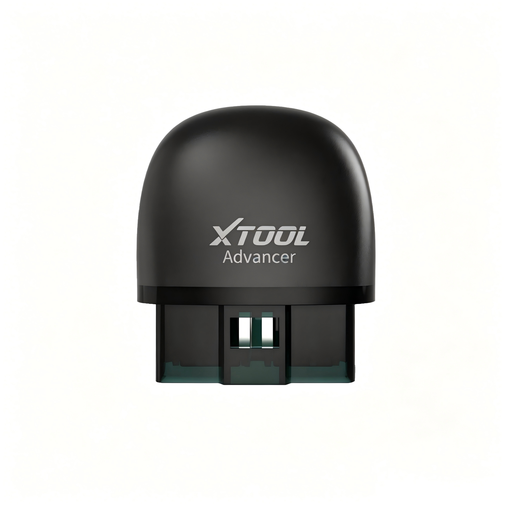
Why This Fits Their Persona: A compact Bluetooth OBD2 scanner for drivers and home mechanics who prefer using a smartphone for checks, live data and routine maintenance.
It states full-system access rather than limiting use to engine codes, and includes standard diagnostics with no subscription and free updates.
Wireless BT 5.0, CAN FD support, live data, oil reset, battery testing and iOS/Android compatibility.
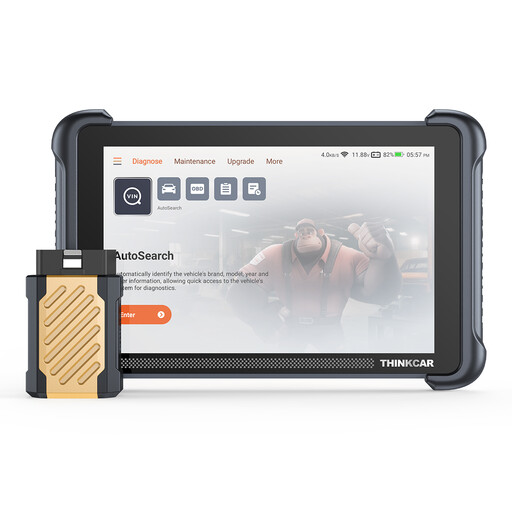
Why This Fits Their Persona: A tablet-style option for independent garages and enthusiasts who value a larger screen, broader service coverage and wireless workshop use.
Its listed capabilities separate full-system diagnostics, ECU coding, bi-directional testing and maintenance resets rather than presenting one generic scan mode.
8-inch touchscreen, CAN FD and DoIP support, 34 reset functions, Bluetooth connection and lifetime free updates.
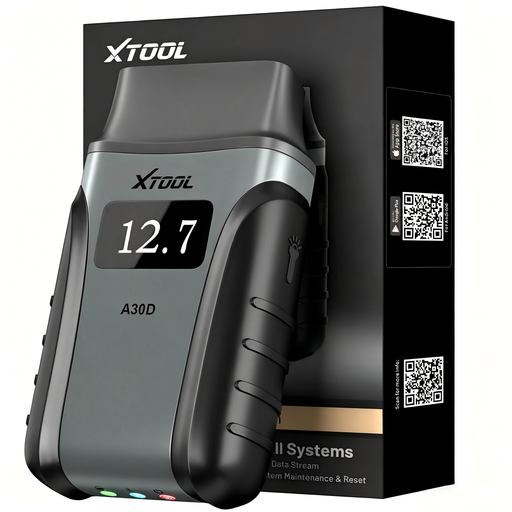
Why This Fits Their Persona: Suitable for mobile mechanics, busy home garages and small repair shops needing wireless active tests and maintenance functions across several vehicles.
The specification lists 19 resets, active testing, full-system diagnostics and compatibility notes for CAN FD and FCA AutoAuth.
Up to eight live-data parameters in graphs, 19 reset functions, Bluetooth range up to 33 feet and lifetime updates.
We have compiled a complete, real-time list of products that fully satisfy these strict selection criteria and UK safety regulations.
Yes. Bluetooth models designed for Android or iOS can suit home users, while tablet scanners provide a larger interface for live data, reports and service functions. Always follow the product instructions, particularly for active tests, coding and battery support.
The hardware can remain useful for many years when stored dry, protected from heat and updated as advised. Its practical lifespan also depends on continued software coverage, app compatibility and whether it supports newer protocols such as CAN FD or DoIP.
They can be, but terms differ. Check whether the offer covers all vehicle software, special functions and future updates. FCA AutoAuth access and some online manufacturer services may still require separate registration or payment.