
24/7 Customer Support

Free returns

Same-day & Next-day Delivery

Quality Guaranteed

Unlock Your Welcome Offers: FREE Delivery | Up to 80% OFF | Free 30-day JoyPlus trial
Download the APP
Choosing professional hand tools is not simply a matter of selecting the largest set or the lowest price. DIY enthusiasts, tradespeople, mechanics, carpenters and home renovators often need tools that remain accurate, comfortable and suitable for the intended material.
A well-chosen tool can support repeated work across a garage, workshop or building project. A poorly matched one may damage fasteners, produce inaccurate markings or become difficult to use after only a few jobs. This guide explains which details deserve attention before buying, followed by product options matched to different working needs.
A kit containing many pieces may still omit the sizes or specialist attachments you regularly use. For example, an open-ended spanner set may have a high piece count but lack larger metric sizes, while a cutting accessory kit may not include a scraper or blade suited to the material.
Check the size range, attachment type and intended applications rather than judging value by piece count alone.
Terms such as “steel construction” do not explain whether a tool is flexible, hardened, corrosion-resistant or suitable for repeated force. For hand tools, the material and manufacturing method both matter. Drop-forged chrome vanadium steel, high-speed steel and high-carbon steel each serve different purposes.
A blade designed for wood will not necessarily be appropriate for metal, and a lightweight pry bar may not be suitable for heavy renovation work.
A tool can be structurally suitable yet awkward in a real UK garage, loft, kitchen renovation or workshop. Offset spanners can improve access around obstructions, while pry bars in different lengths offer more control in confined spaces or additional leverage for heavier objects.
Storage is also practical rather than cosmetic. A roll, case or organised holder helps prevent lost sizes, protects working edges and makes it easier to take tools between a vehicle and a job site.
For mechanic tools, hardened and tempered drop-forged chrome vanadium steel is a useful specification to look for in spanners. It indicates a manufacturing process intended to produce a strong, shaped tool for turning fasteners. A polished finish can make cleaning easier, but it should not be treated as a substitute for correct sizing and safe use.
For cutting and scraping blades, match the material to the task:
Always confirm compatibility with your oscillating multi-tool before purchasing replacement blades.
A combination square should offer a readable scale and a head that locks securely onto the ruler. Dual metric and imperial markings are practical for UK workshops where projects may use either measurement system. A 300mm or 12-inch ruler is suitable for many general layout tasks, including checking 90° and 45° angles, measuring depth and marking lines.
For spanners, compare both the size range and the working profile. A 15° offset can provide additional clearance in tight spaces, but an open-ended spanner still needs to fit the fastener correctly to reduce slipping and damage.
Pry bar length also affects handling. Shorter bars are easier to control in restricted areas, while longer bars can provide more leverage. Use only the force appropriate to the tool and task, and do not use a hand tool beyond its stated purpose.
Before buying DIY tools, renovation tools or construction tools, check the product instructions, warnings and compatibility details. Wear suitable eye protection when cutting, scraping, striking or prying. Keep cutting edges covered where possible, inspect tools for deformation and clean away adhesive, dust or moisture after use.
UK buyers should also review the seller’s safety information and any applicable conformity markings for powered equipment or accessories. Markings alone do not make an unsuitable tool appropriate for a particular job.
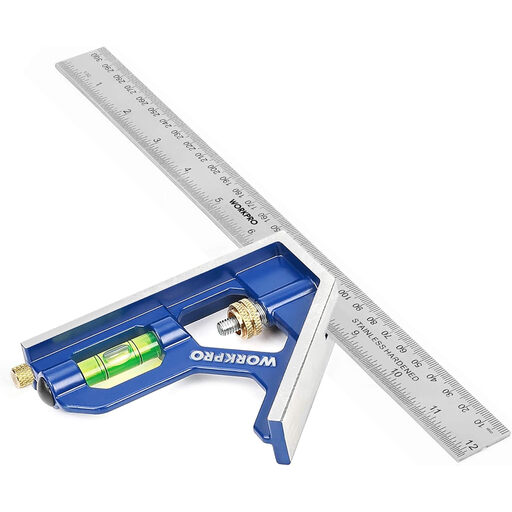
Why This Fits Their Persona: A practical measuring and marking tool for home improvement, carpentry and general workshop projects where one compact instrument needs to perform several layout tasks.
Its 300mm ruler has dual metric and imperial graduations, while the adjustable clamp helps secure the chosen position instead of relying on loose, separate rulers.
Stainless steel ruler, zinc alloy head, bubble level and integrated scriber; measures 90° and 45° angles as well as length, depth and width.
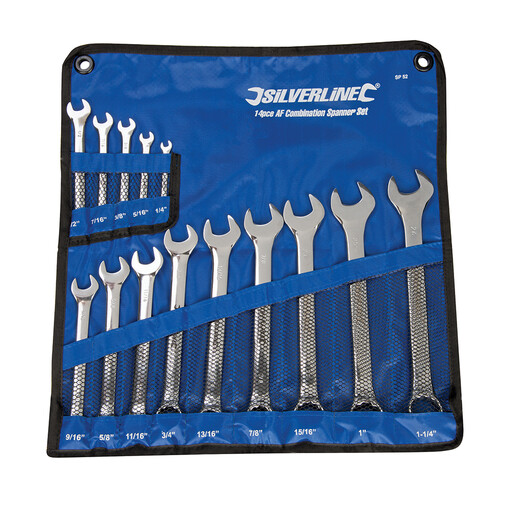
Why This Fits Their Persona: Suits mechanics, engineers and serious DIY users who want a broad selection of combination spanners for regular maintenance and repair work.
The set states its chrome vanadium construction, 14-piece quantity and 1/4-inch to 1-1/4-inch range, making coverage easier to assess before purchase.
Open and bi-hexagonal ends with a 15° offset; supplied with a ballistic nylon storage roll.
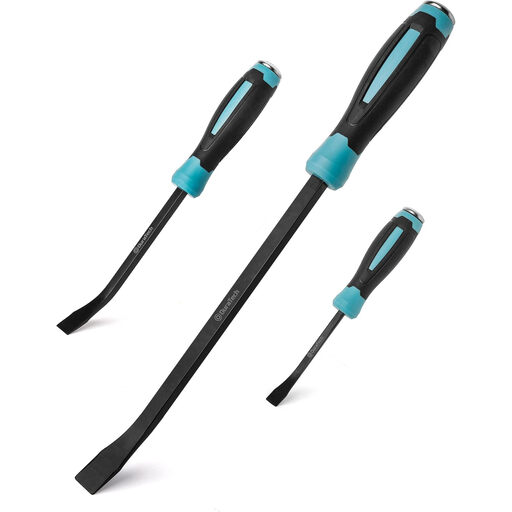
Why This Fits Their Persona: A useful match for renovation workers, flooring installers, construction users and anyone removing trim, tiles, nails or stuck components.
Three lengths—8, 12 and 18 inches—allow users to choose control or leverage rather than forcing one oversized bar into every task.
Heat-treated steel, black oxide finish, angled tips and hammer strike caps; protective end caps are included.
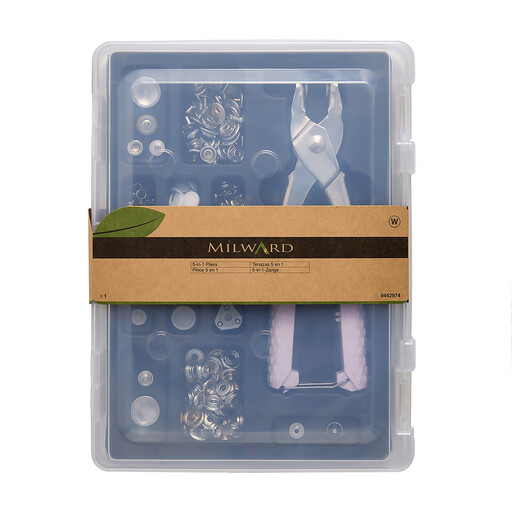
Why This Fits Their Persona: Designed for dressmakers, bag makers, costume projects and crafters attaching different fasteners to fabric and accessories.
The kit identifies five interchangeable applications and includes 3mm and 4mm hole-punching tools, rather than offering pliers without preparation accessories.
Soft-grip handles, tool remover, reusable carry case and 100 assorted snaps, eyelets and fasteners.
We have compiled a complete, real-time list of products that fully satisfy these strict selection criteria and UK safety regulations.
For flooring and renovation projects, cutting and scraping blades should be selected according to the surface and material. The Silverline Cutting & Scraping Set includes 68mm and 52mm HCS blades, a 22mm bi-metal blade and an 80mm HSS blade for specified cutting and scraping applications.
If your work needs metric coverage from 6mm to 32mm, an open-ended spanner set can complement a combination spanner set. Open-ended designs are useful where access from the side is necessary, although the correct size and controlled force remain essential.
Begin with tools that match your regular tasks: a measuring tool, screwdrivers, pliers, a hammer, adjustable or fixed spanners and suitable cutting accessories. Mechanics may prioritise combination spanners and snap pliers, while carpenters may need a combination square, marking tools and pry bars.
Clean tools after use, dry them before storage and keep cutting edges protected. Avoid using spanners on incorrectly sized fasteners and do not strike tools unless they have a designated striking surface. Store sets in their supplied roll or case where possible.
Not necessarily. Compare material, dimensions, compatibility, storage and warranty information against the job. A specialised set with fewer pieces may provide more practical value than a larger collection containing tools you rarely use.