
24/7 Customer Support

Free returns

Same-day & Next-day Delivery

Quality Guaranteed

Unlock Your Welcome Offers: FREE Delivery | Up to 80% OFF | Free 30-day JoyPlus trial
Download the APP
Whether you are a chef, a dedicated home cook or a tradesperson, the term "professional knife" signifies a tool built for performance and durability. Yet, the market is filled with marketing buzzwords and hidden flaws that can lead to a disappointing purchase. As a Joybuy Product Recommendation Officer, my role is to help you navigate this landscape. This guide will break down what truly matters, helping you select a tool that works for you, from the kitchen to a decorating project.
Before you invest, be aware of these common purchasing pitfalls:
To make an informed choice, focus on these fundamental features rather than just marketing claims.
The steel is the heart of any knife. Understanding the basic types is key to matching the knife to your needs and maintenance habits.
Beyond the material, the shape and finish of the blade dictate how it moves through food or other materials.
We have matched a few standout products to different user needs, helping you find the right tool for your specific tasks.
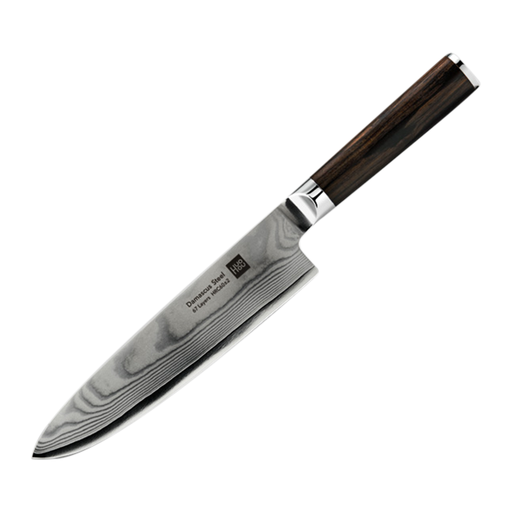
Why This Fits Their Persona: This user appreciates both aesthetics and high performance. The combination of a traditional Damascus pattern, an elegant ebony wood handle and a precision-honed edge makes cooking a more refined experience.
It avoids the "miracle steel" myth by clearly stating its high-performance 90Cr14MoV cutting core, ensuring the beauty of the Damascus layering is backed by genuine cutting power.
The hand-honed 16° edge provides exceptional sharpness for precise slicing, while the ergonomic ebony handle ensures excellent balance and control during use.
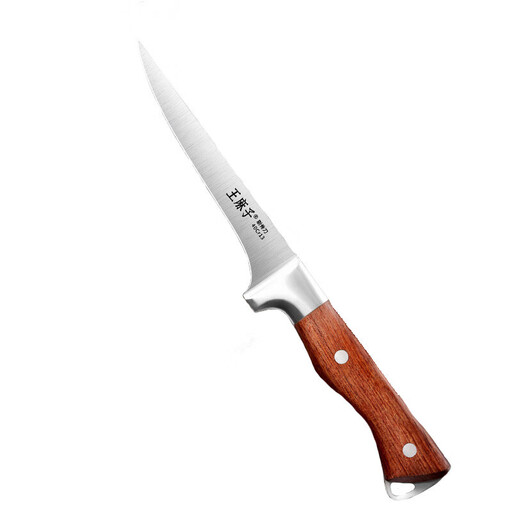
Why This Fits Their Persona: This user requires a no-nonsense, purpose-built tool for processing meat. This knife is designed for the specific demands of deboning and skinning, prioritising function over all else.
It is the perfect counter to the "one-size-fits-all" fallacy. As a specialised meat cutting knife, its pointed tip and curved blade are designed for one job: separating meat from bone with precision.
Its commercial-grade design offers the sharpness and control needed for efficient butchery, a task where a standard chef's knife would be clumsy and less effective.
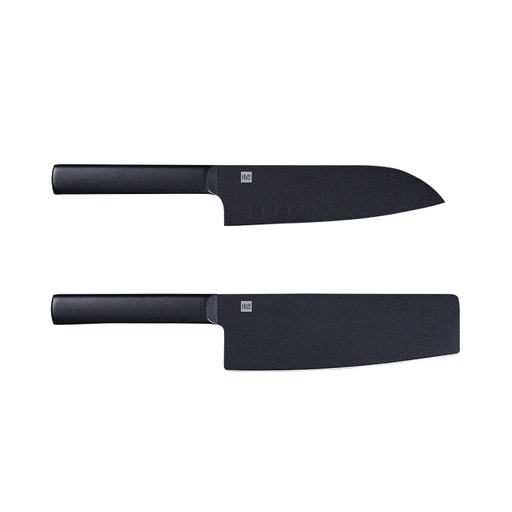
Why This Fits Their Persona: This cook values efficiency, low maintenance and reliable performance. The Santoku shape is a versatile all-rounder, and the non-stick coating makes prep and clean-up fast and simple.
It avoids the maintenance trap of traditional high-carbon steel by using a modern 50Cr15MoV stainless alloy and a protective, food-safe nano non-stick coating for easy cleaning.
The advanced nano coating creates a "lotus-effect" surface that repels water and oil, preventing food from sticking and allowing for a quick rinse-clean. The ergonomic handle ensures comfort.
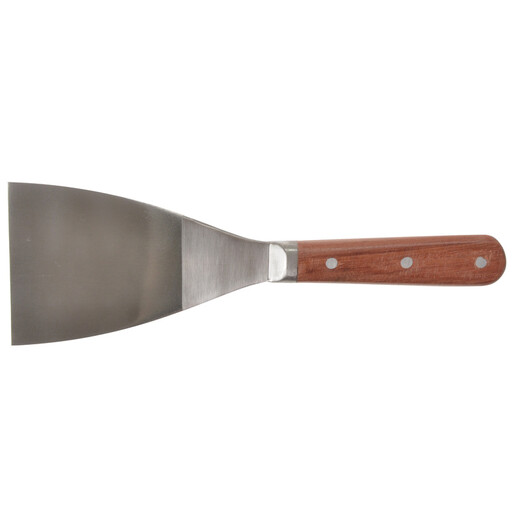
Why This Fits Their Persona: This user needs a tough, reliable tool for manual work like removing old paint or wallpaper. Durability, a comfortable grip and a strong, effective blade are the only priorities.
This product perfectly illustrates why you must choose the right tool for the job. It is a "professional knife," but its bevelled edge and rigid blade are designed for stripping, not slicing vegetables.
The hardened full tang construction ensures exceptional strength and durability for demanding tasks, while the hardwood handle provides a secure, comfortable grip.
We have compiled a complete, real-time list of products that fully satisfy these strict selection criteria and UK safety regulations.
Not inherently. "Damascus" refers to the layered, patterned appearance of the blade. The actual cutting performance is determined by the core steel at the very edge and the quality of the heat treatment. A well-crafted high-carbon steel kitchen knife from a reputable maker can easily outperform a mass-produced Damascus knife with a mediocre core. Always check the specifications for the core material.
This depends entirely on usage. For most home cooks, honing the blade with a sharpening steel every few uses is sufficient to keep the edge aligned. True sharpening, which removes metal to create a new edge, may only be necessary a few times a year. For a professional chef or butcher, this will be far more frequent.
It is strongly advised that you do not. The combination of high heat, harsh detergents and the potential for the blade to knock against other items can rapidly dull the edge, damage wooden handles and lead to corrosion—even on stainless steel. For longevity, always hand wash your knives with mild soap and dry them immediately.