
24/7 Customer Support

Free returns

Same-day & Next-day Delivery

Quality Guaranteed

Unlock Your Welcome Offers: FREE Delivery | Up to 80% OFF | Free 30-day JoyPlus trial
Download the APP
Choosing professional measuring tools is not simply about selecting the product with the longest range or most technical features. Tradespeople, contractors, renovators and DIY users often discover that a tool advertised as “professional” may be awkward to use, unsuitable for the working environment or expensive to replace.
Before buying a laser level, laser distance meter, tape measure or rangefinder, check the specifications that affect everyday performance. A clear understanding of accuracy, construction and intended use can prevent wasted money.
A laser distance meter may advertise a long maximum range, but this does not always indicate how clearly it measures in a bright room, outdoors or across uneven surfaces. Similarly, a golf rangefinder’s headline distance may only apply in favourable conditions.
Look for the stated accuracy, measuring modes and operating conditions. A device that provides a useful reading at the distances you actually work with may be more suitable than one with a larger headline range.
A low-cost tool can appear appealing until the blade coating wears away, the casing cracks or the spirit level loses calibration after a drop. Construction measuring tools used on building sites need suitable protection, while DIY measuring tools for occasional indoor use may not require the same level of reinforcement.
Check the materials, casing design, blade width, magnetic base and storage options. These details often have more effect on ownership than promotional descriptions.
Self-levelling laser levels, slope functions and digital readouts can be useful, but only when they suit the job. A decorator hanging shelves may need clear horizontal and vertical lines, whereas a golfer may prioritise flag locking and a rechargeable battery.
Consider the working environment first, then select the functions that support it.
For tape measures, Class II accuracy is a useful reference for professional work. The Stanley FatMax 8M/26ft Premium Tape Measure, for example, specifies a tolerance of ±0.5mm at 1m. This type of information is more useful than a general claim about precision.
For a spirit level, accuracy is commonly expressed in millimetres per metre. The WORKPRO mini magnetic spirit level specifies 0.5mm/m accuracy, with separate 90° and 180° vials for vertical and horizontal alignment.
Laser tools use similar practical measures. The PREXISO 30m Laser Level states ±5mm/10m accuracy and a self-levelling range of ±4°. If the tool is outside that levelling range, its warning function indicates that the position needs adjustment.
A green beam can be easier to see than a red beam in many indoor conditions, but visibility still depends on ambient light, surface colour and distance. The PREXISO model provides horizontal, vertical and cross-line projection modes, with a stated range of up to 30m.
For a laser distance meter, also check whether measurements can be taken from the front or rear of the device, whether continuous measurement is available and how the screen performs in low light. A lanyard, compact body and carrying case can be valuable for installers and contractors moving between rooms or sites.
A wider blade is generally easier to read and may remain extended over a longer unsupported distance. A heavy-duty measuring tape should also have a secure hook, a reliable lock and a case that can withstand normal site handling.
The Deli 10m x 25mm Heavy-Duty Measuring Tape has a 25mm-wide blade, a wear-resistant coating, a reinforced hook area and a high-impact ABS case with a non-slip rubber covering. The Stanley FatMax model uses a 32mm blade and specifies a 4.2m reach for one-person measuring. Retract either tape carefully and keep the blade clean to reduce internal dirt build-up.
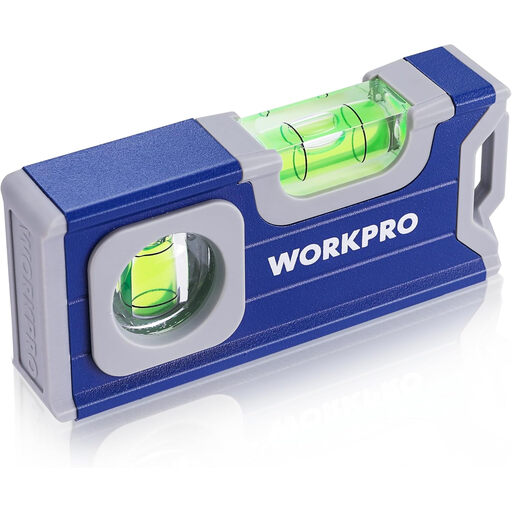
Why This Fits Their Persona: Its compact format suits new DIY users, flat-pack assembly, shelving and small installation jobs where a full-size level is inconvenient.
The stated 0.5mm/m accuracy and separate 90°/180° vials provide specific information instead of relying on vague precision claims.
Aluminium alloy body, V-shaped magnetic base for pipes and a hanging hole for storage.
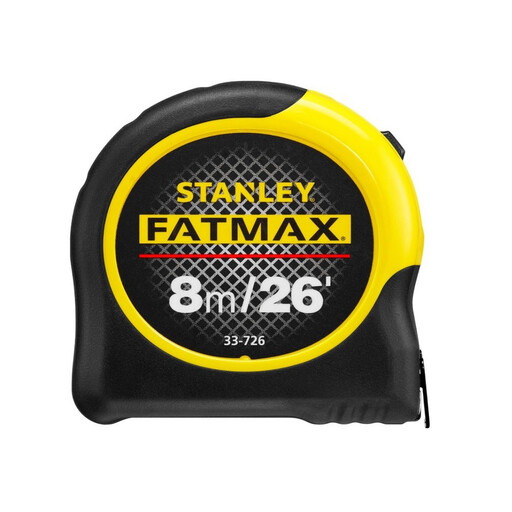
Why This Fits Their Persona: Tradespeople and regular renovators may value its wide blade, specified reach and reinforced construction for repeated measuring.
The listing provides measurable details including 32mm blade width, 4.2m reach and Class II accuracy rather than only describing it as heavy-duty.
Abrasion-resistant polyester film, reinforced blade section and multi-catch hook.
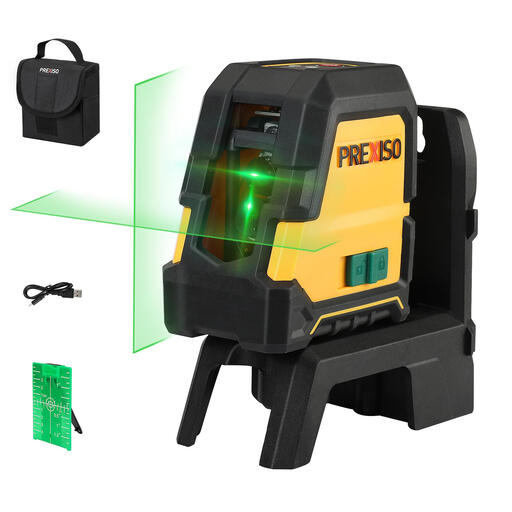
Why This Fits Their Persona: Installers, decorators and renovators working on floors, doors, windows and wall layouts can use its cross-line projection for indoor alignment.
It states the self-levelling limit, accuracy and operating range, helping buyers assess whether it suits their room size and tolerance requirements.
Rechargeable Type-C battery, magnetic bracket and horizontal, vertical and cross-line modes.
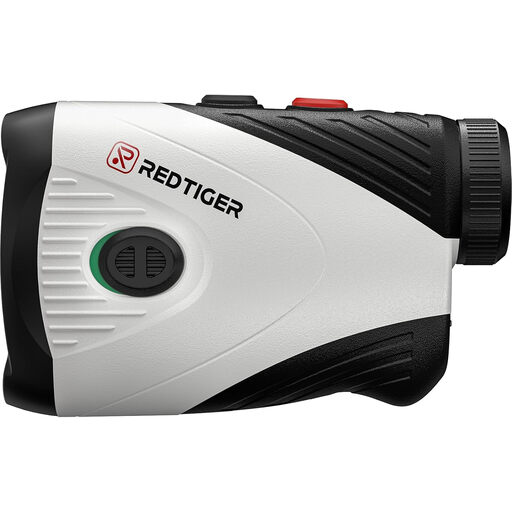
Why This Fits Their Persona: Golfers and outdoor users can use the optical view, rechargeable USB-C battery and built-in magnetic bracket during rounds or trips.
The stated measurement distance, ±0.5-yard accuracy, slope mode and slope-off option make its intended golf functions clear.
7x magnification, flag-lock vibration, rechargeable lithium-ion battery and cart-compatible magnet.
Use lasers responsibly. Never point a laser level or laser rangefinder at a person, vehicle or aircraft, and avoid looking into the beam or the sun. Follow the manufacturer’s instructions and keep electronic tools away from moisture unless their stated protection allows it.
We have compiled a complete, real-time list of products that fully satisfy these strict selection criteria and UK safety regulations.
Yes, a laser distance meter or laser level can be practical for home decoration, flooring, shelving and room planning. Choose a model with straightforward controls, a visible display and an accuracy specification that matches the job. A tape measure remains useful for short measurements, edges and situations where a laser cannot be aimed safely.
Lifespan depends on frequency of use, dirt, moisture and how aggressively the blade is retracted. Clean the blade before storing it, avoid kinks and use the lock when measuring. A reinforced hook, abrasion-resistant coating and impact-resistant housing can help reduce wear, but damaged or distorted blades should not be relied upon for critical measurements.
Rechargeable models can reduce the need for disposable batteries, although they still require charging and careful storage. Check the battery type, charging connection and expected operating instructions before purchase. For occasional work, a manual tape measure has no charging cost, while a laser device may save time on larger or repeated measurements.