
24/7 Customer Support

Free returns

Same-day & Next-day Delivery

Quality Guaranteed

Unlock Your Welcome Offers: FREE Delivery | Up to 80% OFF | Free 30-day JoyPlus trial
Download the APP
By Joybuy Product Recommendation Officer
A professional OBD2 diagnostic scanner can do far more than switch off a dashboard warning light. Depending on the model and vehicle, it may scan multiple control units, display live data, perform active tests, complete service resets and support ECU coding.
However, buying by headline claims alone can lead to unnecessary costs. The right choice depends on your vehicle coverage, required functions and the software terms attached to the tool.
A full-system car scanner may access available modules such as the engine, transmission, ABS, SRS, body control or air conditioning systems. It does not mean that every reset, active test or coding function works across every make, model and year.
Vehicle-specific limitations are particularly relevant for:
Always check compatibility by VIN, vehicle year and required function before purchase.
A vehicle diagnostic scanner with lifetime updates may include software updates without a recurring fee, but this does not necessarily provide dealer-level programming, manufacturer subscriptions or secure gateway authorisation.
For example, FCA AutoAuth access may require a separate account and payment through the official service. Some products also offer lifetime updates for core diagnostics but charge separately for selected service packages. Read the update description carefully rather than relying on the word “lifetime”.
A large tablet with ECU coding, DoIP and hundreds of service functions may be unnecessary for a private owner who mainly needs a car code reader for engine faults and live data.
Conversely, a basic Bluetooth OBD2 scanner may be unsuitable for a mobile technician who needs wired reliability, full-system access or active testing. Consider how often you will use the tool, how many vehicles you service and whether you need reports for customers.
A basic car diagnostic tool often focuses on standard engine OBD2 functions, including:
A more advanced automotive scan tool may access several electronic control units. For newer vehicles, check for CAN-FD and DoIP support. CAN-FD can handle larger data frames than conventional CAN, while DoIP uses Ethernet-based communication for supported vehicles.
Neither protocol guarantees coverage of every newer model, so the scanner’s vehicle list remains important.
A bidirectional OBD2 scanner can send commands to selected vehicle components through the ECU. Depending on the car, an active test scanner may operate cooling fans, fuel pumps, windows, valves, lights or air-conditioning clutches.
These functions can help separate an electrical or control fault from a mechanical fault, but they must be used with the correct repair procedure and stable vehicle power.
ECU coding tools vary considerably. Some support component matching or configuration changes; others offer manufacturer-specific online or offline coding. Coding is not universal, and an interruption during programming may create additional problems. A battery maintainer is sensible for longer procedures.
Compare:
A Bluetooth OBD2 scanner is convenient for driveway checks and mobile work, while a dedicated tablet may be easier for repeated workshop diagnosis.
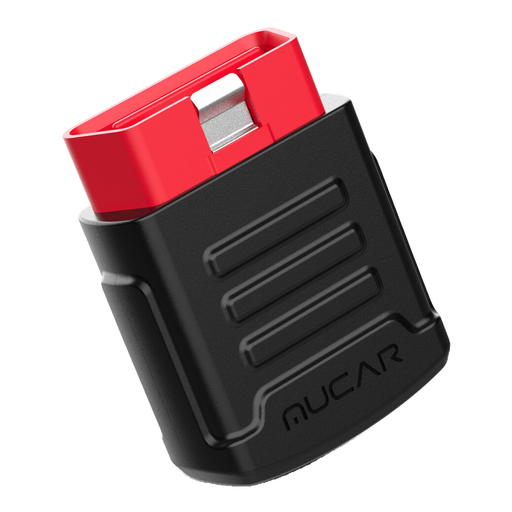
Why This Fits Their Persona: A compact choice for UK owners, used-car inspections and light DIY work using a smartphone app.
The listing distinguishes the standard and Pro versions, including different reset access and update terms.
Full-system diagnostics, live-data graphs, reports and support for more than 115 vehicle brands are listed for the Pro version.
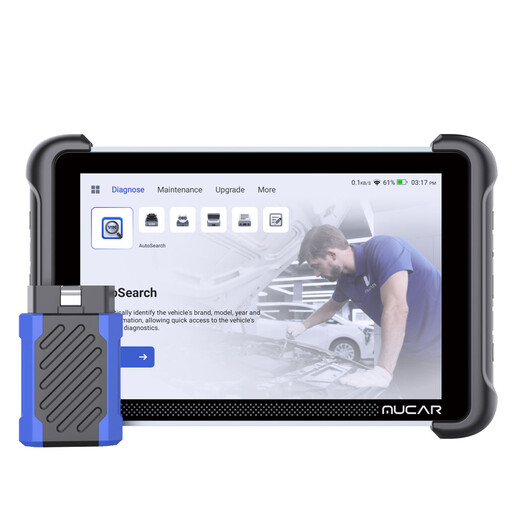
Why This Fits Their Persona: Suited to independent garages and technicians wanting a dedicated tablet rather than a phone-based interface.
Its listed CAN-FD, DoIP and lifetime update features address common coverage and subscription concerns; compatibility still needs checking.
8-inch touchscreen, magnetic VCI, ECU coding, bi-directional tests and more than 34 listed service functions.
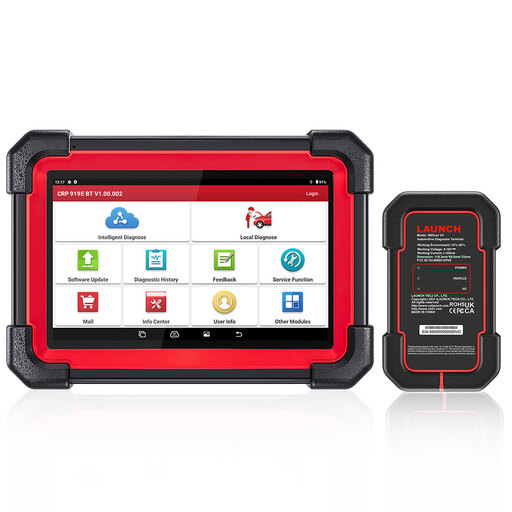
Why This Fits Their Persona: A practical match for mobile technicians and workshops handling varied European, American and Asian vehicles.
The listing specifies that active tests, ECU coding and reset availability vary by manufacturer, year and model.
Bluetooth VCI, CAN-FD, DoIP, full-system diagnosis, ECU coding, active tests and 31+ listed reset functions.
We have compiled a complete, real-time list of products that fully satisfy these strict selection criteria and UK safety regulations.
Before scanning, confirm that the vehicle has a standard 16-pin OBD2 port and that the ignition is switched on as instructed. For active tests, coding and battery-related procedures:
An OBD scanner can show emissions-related readiness information, but an I/M readiness result is not a guarantee that a vehicle will pass its UK MOT. Mechanical condition, emissions and the applicable MOT requirements still determine the result.
It can be worthwhile if you maintain several vehicles, carry out service work or need access beyond engine codes. For occasional warning-light checks, a simpler Bluetooth OBD2 scanner may be sufficient. Compare the cost of included updates and reset functions with the jobs you actually plan to perform.
The hardware may remain usable for several years, but vehicle coverage and software support are more important to long-term value. Look for robust cables or a replaceable VCI, clear warranty terms and update policies. Lifetime software updates do not guarantee that every future vehicle or function will be supported.
You may need FCA AutoAuth for selected secured gateway functions on compatible Fiat, Chrysler, Dodge, Jeep or related vehicles. DoIP is relevant to certain newer vehicles using Ethernet-based diagnostics. Check the vehicle-specific requirements before paying for either feature.