
24/7 Customer Support

Free returns

Same-day & Next-day Delivery

Quality Guaranteed

Unlock Your Welcome Offers: FREE Delivery | Up to 80% OFF | Free 30-day JoyPlus trial
Download the APP
A basic car code reader can be useful for checking an engine warning light, but it may not access the transmission, ABS, airbag or body-control modules. For garages, mobile mechanics and advanced DIY users, a professional OBD2 diagnostic scanner needs to do considerably more: display live data, run active tests, support service resets and communicate with newer vehicle networks.
The challenge is separating useful functions from broad marketing claims. Before choosing an automotive diagnostic scanner, check the vehicle coverage, update terms and exact functions available for your car’s make, model and year.
A scanner may advertise full-system diagnostics while offering only code reading and clearing on certain modules. Bi-directional control, ECU coding and service functions such as DPF regeneration or ABS bleeding can be restricted by vehicle model, software package or manufacturer security gateway.
Always confirm whether the functions you need are supported for your vehicle’s VIN. A full-system car scanner should ideally state its coverage for systems such as:
Lifetime free updates can reduce long-term ownership costs, but the wording matters. Some products include lifetime updates for basic OBD2 functions while charging for advanced vehicle software or reset packages. Others provide a set period of updates, after which the tool remains usable but newer coverage may require payment.
Check whether the advertised update policy includes full-system diagnostics, special functions and new vehicle coverage. For comparison, products in this guide list either lifetime updates or a defined update period, so the ongoing cost is clearer before purchase.
A CAN FD diagnostic scanner can communicate with selected newer vehicles using the CAN FD protocol, but this does not guarantee compatibility with every modern car. FCA vehicles may also require an AutoAuth account or separate manufacturer authorisation for protected functions.
For ECU coding, module replacement or programming, use a stable power supply and follow the vehicle manufacturer’s procedures. A low battery voltage or interrupted connection can cause problems during advanced operations.
For workshop use, look beyond the phrase “OBD2 scanner”. Confirm whether the tool supports all available vehicle systems, live data, freeze-frame information, ECU identification and report generation. A vehicle fault code scanner that only reads generic engine codes will not replace a full-system diagnostic tool.
If you inspect used cars, features such as AutoVIN, readiness monitors, stored codes and live-data graphs can help you record the vehicle’s condition before purchase. They do not replace a mechanical inspection or road test.
A bi-directional OBD2 scanner, also called an active test diagnostic tool, can send supported commands to vehicle modules. Depending on the vehicle, this may include operating cooling fans, windows, fuel pumps, lights, valves or door locks. Availability varies by make, model and year.
Common maintenance functions include:
These functions assist with procedures; they do not confirm that a component is safe or correctly repaired.
CAN FD and DoIP support can be valuable for newer cars, but compatibility lists should be checked carefully. Confirm:
A scanner with a broad vehicle-brand list may still have different coverage across individual models.
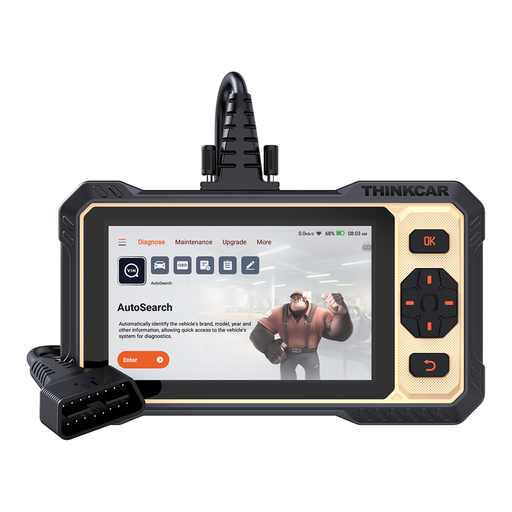
Why This Fits Their Persona: A practical handheld option for home mechanics, mobile users and smaller workshops needing core system access without moving to a larger tablet.
The listing specifies four-system diagnostics, CAN FD support, 20+ service functions and lifetime free software updates. Check individual vehicle compatibility before ordering.
Includes ABS bleeding, DPF regeneration, battery matching, TPMS reset and bi-directional control.
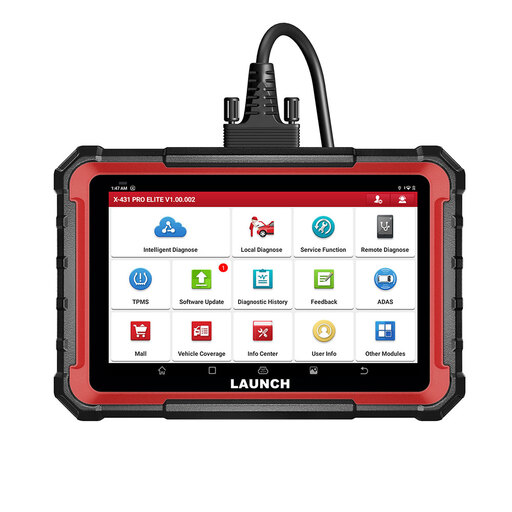
Why This Fits Their Persona: Suitable for busy garages and automotive technicians who value a larger display, reports and deeper workshop functions.
The listing clearly states two years of free updates, after which the tool remains usable. FCA AutoAuth and model-specific coding still require compatibility checks.
Offers full-system diagnostics, ECU coding, active tests, CAN FD, DoIP and a stated 31 reset services.
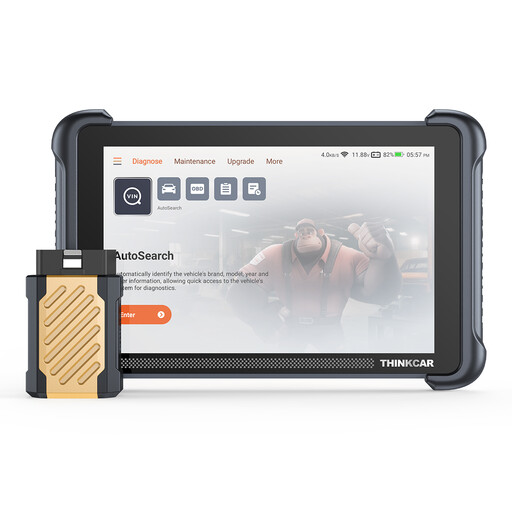
Why This Fits Their Persona: Designed for users handling frequent diagnostics, varied vehicle brands and advanced workshop procedures.
The specification lists ISO, CAN, CAN FD and DoIP support, while noting that advanced coding may require internet access or manufacturer-level support.
Includes 8-inch display, Bluetooth connection, 34 reset functions, ECU coding and bi-directional testing.
We have compiled a complete, real-time list of products that fully satisfy these strict selection criteria and UK safety regulations.
It can be worthwhile for advanced DIY users with several vehicles or frequent maintenance needs. Full-system access, live data and reset functions offer more information than a basic car code reader. However, choose only the functions you can use and verify vehicle coverage before paying for a higher specification.
Not always. Some models advertise lifetime free updates, while others include one or two years and then continue with limited functionality. Read whether the update policy covers the particular service functions and vehicle software you require.
No. A scanner can read or clear supported fault codes and perform selected resets, but it cannot repair the underlying fault. Functions vary by vehicle, and safety-related systems such as ABS or SRS should be serviced according to appropriate UK repair procedures.