
24/7 Customer Support

Free returns

Same-day & Next-day Delivery

Quality Guaranteed

Unlock Your Welcome Offers: FREE Delivery | Up to 80% OFF | Free 30-day JoyPlus trial
Download the APP
A professional OBD2 car diagnostic scanner can do far more than switch off a dashboard warning light. The right automotive scan tool may provide full-system fault scanning, live data, active tests, service resets and, on compatible vehicles, ECU coding.
However, product listings often use similar phrases for very different capabilities. A basic car code reader may be advertised as “professional” while only accessing the engine control module. Before buying, UK DIY car owners, mobile technicians and independent garages should check what the scanner can actually do, which vehicles it supports and whether ongoing software fees apply.
Standard OBD2 functions usually cover emissions-related data, such as reading and clearing powertrain codes, viewing live data, checking freeze-frame information and checking I/M readiness. This does not automatically mean the device can scan the ABS, SRS, transmission, TPMS or body control modules.
A full-system OBD2 scanner should clearly state which systems it can access. Coverage may still depend on the vehicle’s make, model, engine, trim and communication protocol.
A scanner may list 15, 30 or more service functions, including oil reset, EPB, BMS, SAS calibration, DPF regeneration and injector coding. These functions are not universal. Availability can vary significantly between vehicles, and some procedures require a stable battery supply, specific repair conditions or manufacturer security access.
Check compatibility by supplying the vehicle registration details or VIN before purchase, particularly if you need a transmission relearn, ABS bleeding, immobiliser function or ECU coding scanner.
“Free updates” can refer only to basic OBD2 functions, while advanced vehicle software may require a subscription. Some products provide lifetime free updates, whereas others include updates for a limited period. FCA AutoAuth access, where required, may also involve separate registration or charges.
Read the update terms carefully. A scanner that appears inexpensive may cost more to keep current than a one-off purchase with lifetime software access.
For more than occasional check-engine-light checks, look for access to the ECM, TCM, ABS and SRS at a minimum. A full-system vehicle diagnostic tool should also display ECU information, fault-code descriptions and live data.
Graphing several parameters at once makes it easier to compare sensor readings. For example, a technician may monitor engine speed, coolant temperature, fuel trim and battery voltage together rather than relying on one number at a time.
A bidirectional diagnostic scanner can send commands to selected vehicle components through the ECU. Depending on vehicle support, an active test car diagnostic tool may operate cooling fans, fuel pumps, windows, lights, valves or an air-conditioning clutch.
This can help narrow down whether a component, wiring circuit or control module is responding. It does not replace safe mechanical inspection or manufacturer repair procedures, and results should be interpreted with care.
Newer vehicles may use CAN-FD or DoIP communication. A CAN-FD diagnostic scanner can communicate with vehicles using the CAN Flexible Data-Rate protocol, while a DoIP diagnostic scanner uses automotive Ethernet-based communication on supported models.
Also check whether the tool supports FCA AutoAuth or other secure gateway access where relevant. A claimed vehicle-brand count is only a starting point; protocol support and individual model coverage are more useful when comparing products.
For UK use, also check the supplied charger, plug arrangement, warranty terms and compliance information. Products supplied with CE and RoHS information should still be used according to their instructions and stored away from moisture, excessive heat and direct sunlight.
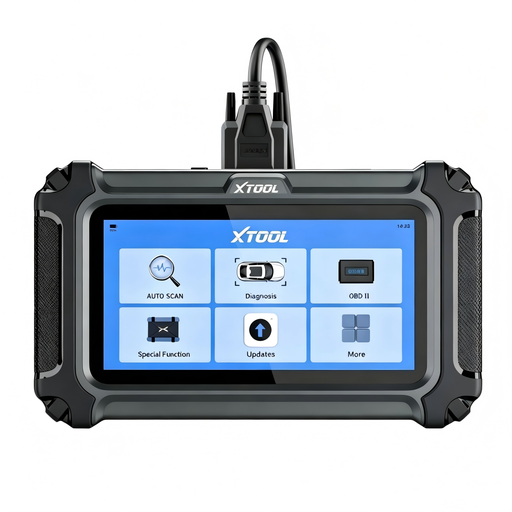
Why This Fits Their Persona: A practical choice for UK DIY owners and weekend mechanics who want handheld diagnostics and common maintenance functions without a recurring update fee.
It specifies four-system diagnostics, CAN-FD support and lifetime free updates, rather than presenting itself only as a basic engine code reader.
Includes 16 reset functions, live-data graphing and battery registration support on compatible vehicles.
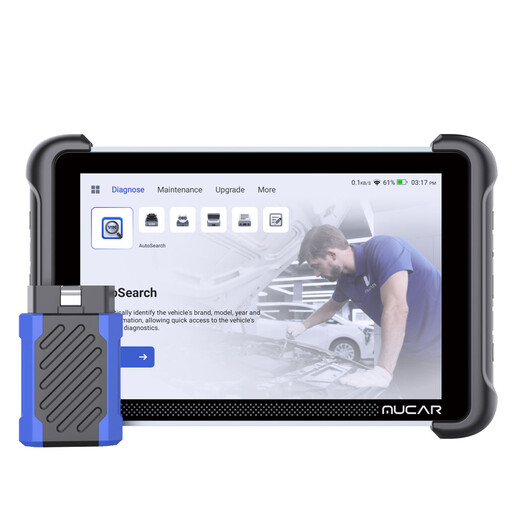
Why This Fits Their Persona: Suits independent garages and advanced enthusiasts who prefer a larger tablet interface for repeated diagnostics and workshop records.
Its specification separates ECU coding, bidirectional control, AI-assisted code interpretation and service functions, while stating that coverage depends on the vehicle.
8-inch touchscreen, magnetic VCI, CAN-FD and DoIP support, plus more than 34 listed service functions.
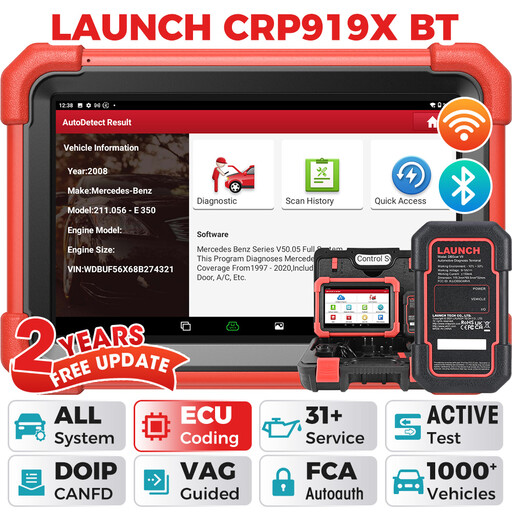
Why This Fits Their Persona: Designed for mobile technicians and small workshops that value wireless operation, broad system access and active component testing.
The listing identifies Bluetooth VCI, full-system diagnosis, active tests, ECU coding and the update period separately.
Supports CAN-FD and DoIP, includes 31 listed reset services and provides wireless vehicle connection.
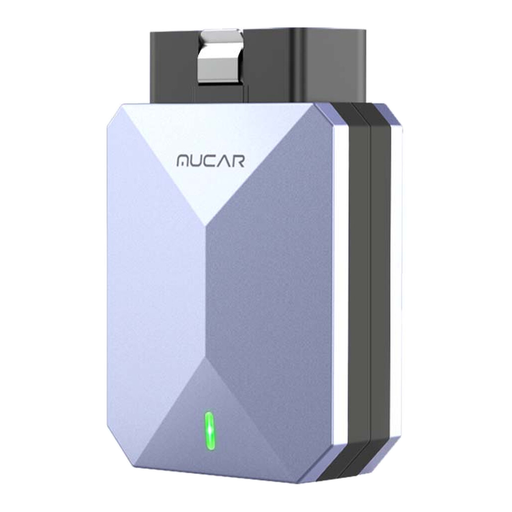
Why This Fits Their Persona: A compact option for DIY owners who want smartphone operation, AI-assisted explanations and wireless checks across more than one family vehicle.
It combines AI assistance with clearly stated full-system scanning, rather than relying on a vague “smart” label alone.
Offers bidirectional control, 15-plus reset functions, CAN-FD support and Bluetooth compatibility with Android and iOS devices.
We have compiled a complete, real-time list of products that fully satisfy these strict selection criteria and UK safety regulations.
Before scanning, confirm that the vehicle battery is adequately charged and that the ignition position matches the device instructions. Do not interrupt a coding or relearn procedure. Save diagnostic reports before clearing codes, especially when the vehicle is being assessed for a fault history.
For a tablet-based scanner, keep storage available for software updates. For Bluetooth adapters, check app compatibility, account requirements and whether advanced functions need separate activation. A product with lifetime free updates can reduce running costs, but it does not guarantee every future vehicle or function will be supported.
Yes, but advanced functions require care. Reading codes and viewing live data are generally straightforward, while ECU coding, ABS bleeding and injector coding should only be attempted when the vehicle procedure and compatibility are understood.
The hardware can remain useful for several years if it is protected from moisture, heat and drops. Its practical lifespan depends more on software support, compatible vehicle coverage, battery condition and connector durability than on the screen size alone.
They can be, but check what is included. Some products provide lifetime access to core OBD2 and full-system software, while special functions, secure gateway access or optional vehicle packs may have separate conditions. Always review the product listing before ordering.