
24/7 Customer Support

Free returns

Same-day & Next-day Delivery

Quality Guaranteed

Unlock Your Welcome Offers: FREE Delivery | Up to 80% OFF | Free 30-day JoyPlus trial
Download the APP
Buying project books and notebooks can seem straightforward until the pages tear badly, the cover bends in a crowded bag or the format does not suit your filing system. A low-priced stationery multipack may also contain less usable paper than expected, while attractive covers can distract from practical details such as ruling, binding and page removal.
This guide explains the specifications that matter, highlights common buying traps and matches several options to different UK users, from students and teachers to office workers and journal writers.
An A4 project book offers generous writing space and is convenient for filing, printing or sharing notes. However, it takes up more room in a backpack or work bag. An A5 notebook is easier to carry but may feel cramped for meeting minutes, diagrams or coursework. B5 sits between the two, offering more room than A5 while remaining practical for many school bags.
Think about where the notebook will be used most often. If it will stay on a desk, A4 may be suitable. If it travels between lectures, meetings and home, A5 or B5 can be easier to manage.
A high page count is only useful if the pages suit your writing tools and organisational method. Check whether the listing specifies sheets or pages, whether the paper is lined or ruled, and whether pages are perforated. A 250-page project book may provide substantial writing capacity, but dividers and reference pages can affect how much space is available for notes.
Also check the line spacing. An 8mm ruled layout is a practical option for standard handwriting, while smaller spacing may suit compact notes but feel restrictive for larger writing.
A spiral notebook or wirebound notebook can open flat, which is useful when writing in meetings or classrooms. However, wire should be handled carefully to avoid bending. A polypropylene cover can be wiped clean, whereas a card cover may be lighter but less resistant to everyday spills.
For tear-out notes, check whether pages are perforated and whether they retain a standard size after removal. A page that tears unevenly may be inconvenient to file or share.
For notebooks for school and office use, consider whether the book needs to fit inside a laptop bag, desk drawer or standard document folder.
Paper weight is measured in GSM, or grams per square metre. The products featured here use either 80 GSM or 100g paper. The latter is heavier and may feel more substantial for journalling or use with a wider range of pens, although writing-tool suitability still depends on the ink.
Where stated, FSC certified paper indicates that the paper comes from sources certified under the Forest Stewardship Council system. It is a useful sourcing detail to check, but it does not by itself guarantee a particular writing experience.
Repositionable dividers allow you to change sections as a project develops. Storage pockets can hold handouts, receipts or loose worksheets. Perforated pages are useful when notes need to be removed, filed or handed to another person.
If you use ring binders, look for a notebook with punched margins or pages designed to remain compatible with your filing system. This can prevent the need to trim or re-punch sheets later.
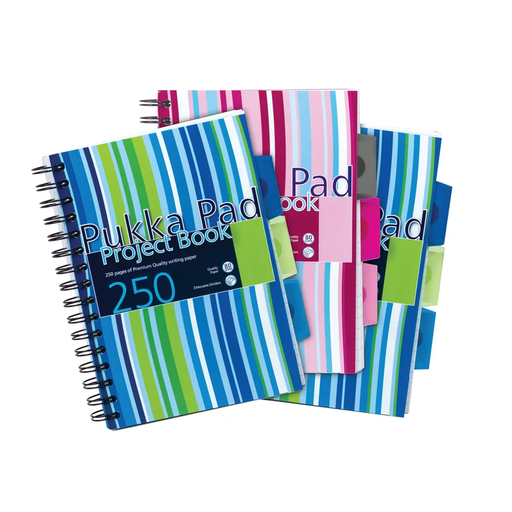
Why This Fits Their Persona: The compact A5 format works well for students, teachers and commuters who need several notebooks for different subjects, modules or personal tasks.
Three repositionable dividers with storage pockets provide structure without requiring separate folders.
Pack of three; 250 pages per book; 8mm lined, 80 GSM FSC certified paper.
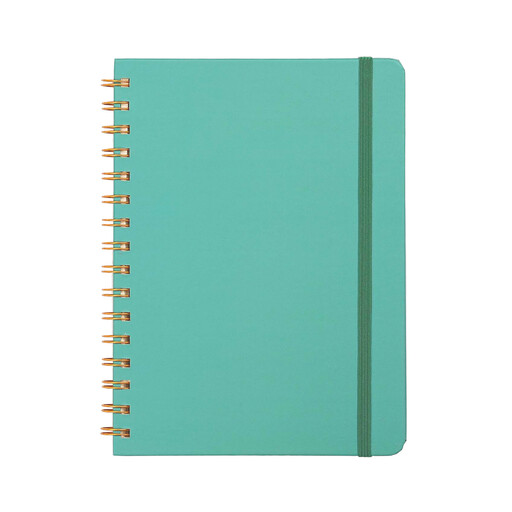
Why This Fits Their Persona: A hardcover A5 notebook suits journal writers, office users and anyone who prefers a more substantial cover for daily carrying.
The hardcover and elastic closure help protect the ruled pages during transport, while the twin-wire binding opens flat.
96 sheets of 100g cream offset paper; elastic band; textured laminated cover.
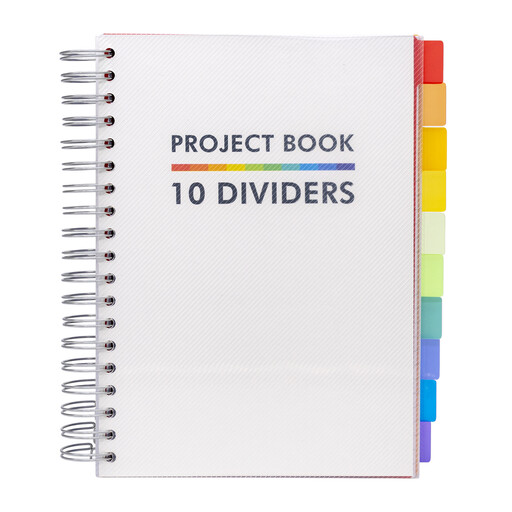
Why This Fits Their Persona: Its B5 footprint and ten-section layout are suited to students and professionals managing several subjects, clients or long-running projects.
The ten repositionable dividers make it easier to adapt sections instead of abandoning a fixed layout as priorities change.
400 pages; perforated sheets; wipe-clean translucent cover; 80 GSM FSC certified paper.
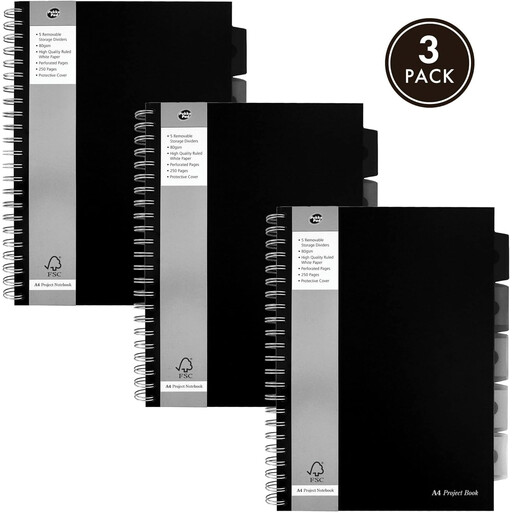
Why This Fits Their Persona: A4 suits office meetings, lesson planning, project management and home-office users who need full-size pages and filing flexibility.
The wipe-clean polypropylene cover addresses everyday scuffs and spills, while perforated pages support clean removal.
Five colour-coded dividers with pockets; 250 pages per book; 8mm feint ruling; personal details and world map pages.
An A4 ruled notepad with perforated pages may suit users who prefer individual sheets rather than sectioned notes. The A4 Pastel Jotta Notepads come as a pack of three, with 200 pages per pad, perforated sheets and a yearly planner.
For a filing-focused setup, the A4 Metallic Jotta Wirebound Notebook includes an added four-hole punched margin, allowing removed pages to remain true A4 size for filing. You can view the wirebound note pad range to compare additional formats and pack quantities.
We have compiled a complete, real-time list of products that fully satisfy these strict selection criteria and UK safety regulations.
Yes. A4 project books provide space for detailed notes, diagrams and meeting minutes. Dividers, pockets and perforated pages can also make them useful for separating subjects or filing completed work. Their larger size may be less convenient for daily public transport or smaller bags.
An A5 notebook is suitable for short meeting notes, to-do lists, journalling and compact study notes. If you regularly write across several pages, include diagrams or store handouts, B5 or A4 may be more practical.
Lifespan depends on frequency of use, storage and handling. A book used daily may show wear sooner than one kept at a desk. Covers, binding, page quantity and moisture protection all influence practical durability, so compare these features rather than relying on appearance alone.