What matters when choosing?
Choose the kind of room setup first, then measure for the picture size and check how everyone will hear the film. Published brightness figures use different units, so they are not a stand-alone comparison of how these models will look in your room.
Bright-room 4K home projector
Consider when: Your group watches in a living room with unavoidable ambient light and you want a large image.
Trade-off: A high stated output does not establish that the projector can sit at the required distance or that the image will remain clear at every size.
Cinema-oriented home projector
Consider when: You can darken the room and want to assess contrast-related features for night scenes as well as 4K detail.
Trade-off: Published picture specifications cannot guarantee the shadow detail you will see in your particular room.
Flexible all-in-one projector
Consider when: You set up in different rooms and value an integrated stand, sound or screen adaptation.
Trade-off: Check room light especially carefully before relying on a very large image from a convenience-led model.
| Concern |
What to check |
Who this matters to |
| Brightness and image size |
Check room light, the intended picture size and throw distance. Read each brightness figure with its stated unit. |
I cannot fully darken the living room, so I need a large image that the group can still watch comfortably. Around 36% of consumers put brightness and image size first. |
| Film detail and dark scenes |
Distinguish true 4K from 4K PRO-UHD specifications, and assess model-specific contrast and motion features in a darkened room. |
For night scenes and fast action, I care more about the picture in a light-controlled room than a portable setup. Film detail is the primary concern for around 29% of consumers. |
| Placement and setup |
Measure projector-to-screen distance and height; identify whether optical zoom, lens shift or a stand addresses the constraint. |
When the screening location changes, I need to set up a usable picture without rearranging the whole room. Around 21% of consumers chiefly prioritise placement and setup. |
| Sound and sources |
Check the connections needed for your film source and whether an audio-out or eARC connection suits your sound setup. |
If people sit across the room, I want dialogue to reach the back seats and the chosen source to connect straightforwardly. Sound and source connections come first for around 14% of consumers. |
Joybuy projectors for film nights
These projectors offer different ways to arrange a group film night, from built-in apps and portable features to connections for an external source. Check the throw distance, usable image size and sound plan for your room; the listed products are not a like-for-like substitute for every home-cinema model discussed above.
 No image available
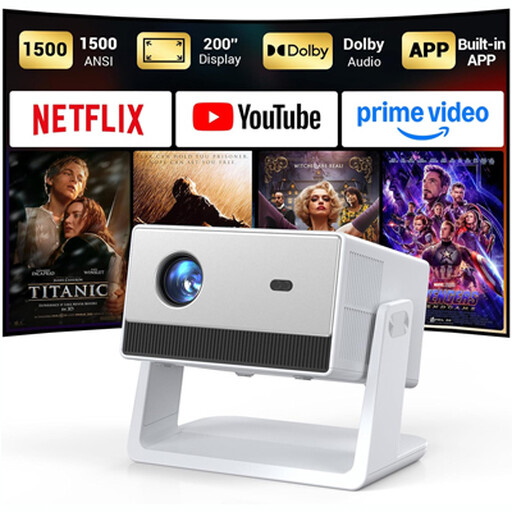
FunFlix Smart Projector, Native 1080P, Soccer Ball, Beer and Stand Bundle
Consider this if built-in apps and a stand suit an occasional group screening. The title specifies native 1080P and autofocus; confirm the throw distance for your intended picture size and check the sound and power arrangements before ordering.
View on Joybuy
 No image available
Wimius K1 Projector, Native 1080P, 1200 ANSI Lumens
Consider this when you plan to connect an external film source and need to assess a large projected image. Its title states native 1080P, 4K support and an image up to 300 inches; 4K support is not a native-4K specification. Confirm that your throw distance permits the picture size you want, and plan the group’s audio.
View on Joybuy
 No image available
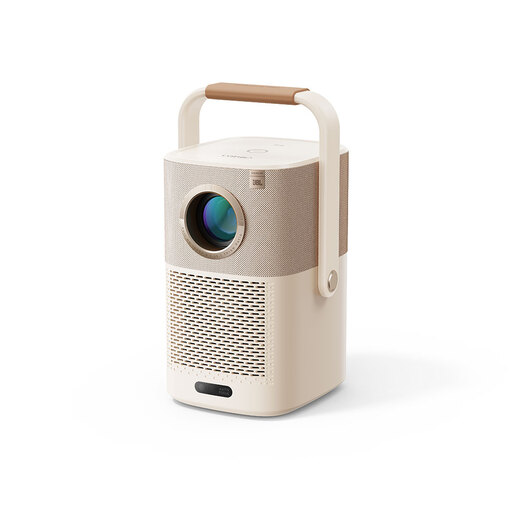
Yaber T2 Plus GTV Portable Projector, Native 1080P
This is a movable option to consider when a built-in battery is useful for occasional screenings. The title specifies native 1080P, JBL sound, WiFi 6 and Bluetooth. Check the intended picture size and room light, and confirm that the battery arrangement suits the length of your film.
View on Joybuy
 No image available
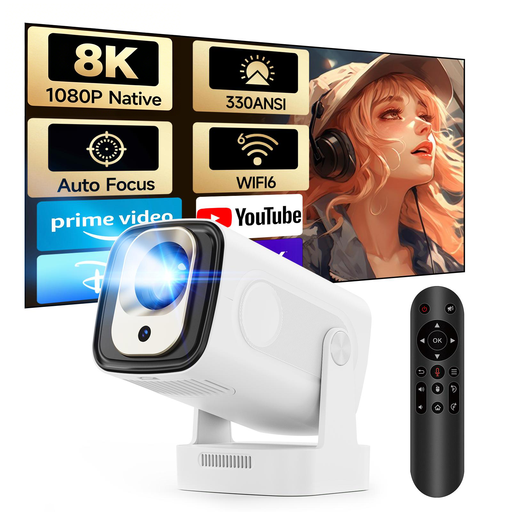
MAGCUBIC HY310 Android 14 Projector, Native 1080P
Consider this for a simple smart setup if you can check the usable picture size before gathering a large group. Its title states 330 ANSI lumens, native 1080P, autofocus and a built-in speaker; it does not establish native 4K. Assess room light and whether the sound will reach every seat.
View on Joybuy
Frequently asked questions
How bright should a projector be for a large-group film night?
There is no single brightness figure that fits every large-group film night: room light and picture size change what you need. BenQ specifies 3,300 lumens for the TK860i and ViewSonic specifies 4,000 ANSI lumens for the PX749-4K as bright-home-projector examples; XGIMI’s HORIZON S Pro is specified at 1,800 ISO lumens for a more flexible setup. Do not compare the differently labelled figures as though they came from the same measurement.
What should I measure before buying?
Measure the usable screen or wall area, projector-to-screen distance, possible projector height and viewer positions, then compare them with the exact model’s specifications. ViewSonic, for example, lists a 0.75 m to 9.76 m throw-distance range for the PX748-4K; do not apply that range to a different ViewSonic model.
Will built-in speakers be enough for everyone?
Built-in speakers may be convenient, but their specifications alone cannot establish whether dialogue will reach your furthest seats. BenQ lists eARC and audio out for the TK860i, while ViewSonic lists audio out for the PX749-4K; check the connection required if you plan to use external sound.
What electrical-safety details should I check when ordering?
Check the responsible seller, suitable power arrangements and the safety information supplied with the projector. GOV.UK guidance recognises current EU requirements, including CE marking, for relevant products placed on the Great Britain market and also describes the use of UKCA marking; the applicable requirements depend on the product. Do not assume that Great Britain’s marking arrangements apply identically in Northern Ireland.
What if my online projector is unsuitable or arrives faulty?
A change-of-mind cancellation and a remedy for a faulty projector are different matters. Check the terms and any return-postage responsibility for a change of mind; Citizens Advice says a faulty item may instead qualify for a refund, repair or replacement. Keep the listing and order details when raising a problem with the seller.


