Choose the projector position before choosing a resolution: short throw can keep the unit close to the wall in a shallow kitchen diner, while conventional throw needs more distance but may suit a measured shelf or mount position. For art documentaries, check the exact model’s brightness measurement, resolution, colour specification and image size at your available distance. Keep any projector away from cooking steam and splashes, with room for airflow.
Who is this setup for?
Daytime kitchen-diner viewers
If daylight or dining-room lights remain on, consider both the projector’s stated brightness and how much light you can keep off the projection surface. A larger picture is not necessarily the more useful one when the room is lit.
Viewers with limited floor space
If there is little distance between the proposed projector position and the wall, measure that space before choosing an image size. A short-throw model may avoid placing the projector in the middle of the dining area.
Viewers focused on art and archival detail
If paintings, captions and archival footage are central to what you watch, compare the exact model’s resolution and stated colour capability. Manufacturer colour figures describe specifications, not an independent test of how the picture will look in your room.
What matters when choosing?
Start with the room’s light and the measured lens-to-wall distance, then find a position that avoids cooking exposure and leaves a workable route for playback and sound.
| Concern |
What to check |
Who this matters to |
| Image visibility in changing light |
Check the stated brightness unit and whether blinds or local lighting can reduce light falling on the wall or screen. Do not treat ANSI lumens, LED lumens and white or colour light output as interchangeable figures. |
If I watch while daylight or dining lights are on, I need a picture I can still follow without relying on the largest image size. Around 36% of consumers put visibility in changing light first. |
| Room fit and image size |
Measure from the proposed lens position to the wall, then check the exact model’s throw range against the usable wall width and desired image size. |
I want a large picture, but the projector cannot occupy the dining table or obstruct movement through the room. Room fit is the primary concern for around 29% of consumers. |
| Kitchen-adjacent placement |
Choose a position away from steam and splashes, and follow the model manual for ventilation and cleaning of vents or filters. |
If I plan to leave the projector set up, I need a location where cooking residue and blocked airflow will not become routine problems. Around 21% of consumers prioritise placement and upkeep. |
| Playback and sound |
Confirm how your documentary source connects and whether the intended speaker arrangement works with that source. |
I want to start a documentary without repeatedly rearranging cables, and I need to hear the narration from my seat. Straightforward playback and sound come first for around 14% of consumers. |
Mistakes to avoid
-
Comparing every lumen figure as though it uses the same measure
BenQ specifies 3,300 ANSI lumens for the TK860i, Epson specifies 3,000 lumens of white and colour light output for the EH-TW7100, and ViewSonic specifies 2,900 LED lumens for the X2-4K. Those labels do not establish a like-for-like brightness ranking.
Check the measurement basis before comparing figures, and plan how you will control light falling on the projection surface.
-
Buying before measuring the throw distance
A projector that cannot produce the intended image size from your available lens position may end up on a dining table or in a walkway. ViewSonic’s stated 100-inch image from 1.5 m applies to the X2-4K, not to projectors generally.
Measure from the proposed lens position and check the exact model’s throw guidance for the wall width you have.
-
Putting the projector beside cooking steam or inside a cabinet
BenQ advises against poorly ventilated or excessively humid locations. Epson warns that dust collecting on a projector filter can raise its internal temperature and shorten optical-engine service life.
Use a stable position away from steam, splashes and grease, keep airflow clear, and follow the exact model’s maintenance instructions.
-
Assuming built-in speakers or smart features settle the setup
Connections and speakers vary by model; their presence alone does not establish that a particular documentary service, playback device or external speaker arrangement will work as intended.
Check your source device, required connections and audio arrangement before choosing where the projector will sit.
Projector brands to consider
These models illustrate different room-planning considerations; their specifications should not be assumed to apply to every projector from the same brand.
BenQ
The TK860i is a conventional-throw example for viewers assessing stated brightness, colour coverage and optical placement controls together.
- BenQ specifies 3,300 ANSI lumens, 4K UHD, 98% Rec.709 coverage, a 1.13–1.47 throw ratio and vertical lens shift for the TK860i.
- Its stated colour coverage is a manufacturer specification, not a test of colour accuracy in a lit kitchen diner. Its throw range also needs checking against the available room depth.
Epson
The EH-TW7100 illustrates a conventional-throw option with lens shift and zoom for a measured shelf or mount position.
- Epson specifies 3,000 lumens of white and colour light output, 4K PRO-UHD, lens shift, zoom, two HDMI ports and 10W stereo speakers for this model.
- A suitable position and throw distance still need to be established. Epson’s 4K PRO-UHD designation should not be read as a universal native-4K specification.
ViewSonic
The X2-4K illustrates short throw where a conventional projector would need to sit farther into the diner.
- ViewSonic specifies a 0.69–0.83 throw ratio and a 100-inch image from 1.5 m, alongside 4K UHD and placement-correction features.
- ViewSonic states brightness in LED lumens for this model, so its figure should not be numerically ranked against other brightness measures without a comparable basis.
Joybuy projector choices
These projectors offer different stated resolutions and setup features for documentary viewing. Check each model’s image size at your available distance, how it will perform with your room lighting, and where it can be ventilated away from cooking.
 No image available
Magcubic HY350Max smart projector, native 1080P
Consider this model if automatic image adjustment would make a temporary documentary setup easier; confirm its image size from your proposed position before buying.
The title states 900 ANSI lumens, native 1080P, auto keystone and 180° rotation. Its 8K support is not a claim of native 8K resolution.
Place it away from cooking steam and splashes, with unobstructed airflow.
View on Joybuy
 No image available
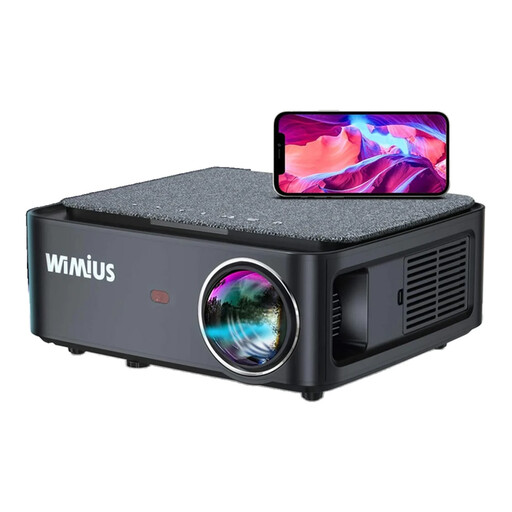
Wimius K1 projector, native 1080P
Consider this model if you need horizontal and vertical image correction, but establish the image size from your available projector position first.
The title states 1,200 ANSI lumens, native 1080P, 4K support and dual speakers. Check whether the intended documentary source connects as you need it to.
Keep the projector away from steam and splashes and allow room for airflow.
View on Joybuy
 No image available
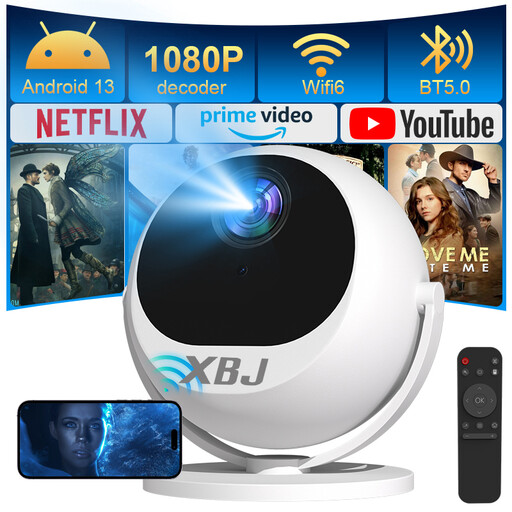
XBJ 360° portable projector, European Version
Consider this model if changing the projection direction matters more than keeping it in one fixed position; rotation does not establish which image size will fit your room.
The title states Full HD 1080P, 360° rotation, auto keystone, Wi-Fi, Bluetooth and HDMI. Check the intended wall distance and lighting before deciding where to use it.
Keep it clear of cooking steam, splashes and obstructed ventilation.
View on Joybuy
 No image available
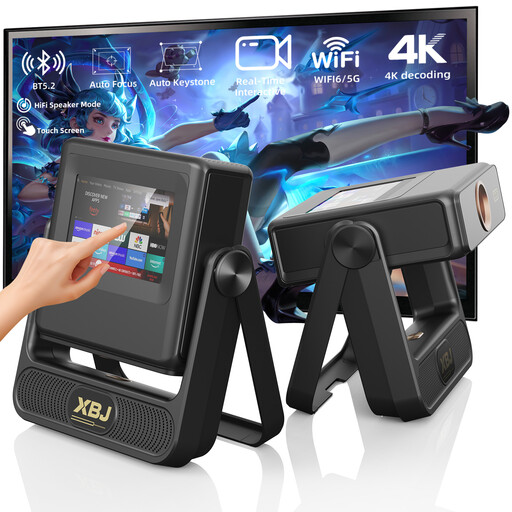
XBJ A5Pro Gray smart projector, native 1080P
Consider this model if auto focus and auto keystone suit your planned setup, while checking that your documentary source works with the exact device.
The title states native 1080P, 4K support and Wi-Fi 6. Confirm its brightness specification before relying on it for viewing with room lights on, and check image size at your available distance.
Choose a position away from cooking steam and splashes that leaves airflow clear.
View on Joybuy
Frequently asked questions
Is short throw worth considering in a small kitchen diner?
Yes, if the available lens-to-wall distance is too short for the image size you want from a conventional-throw model. ViewSonic specifies a 0.69–0.83 throw ratio and a 100-inch image from 1.5 m for the X2-4K; measure your own lens position and wall width rather than applying that result to another projector.
Can I leave a projector set up beside the kitchen?
A fixed position needs to be away from cooking steam, splashes and restricted airflow, rather than being chosen simply because a worktop or cabinet is convenient. BenQ advises against poorly ventilated or excessively humid locations, and Epson warns that dust on a filter can raise internal temperature; follow the exact projector’s placement and cleaning instructions.
What matters for art documentaries besides 4K?
Check how the exact projector will fit the room’s light and projection distance, as well as its stated resolution and colour capability. For example, BenQ specifies 98% Rec.709 coverage for the TK860i, but a manufacturer colour-coverage figure alone does not establish how paintings or archival footage will look on your wall in daylight.
Must a projector supplied in Great Britain carry UKCA marking?
Not necessarily: GOV.UK guidance states that Great Britain continues to recognise CE marking alongside or in place of UKCA marking where the applicable product rules allow it. Electrical equipment supplied in Great Britain is subject to the Electrical Equipment (Safety) Regulations 2016; check the seller’s information for the particular product and market. Northern Ireland follows different processes, so the Great Britain marking position should not be applied there without a market-specific check.


