Measure the available projector-to-screen distance before choosing a resolution: a short-throw model is worth considering when the projector must sit close to the wall, while a conventional model with optical zoom and lens shift remains an option if the room has enough depth. For ballet recordings, also check the recording and player format, colour and dark-scene settings, and the sound connection you need; brightness figures with different measurement labels are not directly comparable.
Who this choice affects
Viewers with limited room depth
If the projector cannot sit far behind the seating, image size at the available lens-to-screen distance is the first question. BenQ and ViewSonic publish short-throw specifications for specific models, but the required position still depends on the model and your intended image size.
Viewers focused on performance detail
If costumes, dancers’ outlines and changes in stage lighting matter most, check the projector’s stated display resolution, colour and picture settings alongside the quality and format of your recordings. A larger projected image alone does not settle those choices.
Viewers who want simpler playback and sound
If the projector will be put away between performances, alignment and access to recordings may matter as much as a fixed installation. Check the apps or playback inputs you will use and the connection required by your soundbar or receiver.
What to check before buying
Set your target image size and measure the available distance first. Once a model can fit the room, assess its picture and playback features against the recordings and equipment you use.
| Concern | What to check | Who this matters to |
|---|
| Placement and image size |
Measure lens-to-screen distance and use the exact model’s distance chart for your target image size. Check whether its required position fits your furniture. |
If I have little space between the seating and wall, I need an image that fits without putting the projector in the way; around 36% of consumers put room fit first. |
| Stage detail, colour and motion |
Check stated display resolution, picture settings and the format your recording and player can deliver. Try familiar footage if picture preferences will decide the purchase. |
I want costumes and movement to remain clear through changing stage lights, rather than choosing by image size alone. Around 29% of consumers make picture fidelity their primary concern. |
| Room light and dark scenes |
Consider how far you can dim lamps and window light. Compare brightness claims only on a compatible measurement basis, and assess dark footage in your intended room conditions. |
When I cannot always darken the living room, I need to judge whether dimly lit performances will still be comfortable to watch; for around 21% of consumers, room-light conditions come first. |
| Playback, alignment and sound |
Confirm access to your recording source, the alignment features you need and the projector’s exact audio connections before planning a soundbar or receiver setup. |
I may move the projector between viewings and want to start a recording without repeatedly arranging the picture and sound. Simpler setup is the main priority for around 14% of consumers. |
Buying pitfalls
-
Treating all brightness figures as equivalent
Manufacturer pages use different labels, including ANSI lumens, ISO lumens and LED lumens. A larger number under a different label does not establish which projector will look brighter in your room.
Check the measurement basis and consider the light you can control with curtains and lamps. If viewing with some daylight matters, assess familiar footage under similar conditions before committing to a model.
-
Choosing an image size before checking throw distance
A projector can suit a small room in principle yet fail to form your intended image from the position you have available. A short-throw label does not replace model-specific placement information.
Measure from the intended lens position to the projection surface, then check the exact model’s distance chart for your target image size and usable wall area.
-
Relying on automatic alignment to solve placement
Autofocus and keystone correction can simplify setup, but they do not establish whether the projector can form the right-sized image from a suitable physical position.
Confirm distance, image position and projection surface first. For a permanent wall or ceiling installation, follow the projector and mount instructions.
-
Using an older recommendation without checking the model
Availability and support can change: BenQ identifies the TH690ST as end of life, while XGIMI listed the HORIZON S Max as unavailable on its UK product page when the model was reviewed for this topic.
Check the exact model number, current availability and warranty arrangements before treating an older feature comparison as a purchase option.
Relevant brands to consider
These examples illustrate different installation and setup features on particular models, not a judgement about every projector each brand makes.
BenQ
BenQ describes the TK705STi as a short-throw 4K projector, making its placement specifications relevant where room depth is limited.
- BenQ specifies a 0.8 short-throw ratio for the TK705STi.
- Check its distance chart for your chosen image size; the brand’s colour and motion features do not by themselves establish how you will prefer ballet footage to look.
Epson
Epson’s EH-TW6250 illustrates a conventional home-cinema setup for a room with sufficient projector-to-screen depth.
- Epson specifies 1.6x zoom and vertical lens shift, which provide placement adjustments within the model’s supported range.
- It is not presented as a short-throw model; check the required distance for your intended image size.
ViewSonic
ViewSonic’s X2-4KE Pro combines a stated short-throw ratio with built-in streaming and an HDMI eARC audio connection.
- ViewSonic states that the X2-4KE Pro can produce a 100-inch image from 1.5 m, a model-specific reference for measuring a room.
- Confirm the position for your own target image size and check current availability before planning around this model.
XGIMI
XGIMI lists a flexible stand, autofocus and automatic alignment features for the HORIZON S Max, relevant to a projector moved between positions.
- The listed stand and alignment features provide setup options for temporary placement.
- The UK product page listed the HORIZON S Max as unavailable when reviewed; check availability and the required throw distance before considering it for purchase.
Joybuy projector choices
These models focus on portable or built-in setup features for living-room viewing. Treat their placement claims as a starting point: the image size available at your measured distance is still the deciding fit check.
 No image available
Magcubic HY350Max Smart Projector
Consider this model if automatic alignment is important in a room where the projector may be moved; check the image size it produces from your available position.
The listing names native 1080P, 900 ANSI, Android 14, 180° rotation and auto keystone. Its 8K wording describes supported material, not native display resolution.
View on Joybuy
 No image available
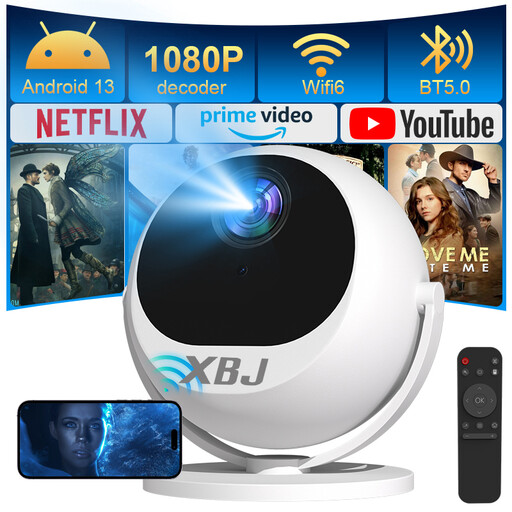
XBJ 360° Portable Projector, European Version
The rotating design may suit a temporary viewing position, provided the projector can form your intended image at the distance available.
The title lists Full HD 1080P, auto keystone, HDMI and a 120-inch display claim. Check the model’s distance data before assuming that display size will fit your room.
View on Joybuy
 No image available
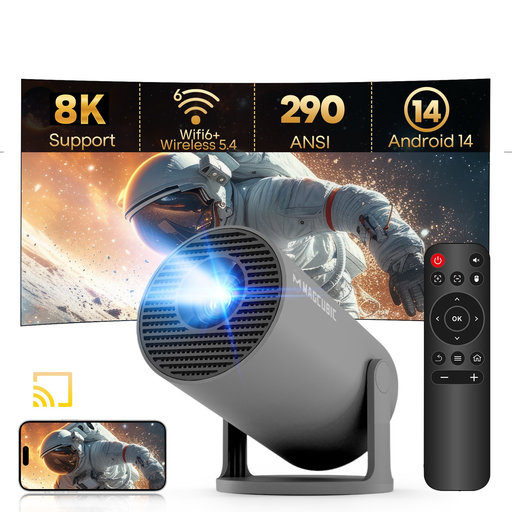
Magcubic HY300 Pro Mini Projector, Grey — Lite Entertainment
The rotating stand and auto keystone may help with a movable setup, but check the image size at your intended distance before choosing it for a small room.
The title specifies native 720p and 1080p support. For viewers focused on fine costume detail, that distinction matters: supported input is not the projector’s native resolution.
View on Joybuy
 No image available
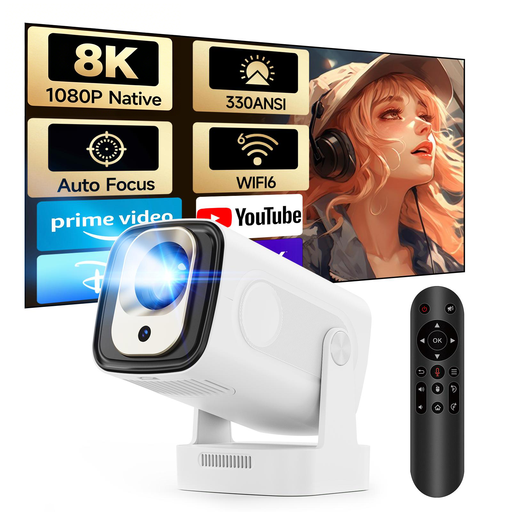
MAGCUBIC HY310 Autofocus Android 14 Projector
Autofocus may make repeated setup easier. Check the image size available from your planned position before relying on its close-placement guidance.
The title also lists 330 ANSI and a built-in speaker. Its combined 4K and native 1080P wording is ambiguous, so confirm the actual native display resolution if ballet detail is a priority.
View on Joybuy
Frequently asked questions
How can I tell whether a short-throw projector will fit?
Measure from the intended lens position to the wall or screen, choose your target image size, and check the exact model’s throw-distance chart. For reference, BenQ specifies a 0.8 short-throw ratio for the TK705STi, while ViewSonic states that the X2-4KE Pro can produce a 100-inch image from 1.5 m; neither figure substitutes for checking the model you intend to buy.
Do ballet recordings require a 4K projector?
No: choose a 4K-capable projector if the recordings and playback device provide suitable material and fine detail is a priority for you. Also check whether the projector fits the room and how its picture looks with your source material; a 4K label alone does not answer those questions.
Can I use a soundbar with a projector?
Yes, if the projector and soundbar have a compatible connection for your setup. ViewSonic specifies HDMI eARC for the X2-4KE Pro; check the exact connections on any other projector and on your soundbar before purchase.
What should I check before ceiling-mounting a projector?
Use a mount suitable for the exact projector and follow its mounting and installation instructions. Epson warns that improper ceiling or wall installation can cause a projector to fall, so do not treat a suitable throw distance as the only requirement for a permanent position.


