Classic-film detail seekers
If you mainly watch restored films or well-mastered discs in a dark room, consider a fixed Full HD or 4K home-cinema projector. Source quality and image size matter when deciding whether 4K is worthwhile.


Choose for the room before choosing resolution: Epson's UK guidance places 1,500–2,500-lumen projectors in dark home theatres and 2,500–3,500-lumen models in living rooms with some ambient light. If your comedy collection includes older 4:3 programmes, check that the projector can show their original proportions; consider 4K chiefly when you also watch high-quality, high-resolution films on a large image.
If you mainly watch restored films or well-mastered discs in a dark room, consider a fixed Full HD or 4K home-cinema projector. Source quality and image size matter when deciding whether 4K is worthwhile.
If lamps or daylight are part of the viewing environment, assess brightness alongside placement and the projection surface. Epson's UK guidance distinguishes this setting from a dark, dedicated home theatre.
If you bring out a projector for comedy nights and store it afterwards, focus on manageable placement and setup. Automatic focus or image adjustment may help, but you still need a suitable viewing surface and room lighting.
Start with room light and the distance available for projection, then check how your films and older programmes will appear on the chosen screen. Treat portable setup features as a separate convenience decision, not a substitute for room fit.
| Concern | What to check | Who this matters to |
|---|---|---|
| Picture fidelity | Check native resolution and picture settings against the quality of your films; consider the intended image size. | If restored films are my main attraction, I want their detail and colour to hold up on a large image. Around 31% of consumers put picture fidelity first. |
| Room light and placement | Measure projection distance and screen area. Epson's UK guidance places 2,500–3,500 lumens in its range for living rooms with some ambient light. | A shared room with lamps or limited space makes a watchable image and workable position my priority; around 31% of consumers put room practicality first. |
| Original 4:3 framing | Check the exact model's aspect-ratio controls and whether your source device can send its original image format. | When I watch older programmes, I would rather accept side bars than stretch the performers' faces. For around 23% of consumers, preserving the original frame is the primary need. |
| Simple setup | Confirm the exact model's focus and image-adjustment features, audio connections and access to your viewing sources. | If the projector comes out only for occasional comedy nights, I want to spend less time positioning it and connecting devices. Around 15% of consumers put ease of setup first. |
An advertised image size does not establish whether the projector can produce it from your available position. Throw distance and any optical zoom matter to the actual fit.
Measure the projector-to-screen distance and the usable screen area, then consult the exact model's placement guidance before ordering.
A stand, mount or different screen may be needed if the planned position does not work.
According to BenQ's screen guidance, an ordinary wall can compromise contrast, colour and perceived detail, even with a picture-focused projector.
Consider a suitable screen for regular film viewing, or assess the wall's flatness, texture and colour before committing to that surface.
Wall preparation or a later screen upgrade adds work to the setup.
Stretching 4:3 material changes the proportions of people and objects in the frame.
Check for a 4:3 or original-aspect-ratio setting on the exact projector and keep the source's framing, including side bars where needed.
In the UK, GOV.UK's TV Licence guidance concerns what you watch, not whether you display it on a television or projector. GOV.UK also distinguishes a TV Licence from permission to show films publicly.
Check the TV Licence rules if you watch live TV or use BBC iPlayer. Before a public screening, arrange the applicable permission for the film or programme.
These ranges illustrate different projector setups; compare the exact model and your room rather than treating a brand name as a picture-quality guarantee.
Its UK range includes portable, home-cinema and laser projectors relevant to different room-light and placement needs.
Its home-cinema range is relevant when film presentation and a more deliberate screen setup are priorities.
Its home and portable projectors are relevant if you want image adjustment and integrated sound without a fully fixed installation.
The Freestyle range is aimed at portable, occasional viewing rather than a permanent home-cinema position.
These projectors suit consideration for flexible comedy nights, particularly where the equipment is moved or put away between uses. Check each model's room fit and 4:3 controls before choosing it for your own collection.
 No image available
Consider this model if you want a movable projector with automatic image-shape adjustment for occasional viewing.
The title lists 900 ANSI lumens, 180° rotation and 8K input support; 8K support does not mean the native image is 8K. Check the brightness rating, throw distance, 4:3 controls and access to your viewing sources for your intended setup.
 No image available
This is an option to assess if you plan to connect an external player for film nights.
The title lists 4K input support, vertical and horizontal keystone correction, and dual speakers. Confirm the stated 1,200-ANSI-lumen rating, your available projection distance and whether older sources can be displayed in 4:3.
 No image available
Consider the rotating design if you want to change the viewing position between comedy nights.
The title lists automatic keystone correction, 500 lumens and a claimed display size of up to 120 inches. Confirm the brightness rating and placement distance for the image you want, along with 4:3 controls and access to your viewing sources.
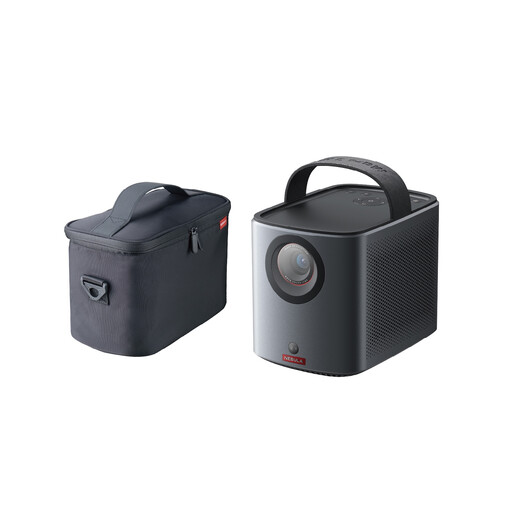 No image available
The carry-case bundle is worth considering if you move the projector between rooms or store it after viewing.
Before choosing it for a comedy night, check its brightness and throw distance in your room, whether it preserves 4:3 framing, and whether its available power arrangement suits the length of your viewing.
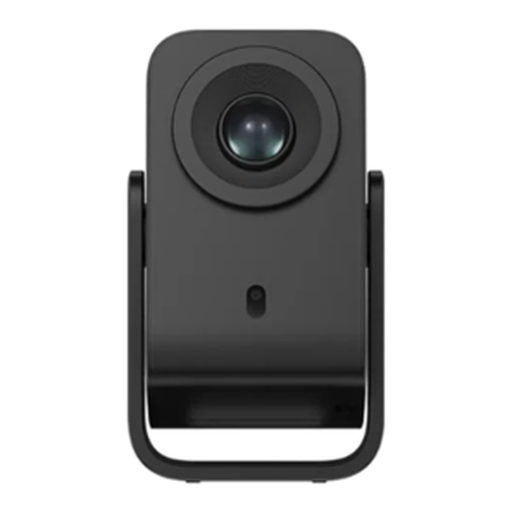 No image available
Consider this portable model if you prefer a compact setup for occasional shows and films.
The title states 4K input support, while its Full HD specification describes the projected resolution. Check room-light suitability, projection distance, 4:3 display settings and access to your streaming services.
A projector does not change the UK TV Licence rules: GOV.UK says you need a licence to watch or record programmes as they are broadcast, or to use BBC iPlayer. Watching a DVD or other on-demand content alone does not create that requirement, provided you are not watching live TV or using BBC iPlayer.
Not without checking screening permissions. GOV.UK says a TV Licence does not automatically permit a public film showing; arrange permission from the relevant rights holder or licensing body for the planned event.
A 4:3 screen is worth considering if that format dominates your viewing; for a mix of older programmes and widescreen films, a 16:9 screen accommodates both if you accept side bars around correctly displayed 4:3 material. Check that the exact projector can preserve the original aspect ratio.
A wall may suit casual viewing, but do not assume it will deliver the same picture as a suitable screen. BenQ's screen guidance cautions that an ordinary wall can affect contrast, colour and perceived detail; assess its surface before making it part of a picture-focused setup.
Match brightness to the room rather than choosing the largest number: Epson's UK guide associates 500–1,500 lumens with portable use in controlled light, 1,500–2,500 lumens with dark home theatres and 2,500–3,500 lumens with living rooms that have some ambient light. Check the exact model's rating method and plan for the lighting you will actually use.