Daytime lounge viewers
If you watch while daylight or room lights are on, a readable image matters more than size alone. Start with light falling on the projection surface and the screen size you can use comfortably.


For cookery shows in a bright lounge, choose a projector setup only after checking how much daylight reaches the image, the intended screen size and where the lens can sit. A conventional-throw 4K model suits a clear beam path and fine recipe text; ultra-short throw suits a position close to the wall, while short throw is worth considering when distance is limited and 4K detail matters less. None of these routes removes the need to control light falling on the screen.
If you watch while daylight or room lights are on, a readable image matters more than size alone. Start with light falling on the projection surface and the screen size you can use comfortably.
If you pause to read ingredients or follow close-up preparation steps, consider resolution alongside the brightness and contrast available at your chosen image size.
If seating, furniture or walking routes leave no clear path for a long beam, compare the exact placement requirements of conventional-, short- and ultra-short-throw models before choosing one.
For cookery shows in a bright lounge, settle the usable screen size and daylight conditions first, then check where the projector can go and how clearly you need to see small text.
Consider it: when a clear lens-to-screen path allows a 4K home-cinema projector to fit the room.
Allow for: space across the lounge and the possibility of someone crossing the beam.
Consider it: when placing the projector close to the wall avoids a beam through seating or walkways.
Allow for: careful positioning and a suitable, sufficiently flat projection surface.
Consider it: when you need a shorter projection distance but can still position the unit away from the wall.
Allow for: checking the exact model’s image size at your available distance; a 1080p option offers less pixel detail than 4K.
| Concern | What to check | Who this matters to |
|---|---|---|
| Visibility in daylight | Check whether daylight hits the image and compare stated brightness at a realistic screen size. ProjectorCentral notes that room light, screen material and image area all affect brightness needs. | I want to follow a programme while the lounge is still light, without the captions disappearing against a washed-out picture. Around 50% of consumers would put daytime visibility first. |
| Placement | Measure the available lens-to-screen distance and check the exact model’s throw ratio or image-size guidance against the furniture layout. | A projector crossing the seating area would be awkward whenever someone walks through the room. For around 30% of consumers, finding a workable position is the primary need. |
| Recipe detail | Compare resolution at the intended image size, and check how your chosen programme source connects or runs on the projector. | I pause to read ingredients and want close-up steps to remain clear, rather than choosing resolution without regard to the room’s lighting. Fine detail comes first for around 20% of consumers. |
ProjectorCentral explains that ambient light, image area and screen material affect the brightness needed. A stated projector rating does not promise the same result on a large image in your lounge.
Set a realistic image size, check where daylight lands and compare like-for-like brightness ratings before deciding whether more output is the answer.
Extra pixel detail will not help if the projector cannot form the intended image from a practical position or viewers regularly cast shadows across it.
Check the exact model’s throw ratio or distance-to-image-size guidance against your wall, furniture and available projector position.
Light and reflections on the projection surface affect the image. ProjectorCentral notes that controlling room light helps preserve visible contrast.
Inspect the wall for texture and direct light, and consider a screen appropriate to the projector type if the wall is unsuitable.
A screen, light control or a changed projector position can add work after the initial setup.
Electrical-safety requirements for equipment placed on the Great Britain market do not, by themselves, establish that a particular listing meets them. Northern Ireland has separate provisions.
Before ordering, check the seller’s product identity, supply information and instructions for your delivery location. If replacing an old projector, arrange an appropriate electrical-equipment collection or take-back route.
These named models illustrate different placement and resolution choices; their specifications should not be assumed to apply to every projector from the same brand.
BenQ UK lists the TK860i as a conventional-throw 4K UHD home-cinema projector rated at 3,300 ANSI lumens, with a 1.13–1.47 throw ratio.
Epson United Kingdom describes the EH-LS650B as an ultra-short-throw 4K PRO-UHD laser model rated at 3,600 lumens and capable of an image up to 120 inches when placed close to the wall.
ViewSonic United Kingdom lists the LSD400HD-ST as a 1080p short-throw laser model rated at 4,000 ANSI lumens, with a stated 100-inch image from 1.1 m.
These Joybuy choices are projectors to assess for recipe detail and lounge placement. Check the image size each can produce in your room and manage daylight on the projection surface before treating any stated brightness as sufficient.
 No image available
Consider it if you want native 1080p for recipe text and plan to check whether its image size fits your available position.
The product name states 900 ANSI lumens, Android 14 and HDMI and USB compatibility. Check that your cookery-show apps are available before relying on the built-in system; the brightness rating alone cannot establish daytime contrast.
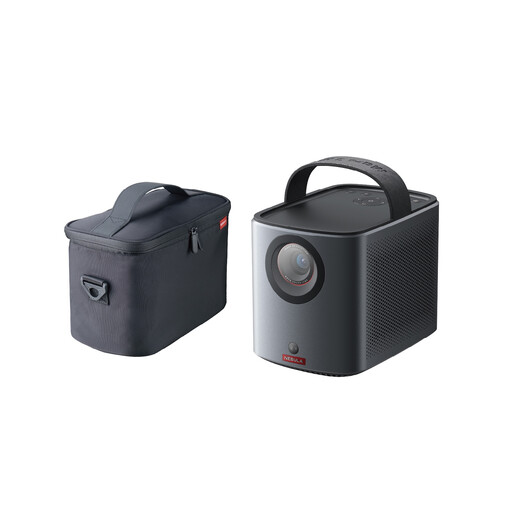 No image available
Consider this bundle if a carry case matters to your setup, while checking the projector’s image size and brightness against the light in your lounge.
Confirm that its throw distance fits your room and that its power arrangement suits how long you watch.
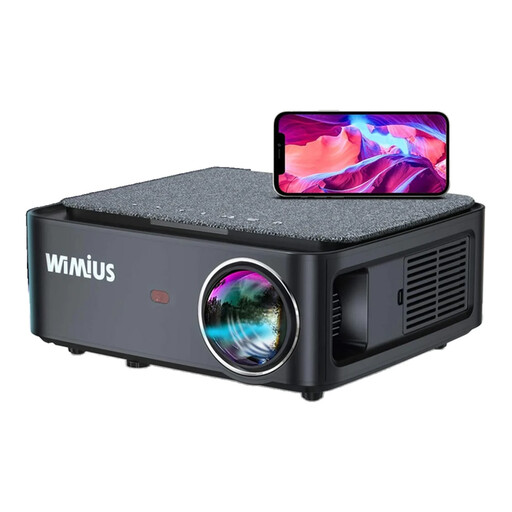 No image available
Consider it if native Full HD detail and an external source for cookery programmes fit the way you watch.
The product name states 1080p, 1,200 ANSI lumens and compatibility with FireStick. Plan for an external streaming source, and check the intended image size at your available throw distance; the brightness rating is not a guarantee of contrast in daylight.
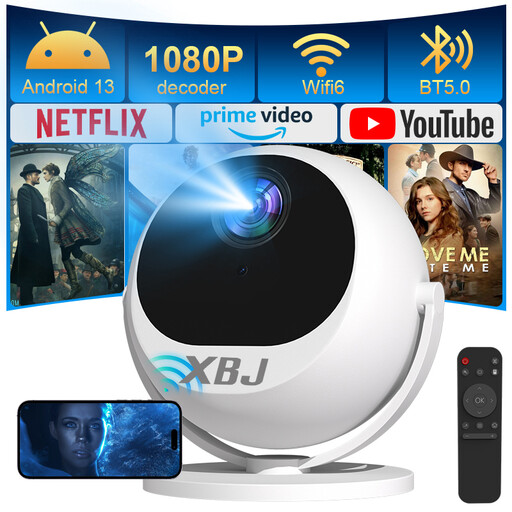 No image available
Consider its rotating design if aiming the image from a table or towards a wall or ceiling matters in your lounge.
The product name states Full HD 1080p, 500 lumens and a 120-inch display claim. Check the image size available at your chosen position and how much daylight reaches the surface before deciding whether that size is practical.
Choose brightness in relation to your screen size and the light reaching it, rather than using one lumen threshold for every room. ProjectorCentral identifies ambient light, screen material and image area as factors; measure your planned setup and compare stated brightness on a like-for-like basis.
Not on its own: light falling on the projection surface still limits visible contrast. Reduce direct daylight where possible and avoid making the image larger than you need before relying on a higher brightness rating.
Choose by the position that fits your lounge and the image size you need. Epson United Kingdom says its ultra-short-throw EH-LS650B can project up to 120 inches close to the wall; ViewSonic United Kingdom states that its short-throw LSD400HD-ST produces 100 inches from 1.1 m. Check the exact model’s dimensions rather than treating either label as a fixed distance.
Check that the seller can identify the product supplied and provide the relevant safety and conformity information. The Office for Product Safety and Standards states that electrical equipment placed on the Great Britain market must meet applicable safety requirements; Northern Ireland has separate provisions, and a UK site listing alone does not establish a particular product’s compliance.
Use an appropriate electrical-equipment collection or retailer take-back route rather than putting it in ordinary household waste. GOV.UK describes the WEEE rules as supporting the recovery, reuse and recycling of electrical equipment and its components.