Choose for the light level and the distance available between the projector and the wall before considering maximum image size. A bright, conventional home projector is worth investigating if races will be watched with the lights on and there is room to position it; short throw addresses restricted distance, while a portable model makes more sense for occasional viewing in a room you can darken. Check the exact model’s projection distance, source connection and sound arrangement against your diner.
Who is this setup for?
Daytime race viewers
If you follow stages or finishes while daylight or kitchen lighting is present, start with image visibility. Look at how the manufacturer describes the exact projector’s intended lighting conditions, then check whether it will fit your room and connect to your race source.
Viewers with limited placement space
A dining table, island or walking route may leave little clear distance to the image wall. Short throw is worth considering, but the image size you can obtain still depends on the particular model and its position.
Occasional race viewers
If the projector needs to come out for selected races and be stored afterwards, portability and built-in viewing features may matter more to you. Allow for the possibility of darkening the diner rather than assuming a compact model will suit daytime lighting.
What matters when choosing?
These three routes address different constraints: a lit room, restricted projection distance or a setup that is easy to put away. Decide which constraint is hardest to change before comparing individual models.
Bright standard-throw projector
Consider when: Daylight or kitchen lights will remain on and you have the distance specified for the image size you want.
Trade-off: A conventional placement may conflict with dining furniture or a walking route.
Short-throw projector
Consider when: Furniture prevents a longer projector-to-wall run. Optoma says its GT2000HDR can produce a 100-inch image from just over one metre away.
Trade-off: You still need a workable projection path and the placement measurements for the exact model.
Compact portable projector
Consider when: You watch occasionally, need to move or store the unit, and can substantially darken the diner.
Trade-off: Convenient placement and smart features do not establish that an image will remain clear in daylight.
| Concern |
Buying checks |
Who this matters to |
| Visibility with room lighting |
Check the exact model’s stated brightness unit and intended lighting conditions. Consider how much light reaches your wall or screen. |
If I watch a finish while daylight enters the diner, I need to be able to follow the picture without rearranging the whole room; around 42% of consumers put image visibility first. |
| Throw distance and placement |
Measure the usable lens-to-wall distance and desired image width, then compare both with the model’s throw information. |
With a table or island in the way, I need a position that neither interrupts viewing nor blocks movement. For roughly 33% of consumers, fitting the projector into the layout is the primary concern. |
| Race source, sound and storage |
Confirm the broadcaster’s supported device or app, the projector’s connection options and your audio plan. |
I want to get the race playing and put the equipment away afterwards, without discovering that my chosen source will not work. Ease of setup and access come first for about 25% of consumers. |
Buying pitfalls
-
Choosing a portable projector for a lit room on resolution alone
Full HD describes image resolution, not how visible a projected race will be under kitchen lighting. XGIMI lists its portable MoGo 4 at 450 ISO lumens, while Epson positions the EH-TW840, with 4,000 lumens of white and colour light output, for rooms with ambient light; those specifications are not a like-for-like viewing test.
Start with the lighting you expect during races, then check the particular model’s brightness unit and manufacturer guidance for that environment.
-
Choosing an image size before measuring the room
The projector may need to sit where diners walk or farther from the wall than the room permits. Optoma states that the short-throw GT2000HDR produces a 100-inch image from just over one metre away; BenQ lists a 1.5–1.65 throw ratio for the TH585P. Neither figure describes every projector.
Measure your intended projector position and image width, and use the throw information for the model you plan to buy.
-
Treating 4K input support as native 4K projection
Optoma describes the GT2000HDR as a Full HD projector that accepts 4K UHD and HDR input. An accepted input format does not change its stated native resolution.
Read the native-resolution specification separately from the list of supported input signals.
-
Assuming a projector changes live-TV licensing rules
TV Licensing says that watching live TV on channels or streaming services, or using BBC iPlayer, requires TV Licence coverage regardless of the device displaying the picture.
Check your household’s TV Licence coverage before using a projector for live cycling coverage or BBC iPlayer.
Brands to consider
These examples illustrate model-specific approaches to brightness, placement and portability; a brand name alone cannot establish the fit for your diner.
Epson
The EH-TW840 is an Epson home-projector example for buyers investigating viewing with ambient light.
- Epson lists Full HD resolution, 4,000 lumens of white and colour light output and two HDMI ports for this model.
- Its specified built-in speaker is 2W mono. Consider whether that meets your needs when people are talking or cooking nearby.
Optoma
The GT2000HDR illustrates Optoma’s short-throw route for a diner with limited projector-to-wall distance.
- Optoma states that this Full HD model can produce a 100-inch image from just over one metre away and lists 3,500 lumens for lights-on viewing.
- Its 4K UHD and HDR input compatibility should not be mistaken for a native 4K projection specification.
BenQ
BenQ’s UK sports-projector material gives buyers models to investigate alongside their room measurements.
- BenQ describes sports-oriented features across selected models, including sports modes and motion processing.
- Placement requirements vary by model: BenQ lists a 150-inch image at 2.7 m for the TK705STi and a 120-inch image at 4–4.4 m for the TH575i.
XGIMI
The MoGo 4 illustrates a portable option for occasional viewing when storage and repositioning matter.
- XGIMI lists the MoGo 4 as a 1080p model with Google TV, a 360-degree adjustable stand and 450 ISO lumens.
- Those portable features do not establish that it will suit a brightly lit kitchen diner; check the room conditions and your race source.
Joybuy projector options for race viewing
These projectors offer different starting points for a kitchen-diner race setup, from models with stated brightness and placement features to portable, pack-away options. Match each one to your room measurements and viewing source rather than treating its place in this list as a brightness or performance comparison.
 No image available
Magcubic HY350Max Smart Projector, Native 1080p
Worth examining if you want an adjustable projector position and a stated brightness figure for your race setup. The title lists 900 ANSI lumens, HDMI and 180° rotation; check the image size achievable at your available distance and whether your race source will connect.
View on Joybuy
 No image available
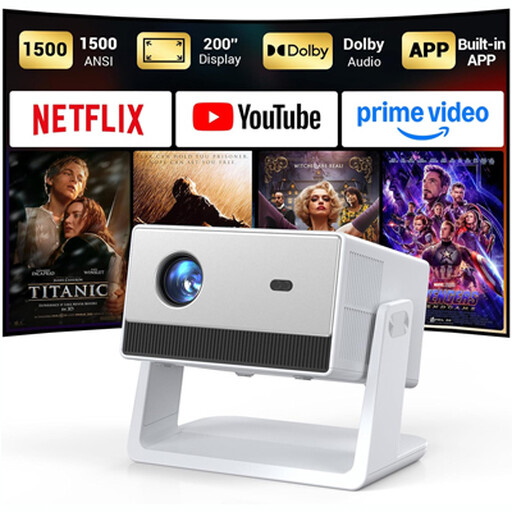
FunFlix Football World Cup Gift Smart Projector with Stand, Native 1080p
Consider it if an adjustable stand and a smart-projector setup suit where you plan to watch. The title lists Wi-Fi and Bluetooth; confirm the throw distance, race-source compatibility and focus method for the supplied model before choosing a position.
View on Joybuy
 No image available
Wimius K1 Full HD Projector, 1200 ANSI Lumens
Worth checking if you have room for a projector whose placement must be planned around the dining area. Its title lists Full HD 1080p, 4K input support and horizontal and vertical keystone correction. Confirm the image size at your intended position and the connection needed for your live-race source.
View on Joybuy
 No image available
XBJ 360° Portable Projector, European Version
Its portable format may suit races for which you bring out a projector and store it afterwards. The title lists Full HD 1080p, 360° rotation, 500 lumens and HDMI. Check the required projection distance, room lighting and broadcaster compatibility before relying on it for a daytime race.
View on Joybuy
 No image available
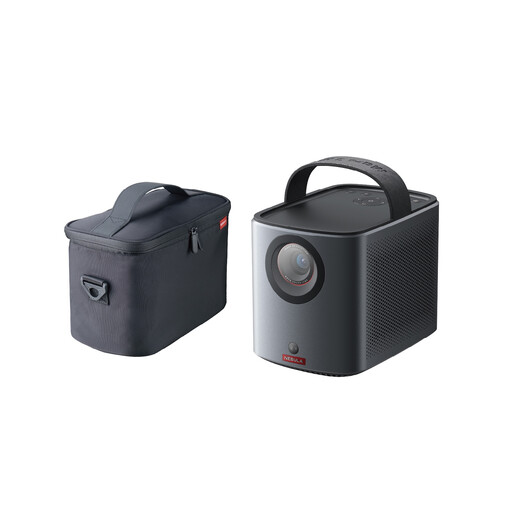
Soundcore Nebula Mars 3 Air + Carry Case Bundle
The carry case makes this bundle relevant if the projector needs to be packed away between races. Check whether you can darken the diner sufficiently, obtain your intended image size at the available distance and access the broadcaster you use.
View on Joybuy
Frequently asked questions
Do I need a TV Licence to watch a cycling race through a projector?
You need TV Licence coverage to watch live TV on a channel or streaming service, or to use BBC iPlayer, regardless of whether the picture appears on a projector. TV Licensing says the display device does not change those requirements; check your household’s coverage before the race.
Does every kitchen diner need a short-throw projector?
No. Short throw is useful when your measured placement distance is restricted by furniture or a walking route. If a conventional projector can sit at the distance required for your desired image width without obstructing the room, compare its other features against your lighting and source needs.
Will a portable smart projector work for daytime races?
Do not rely on portability or built-in apps to answer that question. Check the exact model’s stated brightness and intended lighting conditions against your diner, and confirm that the broadcaster’s app or a compatible connected device will provide the race.
What should I check when buying a projector for use in Great Britain?
Check that the seller’s listing identifies the exact model and provides suitable plug and power information and manufacturer instructions for your intended setup. The Office for Product Safety and Standards says electrical equipment placed on the Great Britain market must meet applicable product requirements; do not infer that a projector meets them solely from a general product description.


