Living-room family video hosts
You regularly gather several people in a shared room and need to judge whether the picture will remain visible with some ambient light. You also need a workable connection from the device storing the videos.


Choose around the room where you will usually watch: a brighter mains-powered projector is worth considering for a shared living room with ambient light, while a battery model makes more sense when moving between rooms matters most and viewing can take place in darker conditions. Before choosing either, measure the projector-to-wall distance and check how the device holding your videos will connect; a claim of 4K compatibility does not establish native 4K resolution.
You regularly gather several people in a shared room and need to judge whether the picture will remain visible with some ambient light. You also need a workable connection from the device storing the videos.
You want an image that fits the wall despite limited projector-to-wall distance, or need to position the projector away from the centre of the room.
You value carrying the projector between rooms or to family visits and can arrange darker conditions for viewing with a portable model.
Start with your usual room lighting and available placement distance, then check playback from the phone, camera or laptop that holds your videos. Portability matters most if you will regularly change viewing locations.
| Concern | What to check | Who this matters to |
|---|---|---|
| Visibility in the family room | Compare the stated brightness unit with your normal lighting and intended image size; check native resolution separately if footage detail matters. | If we watch together while the room is not fully dark, I want everyone to see the picture without relying on a small image. Around 42% of consumers would put shared-room visibility first. |
| Room fit and setup | Measure lens-to-wall distance and available wall width, then consult the exact model's projection-distance chart. | When space is tight, I need the intended image to fit without moving furniture each time. Room fit would be the primary concern for around 33% of consumers. |
| Playback and portability | Check the connection method for your source device; for battery viewing, check runtime in the mode you plan to use. | If videos move between devices or viewing locations, I need a practical way to play them wherever we gather. Around 25% of consumers would prioritise playback flexibility and portability. |
A projector can accept a 4K signal while displaying it at a lower native resolution. Joybuy's XBJ listing distinguishes native 1080p from 4K compatibility, while its HY300Pro listing specifies 1280 × 720 alongside 4K support.
Find the native display resolution in the specifications when detail in family footage matters to you.
Ambient light and a larger image affect how bright the picture appears. ANSI, ISO and unspecified lumen figures should not be treated as directly interchangeable.
Check the stated measurement unit alongside your normal lighting and planned image size, rather than judging a lit-room setup from a dark-room demonstration.
Image size depends on the exact projector and its distance from the wall. A placement that works for one model may not produce your intended image with another.
Measure the proposed lens position and usable wall width, then check the model's distance chart or calculator.
If the intended position does not work, a different stand, mount or cable arrangement may be needed.
A battery-powered projector can make moving between viewing spots easier, but that does not establish that its picture will suit daytime or lamp-lit viewing.
Choose portability for the locations where you will actually use it, and assess brightness against those locations rather than treating battery operation as a substitute for room-light suitability.
Mains-powered home-cinema models represented here by the CO-FH02 and EH-TW6250.
Home-projector models for buyers weighing room lighting against available placement distance.
Portable viewing represented by the battery-powered MoGo 4.
Flexible portable placement represented by the M1XE.
These projectors cover different approaches to family-video viewing, from checking a fixed room setup to carrying a projector between locations. Compare each one with your lighting, available distance and video source before choosing.
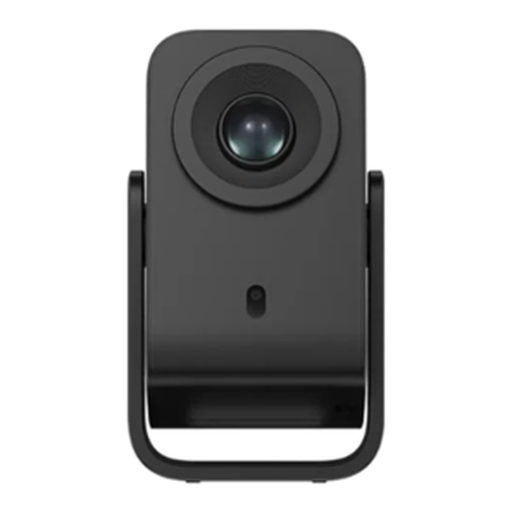 No image available
Consider this model for family footage when Full HD resolution is a priority. Its title also states 4K support; check the projection distance, room lighting and connection method for your video source.
 No image available
Consider this model if Full HD footage and a stated brightness figure are on your shortlist. The title gives 1,200 ANSI lumens and 4K support; confirm the image size at your measured distance and the connection needed for your videos.
 No image available
Consider its rotating design if positioning the picture is part of your room setup. The title states 180° rotation, auto keystone and 900 ANSI lumens; check the image size at your available distance and treat 8K support separately from its stated native 1080p resolution.
 No image available
Consider the rotating design if you need to change projection direction. The title lists a 120-inch display, auto keystone, Wi-Fi, Bluetooth and HDMI; check what image size your room permits and whether your particular device can connect.
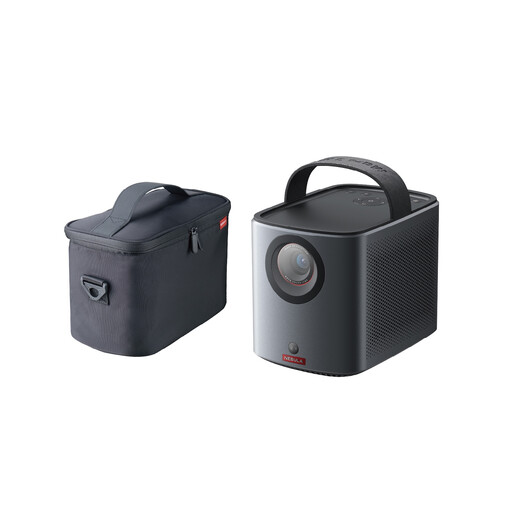 No image available
Consider the carry-case bundle if moving family viewing between locations is a priority. Check that its battery runtime, connection options and projection distance suit the sessions you have in mind.
Choose brightness in relation to your room light and intended image size, not as an isolated number. BenQ UK says 1,500–2,000 lumens can suit a 100–120-inch image in a dark home-theatre setup, while ambient light may call for 3,000 lumens or more; that is brand guidance, not a guarantee for every room or projector.
Measure the available lens-to-wall distance and use the exact model's projection-distance chart or calculator to check your intended image width. A short-throw model may help where space is restricted, but you still need its model-specific image-size range.
Yes, if the projector and source device share a compatible connection method. Check the particular phone or laptop for supported HDMI, USB-C video output or wireless mirroring rather than assuming that a smart interface can play every video source.
It may cover a shorter session, but compare the stated runtime in your intended operating mode with how long you plan to watch. XGIMI lists up to 2.5 hours for MoGo 4; arrange mains power or check support for an external power source if you expect to watch longer.