Choose a projector for watching tennis around your room light and the image size you can achieve from the available lens-to-screen distance, rather than resolution alone. In a room with daylight, compare clearly stated brightness ratings and plan for light control; where placement is tight, check the exact model’s throw range. Confirm how your match source and sound system will connect, and treat motion features as model-specific options rather than proof of clearer play.
Who is a tennis-viewing projector for?
Bright-living-room viewers
If you watch afternoon matches with windows or lights in use, consider stated brightness alongside the image size and how much light you can control. ViewSonic’s sports-projector guidance identifies brightness as a factor in this setting.
Small-room, big-screen viewers
If furniture limits where the projector can sit, start with the lens-to-screen distance and your intended image width. BenQ’s installation guidance explains how throw ratio relates those measurements.
Fast-action viewers
If following the ball and rallies is your priority, check the exact projector’s motion options, picture settings and connection to your match source. BenQ and Epson list motion-processing features on particular models, not across every projector they make.
What matters when choosing a projector for tennis?
Set your intended screen size and projector position before comparing models, then assess room light and the connections needed for the match.
| Concern |
What to check |
Who this matters to |
| Room-light visibility |
Compare brightness ratings stated using the same measurement method, and consider the intended image size and available light control. |
If afternoon matches are on while the room has daylight, I need an image I can follow without relying on resolution alone; around 36% of consumers put room-light visibility first. |
| Placement and screen size |
Measure from the planned lens position to the screen, then check the exact model’s throw range and screen-size-at-distance figures. |
A shelf or seating layout may leave little room to move the projector, so the wanted image has to fit that position; for around 36% of consumers, placement and screen size are the primary concern. |
| Motion and match source |
Check available motion modes for the intended input, plus the source device’s HDMI and content-protection requirements and the planned sound connection. |
To follow quick rallies through a streaming stick or set-top box, I need the picture and source setup to work together; motion and connection needs come first for around 28% of consumers. |
Common buying mistakes
-
Choosing by resolution alone
A resolution label cannot tell you how visible a tennis match will be in a light-filled room. ViewSonic’s sports-viewing guidance considers brightness alongside image quality and screen size.
Assess the light reaching your screen, compare stated brightness on a like-for-like basis and consider whether curtains or blinds can help during daytime matches.
-
Ordering before measuring the projection distance
The required lens-to-screen distance depends on the exact model and image width. An advertised screen size does not establish that the projector can produce it from your chosen shelf or ceiling position.
Measure the planned lens position and check the model’s throw range before choosing a screen or mount. Leave room for cables and ventilation in the placement plan.
-
Assuming a projector changes live-TV licensing requirements
TV Licensing says its requirements for live TV on a streaming service and for BBC iPlayer viewing apply regardless of the device used.
Before watching a live tennis broadcast through a connected source, check that the viewing location has the TV Licence coverage it needs.
-
Overlooking light-source maintenance
Lamp-life figures depend on the model and operating mode; they should not be read as a single replacement interval for every projector.
For a lamp-based model, check its stated life by mode, replacement-lamp availability and warranty exclusions against your expected use.
Replacing a lamp or arranging servicing may add an ownership task later.
Brands to consider for tennis viewing
BenQ
BenQ’s UK sports page presents the TK705STi as a short-throw option, listing a 150-inch image at 2.7 m, 3,000 lm, MEMC and Sports Mode.
- The model-specific distance figure gives you a starting point for checking a room with limited placement depth.
- Sport features are BenQ’s product claims, not independent evidence of tennis-viewing results. Check the exact model’s placement requirements and warranty exclusions.
Epson
Epson’s UK EH-TW7100 listing specifies 3,000 lumens, optical zoom, lens shift, keystone correction, two HDMI ports and frame interpolation.
- Zoom and lens shift are installation features worth checking if the planned position is not centred on the screen.
- Epson’s statement about sharper fast-moving images from frame interpolation is a manufacturer claim. The EH-TW7100 is lamp-based, so consider its maintenance requirements.
ViewSonic
ViewSonic’s UK specification for the PX749-4K lists 4,000 ANSI lumens, 4K UHD, a 1.13–1.47 throw ratio and a 100-inch image at 2.50 m.
- Its stated brightness and placement figures can be compared with your room measurements, provided brightness figures use comparable methods.
- The PX749-4K uses a lamp. ViewSonic lists 4,000 hours in Normal mode and 20,000 hours in SuperEco mode; check which mode suits your intended use.
Joybuy projectors for tennis viewing
These home-viewing and adjustable-placement projectors are options to assess against your tennis setup. Check room light, achievable image size and match-source compatibility for the individual model rather than assuming that a portable design or resolution label settles the choice.
 No image available
Magcubic HY350Max Smart Projector
Consider this model if adjustable positioning is important for your match-viewing setup; check the image size achievable from your planned position.
The product name states native 1080P, 900 ANSI, a 180° rotating design, auto keystone and HDMI/USB compatibility. Confirm compatibility with your match source and any motion mode you want to use.
View on Joybuy
 No image available
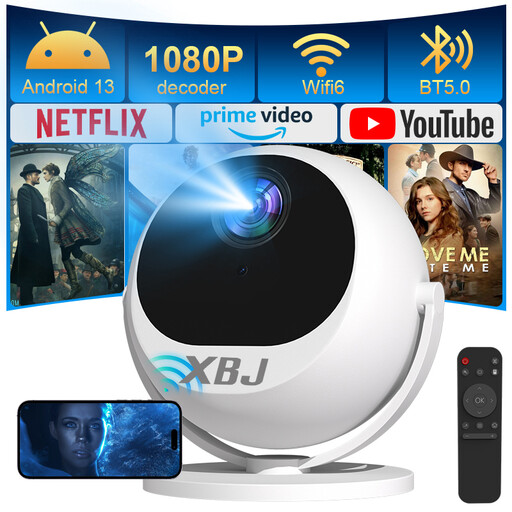
XBJ 360° Portable Projector, European Version
Its rotating design may suit a room where you need to adjust projection direction; establish the lens-to-screen distance needed for your chosen image.
The product name states Full HD 1080P, 500 lumens, a 120-inch display claim, auto keystone and HDMI connectivity. Compare brightness only with figures stated on the same basis, and check the required source and audio connections.
View on Joybuy
 No image available
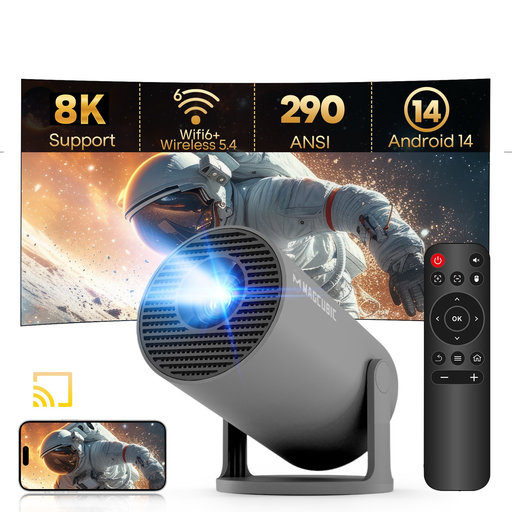
Magcubic HY300 Pro Mini Projector, Grey
Consider this compact model for a room you can darken, after checking where it must sit to produce your intended image size.
The product name states native 720p with 1080p support, auto keystone and a 180° rotating stand. Check the focus method and how your live-match source would connect before choosing it.
View on Joybuy
 No image available
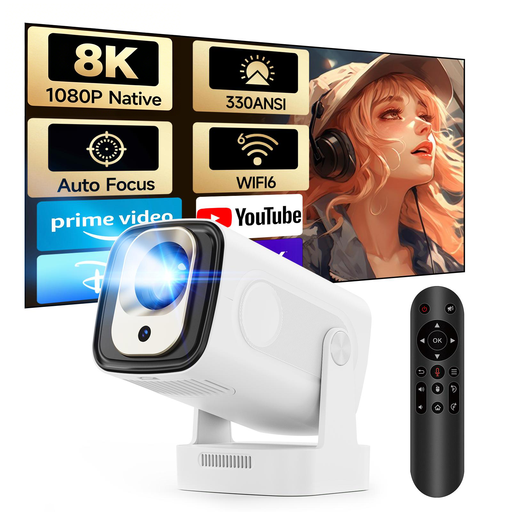
MAGCUBIC HY310 Android 14 Projector
This model is worth checking if you want an adjustable home-viewing setup, but confirm its usable image size at your actual projection distance.
The product name states 330 ANSI and a built-in speaker. Its resolution descriptions differ within the product information, so confirm the exact variant’s native resolution, external inputs and match-source compatibility before purchase.
View on Joybuy
 No image available
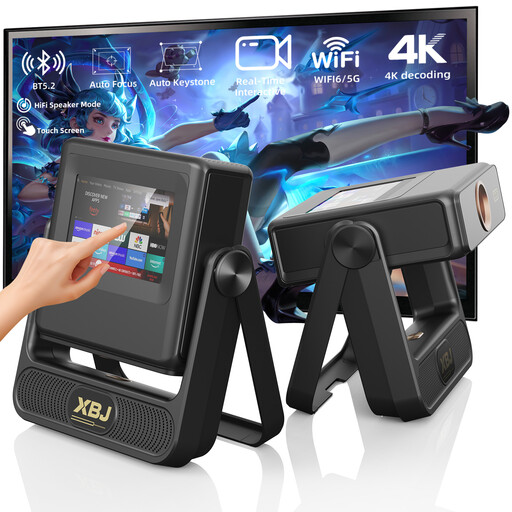
XBJ A5Pro Projector, Grey, with Touch Tablet
Consider its adjustable setup only after checking the image size it can produce in your room and what the stated bundle contains.
The product name states native 1080P, auto focus and keystone correction. Brightness figures conflict across the product information, so confirm the exact variant’s rating before judging its suitability for a room with daylight.
View on Joybuy
Frequently asked questions
How can I tell whether a projector will make a 100-inch image in my room?
Measure from the planned projector lens position to the screen, then check the exact model’s throw-ratio range and screen-size-at-distance figures. BenQ explains throw ratio as throw distance divided by image width; ViewSonic lists a 100-inch image at 2.50 m for the PX749-4K, but that distance must not be applied to another model.
Can I connect a streaming stick or set-top box to a projector?
You can if the chosen projector has a suitable input and the source device’s video and content-protection requirements are compatible. Epson lists two HDMI ports for the EH-TW7100, while ViewSonic lists two HDMI 2.0/HDCP 2.2 inputs for the PX749-4K; also check device power and how you will get sound.
Do I need a TV Licence to watch live tennis through a projector?
TV Licensing says watching live TV through a TV or streaming service requires TV Licence coverage regardless of the device used. It also says BBC iPlayer viewing requires coverage whether the programme is live or on demand; check the arrangements for your viewing location.
Will a lamp projector need maintenance?
A lamp-based projector may eventually need a replacement lamp, but the timing depends on the model and operating mode. ViewSonic lists 4,000 hours in Normal mode and 20,000 hours in SuperEco mode for the PX749-4K; check replacement-part availability and warranty terms for the projector you choose.


