Flatmates who put the projector away
If the projector moves between a bedroom and the lounge, a portable model with straightforward setup is a useful starting point. Check that its image and sound suit the room where you will actually watch.


Choose a portable Full HD projector if it needs to be put away after viewing and you can darken the room. For a lounge used with some ambient light, consider a brighter conventional-throw model if you can keep its projection path clear; consider ultra-short-throw when the available distance or a walkway rules out that placement. Measure the space and check the intended viewing services, audio options and each model’s stated brightness unit before buying.
If the projector moves between a bedroom and the lounge, a portable model with straightforward setup is a useful starting point. Check that its image and sound suit the room where you will actually watch.
If gardening programmes are usually on while daylight or household lights remain, prioritise room-light conditions and a clear projection path over compactness. Epson United Kingdom’s buying guidance places 2,500–3,500 lumens in its range for living rooms with some ambient light.
If furniture or a walkway leaves no practical position farther from the wall, check a short- or ultra-short-throw layout. The intended image width and the exact model’s throw ratio determine whether it fits.
Consider it when: you can darken the room and need to move or store the projector after viewing.
Trade-off: Check its image in your usual room lighting rather than assuming a compact model will suit daytime viewing.
Consider it when: the lounge has some ambient light and offers a stable position with a clear path to the wall.
Trade-off: the required distance may put the projector or its beam in the way of flatmates.
Consider it when: a conventional projection path would cross a walkway or there is too little placement depth.
Trade-off: confirm that the position close to the wall and the projection surface suit the exact model.
| Concern | What to check | Who this matters to |
|---|---|---|
| Room lighting | Decide whether you will watch in a darkened room or with lights on. Check the stated brightness unit and the conditions in which you can assess the image. | If I watch gardening shows while the lounge is lit, I need to follow captions and plant details without relying on a dark room; around 36% of consumers put ambient-light viewing first. |
| Placement and storage | Measure image width, available projector-to-wall distance and the walking path; use the exact model’s throw ratio. | When the lounge has to be cleared after viewing, I need a position that works without leaving equipment in the walkway. Around 29% of consumers make placement and storage their primary concern. |
| Shared-room audio | Check audio outputs, intended headphones or speakers, and the model’s stated fan-noise information. | For evening viewing, I want to hear speech without disturbing flatmates; around 21% of consumers prioritise quiet-viewing arrangements. |
| Streaming and connections | Confirm the intended service works through the projector or a compatible external device, and check the inputs you need. | If flatmates use different devices, I want programmes to start without repeatedly changing the setup. Around 14% of consumers put connection convenience first. |
A conventional projector still needs enough distance from the wall, and a shared walkway can obstruct its beam.
Measure the usable image width and projector position, then calculate the required distance from the exact model’s throw-ratio range.
An unsuitable position may mean using a stand or mount, or rearranging furniture.
Portable models and brighter-room guidance describe different viewing conditions. Manufacturers also use different brightness units, so their figures are not automatically comparable.
Decide how much you can darken the lounge and assess a portable projector under your usual lighting before relying on it for daytime programmes.
Built-in speakers do not establish whether dialogue or projector noise will suit a shared room at night. BenQ Europe lists 34 dB typical acoustic noise for its TH575, a model-specific figure rather than a measure for other projectors.
Check the exact model’s audio connections and noise information, and agree viewing times with flatmates.
Private listening may require compatible headphones or an audio cable.
The display device does not determine whether a TV Licence is needed. GOV.UK says a licence is required to watch or record programmes as they are broadcast.
Check the services you intend to use and the flat’s licensing arrangements before watching live broadcasts or BBC iPlayer.
A reference point for choosing resolution and brightness according to room conditions.
Its TH575 provides a specified conventional-throw Full HD example for assessing a shared-lounge layout.
Its named portable and ultra-short-throw models illustrate different ways to handle storage and limited placement depth.
These choices focus on projectors that can be moved or put away between shared-flat viewing sessions. Check the image, placement and connection requirements of each model; the portable choices here do not stand in for the conventional-throw and ultra-short-throw routes discussed above.
 No image available
Consider its rotating design if you need to set up and put away the projector in a shared room.
The product name states native 1080p, Android 14, Wi-Fi 6, Bluetooth 5.4, 180° rotation and automatic keystone correction. Check the intended image size and placement distance, and assess whether the image and fan noise suit your room.
 No image available
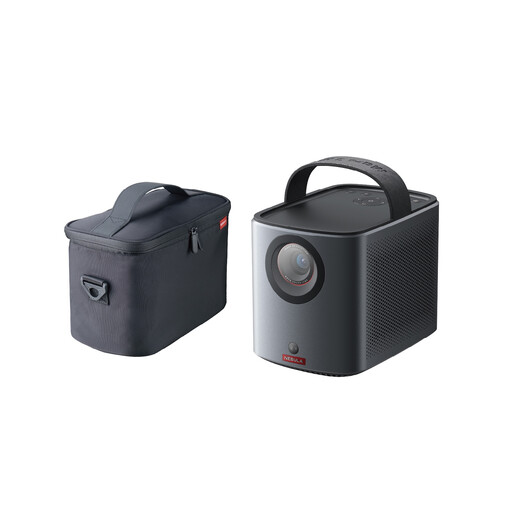
The carry case makes this bundle worth considering if the projector must be put away after each session.
Before relying on it for gardening shows, check the intended streaming service, playback arrangements and how the image looks in your usual lounge lighting.
 No image available
Its rotating design may suit a room where the projector has to be repositioned between sessions.
The product name advertises Full HD 1080p, 500 lumens, automatic keystone correction and Wi-Fi, Bluetooth and HDMI connections. Confirm the required throw distance and streaming method for your setup.
 No image available
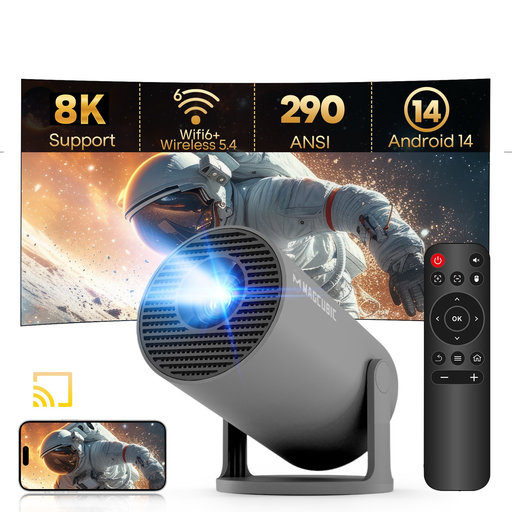
Consider this compact model if storage matters and native Full HD is not essential for your intended image size.
The product name specifies native 720p with 1080p support, Android 14, Wi-Fi 6, Bluetooth 5.4, automatic keystone correction and a 180° rotating stand. Check that captions remain comfortable to read at your chosen image size.
 No image available
Consider it if you plan to connect an external viewing device and need to move the projector between locations.
The product name advertises FHD1080P, 1,200 ANSI lumens, 4K support, keystone correction and dual speakers. Check the distance needed for your intended image, the exact streaming connection and quiet-room suitability.
The projector itself does not provide an exemption: GOV.UK says you need a TV Licence to watch or record programmes as they are broadcast. BBC iPlayer viewing also requires a licence. Check the services you will use and the licensing arrangements for your shared flat rather than assuming a licence held for another household covers it.
Measure the usable image width and the distance available between projector and wall. Throw distance equals the exact model’s throw ratio multiplied by image width; also check whether people will walk through the beam. An ultra-short-throw model can sit closer to the wall, but still needs a suitable position and projection surface.
Use it only if the connected load stays within the lead’s marked rating. Electrical Safety First advises against overloading or daisy-chaining extension leads and against using damaged leads; check the projector’s power requirements alongside everything else connected.
They may suit casual viewing, but speaker specifications alone cannot tell you whether dialogue or volume will work for your flatmates. Check the exact projector’s headphone, Bluetooth or audio-output options and consider where its fan will sit relative to listeners.