Bright-room group hosts
If curtains cannot remove all the ambient light in a lounge, classroom or community room, the group needs a sufficiently large, visible image before finer resolution becomes the deciding factor.


Choose a projector that can produce a legible image at the size and light level of your room, then decide whether Full HD or 4K better serves the detail your group needs to see. A bright Full HD model is worth considering when shared visibility takes priority; 4K deserves closer attention for fine maps, labels and footage, provided the source and viewing conditions support it. Either choice needs a room-specific throw-distance check and a plan for audible narration.
If curtains cannot remove all the ambient light in a lounge, classroom or community room, the group needs a sufficiently large, visible image before finer resolution becomes the deciding factor.
For groups studying maps, scientific graphics, subtitles or wildlife footage, source quality, resolution, room light and seating distance all affect how useful fine picture detail will be.
In a shallow or multipurpose room, the available lens-to-screen distance and where people need to walk may determine whether standard-throw or short-throw placement is practical.
Start with visibility at your intended screen size, then weigh fine detail against the room placement and audio arrangements the group will need.
Consider it when: Ambient light and a large shared image matter more than resolving the smallest documentary details.
Trade-off: Full HD has fewer display pixels than 4K, so closely seated viewers may find fine labels or textures less distinct.
Consider it when: Fine graphics and footage are central to the session and the programme and playback device can supply suitable material.
Trade-off: Higher resolution does not remove the need to manage ambient light or confirm that the projector fits the room.
| Concern | What to check | Who this matters to |
|---|---|---|
| Brightness and image size | Check how brightness is specified and whether the intended image remains usable with your room lighting. A maximum image size alone does not establish visibility at that size. | If I cannot fully darken the room, everyone still needs to follow what is on screen; around 33% of consumers put shared-image visibility first. |
| Fine documentary detail | Check the displayed resolution, documentary source and playback connection. A projector that accepts a 4K signal need not display it at native 4K resolution. | When maps and diagrams carry the story, I want nearby viewers to read their finer elements; roughly 27% of consumers prioritise documentary detail. |
| Throw distance and placement | Measure the lens-to-screen distance and planned image width, then check the exact model’s throw range. Follow its mounting instructions if installation is needed. | In a shallow room, I need the picture to fit without putting equipment in the group’s way; around 20% of consumers make workable placement their primary concern. |
| Audio and playback | Confirm the connections your source requires and whether external audio can be connected if the built-in speaker is inadequate. | If several people are listening from different seats, I need narration they can follow without a complicated source setup; roughly 20% of consumers put playback and audio first. |
A claimed maximum size does not tell you whether the projector can produce your planned image from its available position. ProjectorCentral defines throw ratio as lens-to-screen distance divided by image width, and the usable range varies by model.
Measure the proposed lens position and screen width, then consult the exact model’s projection calculator or specification sheet.
Epson describes the EB-FH18’s output as 4,100 lumens, while ViewSonic labels the PX749-4K at 4,000 ANSI lumens. Those headline figures alone do not establish how either image will look at your screen size and light level.
Compare like-for-like measurements where possible, and consider the intended image size and room lighting alongside them.
Extra display detail is less useful if the programme or playback device cannot supply it, or if ambient light makes the image difficult to see.
Confirm the source format, connection and seating arrangement, then check visibility at your planned image size.
Epson warns in its EB-FH52 guidance that improper ceiling or wall installation can cause a projector to fall. Mounting needs more than a bracket that appears to fit.
Use the mounting points and compatible installation method specified for the projector you buy.
These named projector lines illustrate different specifications to assess; a brand name alone does not determine how a model will perform in your room.
Epson United Kingdom lists the EB-FH18 as a Full HD projector with 4,100-lumen output, two HDMI ports and an advertised image size of up to 304 inches.
BenQ United Kingdom describes the TK705i as a 4K, 3,000-lumen home projector and the TK705STi as a 4K short-throw model with a stated 0.8 throw ratio.
ViewSonic United Kingdom lists the PX749-4K as a 4K projector rated at 4,000 ANSI lumens.
These Full HD projector choices are relevant when planning a shared documentary image. Check each model against your room lighting, screen width, viewing distance and audio needs; 4K input support should not be mistaken for native 4K display resolution.
 No image available
Consider this model if Full HD documentary detail meets your group’s needs and you want a stated 900 ANSI-lumen output. Its title also lists HDMI and USB compatibility, Wi-Fi 6, Bluetooth 5.4 and automatic keystone correction. Check the image width it can produce from your available position and whether your group will need separate speakers.
 No image available
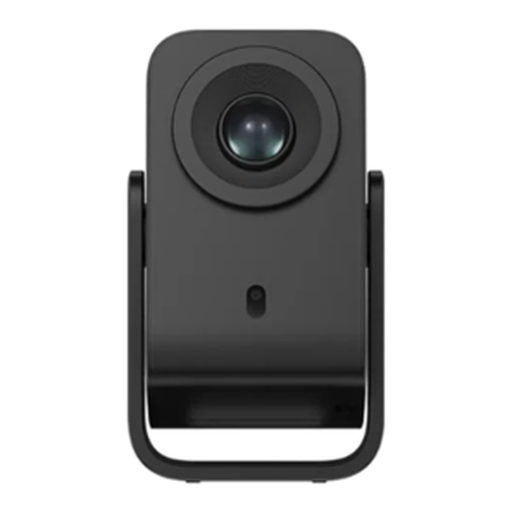
Consider this model where flexible physical positioning matters and Full HD is sufficient for the documentary source. The title states 360° rotation, 500 lumens, an image of up to 120 inches, automatic keystone correction, Wi-Fi, Bluetooth and HDMI. Confirm the throw distance for your planned image and the audio arrangement for the room.
 No image available
Consider the TCL C1 if a Full HD projector meets your group’s detail needs. Its product name states 1080P FHD and 4K support; 4K support should not be read as a native 4K display specification. Confirm the image size and placement range for your room before choosing it.
 No image available
Consider this model for Full HD group viewing if its placement range suits your room. Its title states 1,200 ANSI lumens, an image of up to 300 inches, 4K support and dual stereo audio. The maximum size is not a promise of suitable visibility at that size; confirm the image width available from your planned position and whether narration will be audible across the group.
Not necessarily: choose according to the detail viewers need to see and the visibility you can achieve in the room. A 4K projector merits consideration for fine maps and graphics when the programme and playback device support them; a Full HD model remains an option when a large, legible shared image takes priority.
Measure from the planned lens position to the screen and compare that distance with the image width you want. ProjectorCentral defines throw ratio as distance divided by image width; the exact model’s throw range or projection calculator will show which sizes are possible in your room.
Judge the speaker against the actual room rather than assuming it will cover every seat. Epson United Kingdom specifies a 16W mono speaker for the EB-FH18, but a power rating alone does not establish dialogue clarity for your audience; check external audio connections if needed.
Check the exact projector’s mounting instructions, specified attachment points and compatible mounting method. Epson’s EB-FH52 guidance warns that improper ceiling or wall installation can cause a projector to fall.
Check the marking and seller documentation for the delivery region. GOV.UK guidance from the Department for Business and Trade, dated 31 March 2026, distinguishes electrical equipment placed on the Great Britain market, for which it lists UKCA or CE, from Northern Ireland, for which it lists CE or UKNI together with CE. Do not infer a particular projector’s compliance from its plug or listing image alone.