Colour-focused musical-film viewers
If you can control the light and accommodate a longer throw and separate speakers, you may want to give costumes, stage lighting, skin tones and dark scenes particular attention when comparing picture modes.


Choose the projector setup around your room and sound system before comparing rated lumens. In a light-controlled cinema room, concentrate on colour, HDR handling and a lens that fits the installation; in a brighter shared room, check usable brightness at your intended screen size and plan how you will control room light. If the projector must sit close to the wall, consider an ultra-short-throw model, but check the projection surface and audio connections before buying.
If you can control the light and accommodate a longer throw and separate speakers, you may want to give costumes, stage lighting, skin tones and dark scenes particular attention when comparing picture modes.
If your screen or ceiling position is already fixed, check whether a model’s zoom and lens shift can place the image correctly before comparing its other features.
If there is no practical projection path behind the seating, close-to-wall ultra-short-throw placement may fit better. You will still need a suitable projection surface, room-light control and an audio plan.
For musical films, settle the room layout and intended screen size first. Then compare picture modes and decide how the soundtrack will reach your speakers.
| Concern | What to check | Who this matters to |
|---|---|---|
| Colour and dark scenes | Compare stated colour coverage, calibration options and supported HDR formats for the exact model and picture mode. | If costumes and stage lighting matter to me, I also want dark scenes to retain detail in my light-controlled room. Around 31% of consumers would put this picture-quality concern first. |
| Room light and brightness | Check the intended screen size, room lighting and brightness in the picture mode you expect to use, rather than rated output alone. | When I cannot fully darken a shared room, I need an image that remains watchable at my chosen size without relying only on the brightest mode. For around 25% of consumers, that is the primary concern. |
| Placement | Check model-specific throw distance, screen position and lens-shift range; for ultra-short throw, check surface flatness too. | A fixed screen or cabinet position leaves me little room to move the projector, so making the image fit comes before its other features. That layout is the main concern for around 25% of consumers. |
| Soundtrack connections | Trace the connection from the source device through the projector or AV receiver to the sound system, including compatible inputs and audio formats. | I do not want songs and dialogue to depend on a projector speaker when I am planning a separate sound system. Around 19% of consumers would make audio integration their first consideration. |
ProjectorCentral advises that output in a colour-accurate mode can be lower than a projector’s maximum rating. Room light also raises the apparent black level, which matters in dark stage and backstage scenes.
Compare brightness for your screen size and intended picture mode where measurements are available, and consider how much light you can keep off the screen.
A long-throw and an ultra-short-throw projector need different positions. An attractive image specification will not solve a throw-distance or screen-placement mismatch.
Measure the proposed lens position and screen, then check the exact model’s throw and lens-shift guidance before ordering.
A permanent installation may also involve a mount, a cable run or moving the screen.
Integrated audio can simplify casual viewing, but Dolby’s home-cinema guidance also considers room layout and speaker placement. A musical-film soundtrack deserves a connection plan of its own.
Decide whether you will use projector audio, a soundbar or an AV receiver and speakers, then check the connection path and supported formats across those devices.
Separate speakers can add equipment, cabling and setup work.
GOV.UK’s electrical-equipment guidance for Great Britain has a different scope from the arrangements applying in Northern Ireland under the Windsor Framework.
For a Northern Ireland delivery, ask the seller for the product documentation relevant to that market rather than relying on Great Britain guidance alone.
Relevant when comparing dedicated, colour-focused cinema models with brighter entertainment or short-throw options.
Offers distinct long-throw installation and close-to-wall living-room routes in the models considered here.
Relevant to shoppers considering a native-4K laser projector for a dedicated cinema room.
Relevant when assessing a brighter laser model for a larger screen or a room with more ambient light.
These portable and smart projectors are choices to assess for flexible home viewing. Check each one against your room, screen and audio plans; their inclusion does not establish the colour, brightness or installation performance of a dedicated cinema or ultra-short-throw model.
 No image available
Consider this portable model if you need to adjust projection direction in a compact setup. Its title lists 180° rotation, auto keystone correction, Android 14 and Bluetooth 5.4. Check the image size achievable from your chosen position, as well as its HDR and external-audio compatibility if those matter for musical films.
 No image available
The rotating design may suit a room where projection direction changes. The title lists Full HD 1080P, auto keystone correction and a 120-inch display claim. Check the throw distance for your intended image size and the connection you would use for separate audio.
 No image available
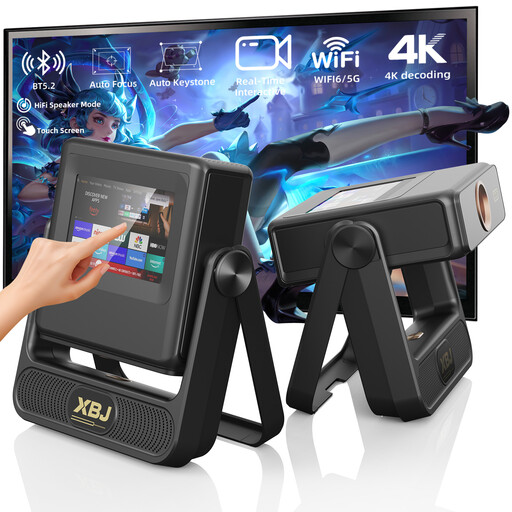
Consider this model if autofocus and keystone correction would help with flexible placement. Its title also lists 4K input support and Wi-Fi 6. Confirm the supported image size, required distance and brightness for your intended picture mode before choosing a screen.
 No image available
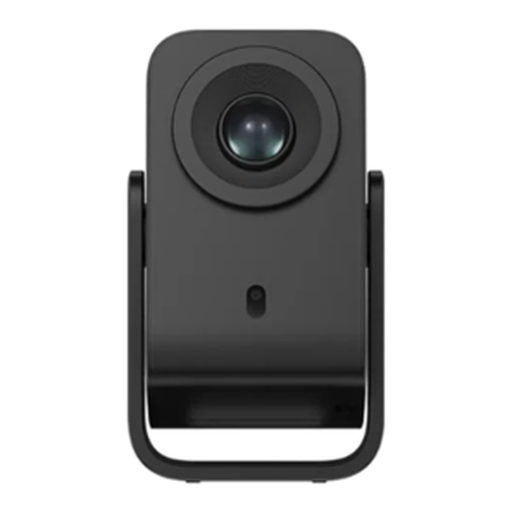
This portable model may suit a setup that needs to move between viewing positions. Its title lists 1080P FHD and 4K input support. Check picture-mode brightness for your screen and room lighting, plus the audio connection you would need for a separate sound system.
Choose brightness for the screen area and the picture mode you intend to use, not just the rated maximum. ProjectorCentral recommends 13–18 lumens per square foot for dark-room home theatre; its guidance gives about 540 lumens at the screen for a 100-inch 16:9 image at 18 lumens per square foot. Check how your chosen model performs in a suitable film mode.
Yes, if close-wall placement solves your room layout and the projection surface is suitable. Epson specifies an 80-inch image from 2.3 cm from the wall for the EH-LS800B; check the exact placement instructions, manage light falling on the screen and plan your audio connections separately.
A separate system is worth planning if songs, dialogue and orchestration are central to your viewing. Dolby recommends considering speaker placement as part of the room setup; check that the projector, source device and soundbar or AV receiver have a compatible connection path.
Measure the screen size, proposed lens-to-screen distance, mounting position and cable route. Then check the exact model’s throw and lens-shift limits against those measurements; Dolby also advises considering room shape and speaker positions when planning a home cinema.
Do not assume that Great Britain guidance covers a Northern Ireland purchase. GOV.UK’s guidance on the Electrical Equipment (Safety) Regulations 2016 is scoped to Great Britain, while Northern Ireland is treated differently under the Windsor Framework. For a Northern Ireland delivery, confirm the applicable product documentation with the seller.