Choose for the room before choosing by advertised brightness: controlled lighting makes dark scenes and subtle colour easier to assess, while a room that stays lit calls for more usable brightness but still compromises perceived black levels. Before settling on a model, check its fit with your screen and projector position, then confirm how your documentary source and audio system will connect.
Who is this for?
Detail-and-colour documentary viewers
If geological textures, wildlife colour and dark astronomy scenes are your priorities, examine the exact model's resolution, HDR support and colour information. Those specifications matter more to your shortlist than portability alone, but they are not a substitute for seeing how the picture looks in your room.
Planned home-cinema installers
If the screen wall or projector position is already fixed, start with the distance between them. ProjectorCentral identifies throw distance and screen size as core buying factors; zoom and lens shift then determine how much optical placement flexibility a particular model offers.
Multipurpose-room viewers
If documentaries will sometimes play with lights on or curtains open, assess brightness for your intended screen and lighting. ProjectorCentral explains that ambient light reduces perceived contrast, so extra projector brightness does not by itself restore dark-scene blacks.
What matters when choosing?
For science documentaries, decide first how much light you can control and where the screen and projector can go. Then compare picture-format claims and the connections needed for your viewing setup.
| Concern | What to check | Who this matters to |
|---|
| Detail and colour |
Check the exact model's native resolution or stated 4K output, supported HDR formats and colour information. Confirm that your source supplies the formats you intend to watch. |
If fine textures, natural-history colour and dark space scenes are my priority, I want to assess picture detail rather than shop by lumens alone. Around 33% of consumers put picture fidelity first. |
| Room and screen fit |
Measure lens-to-screen distance and the intended screen size; check the exact model's throw range, zoom and lens shift. |
With my screen wall and projector position already planned, I need an image that fits without relying on substantial digital correction. Installation fit comes first for around 27% of consumers. |
| Ambient light |
Compare brightness for your screen size and viewing conditions, seeking measured output in a suitable picture mode where available. Plan how you will control room light. |
When I cannot always darken the room, I need the image to remain watchable while accepting less convincing dark scenes. Around 20% of consumers prioritise use with ambient light. |
| Sources and sound |
Confirm the intended streaming device or player, HDMI connection and audio routing; check whether the exact projector has a speaker. |
If I want to start a documentary without connection problems and hear the narration clearly, the source and audio setup is my main concern. That need leads for around 20% of consumers. |
Buying pitfalls
-
Choosing by the advertised lumen figure alone
ProjectorCentral cautions that brightness in a picture mode adjusted for video can be lower than the rated figure. Screen size and room light also change how useful that output will be.
Set your screen size and lighting conditions first, then look for measured brightness in a relevant picture mode where available. Plan light control if dark documentary scenes matter to you.
Changing the screen or adding blackout blinds later can add work to the installation.
-
Buying before checking projector placement
A projector has to fill the chosen screen from an available position. As ProjectorCentral's home-theatre guidance explains, throw distance and screen size are linked; lens controls vary by model.
Check the exact model's throw information against your measurements before ordering. Where placement is constrained, examine optical zoom and lens shift rather than assuming keystone correction will resolve it.
An unsuitable position could mean moving the mount or accepting a smaller image than planned.
-
Assuming the projector provides sound
BenQ specifies that the W5800 has no built-in speaker, despite listing eARC connectivity. Its picture and sound therefore need a planned route through the rest of the setup.
Decide whether you will use a soundbar, AV receiver or powered speakers, and confirm how the source and projector will connect to that equipment.
External audio equipment, cables or installation may be needed.
-
Assuming a phone adapter will play every streaming service
BenQ's W5800 FAQ describes a cabled mobile-device setup in which sound plays but the picture remains blank for some streaming content.
Check the complete connection chain for the services you use. Where possible, test it before purchase or confirm that a suitable streaming device can connect by HDMI.
Projector brands to consider
Epson
Epson's home-cinema range includes the EH-LS12000B, a laser model with stated 4K output, HDR10+ support and powered optical controls.
- Epson specifies powered zoom, focus and lens shift for the EH-LS12000B, features worth examining if projector placement is constrained.
- Those controls do not remove the need to check the model's throw range against your screen and room.
BenQ
The W5800 is a cinema-focused 4K laser model with motorised lens adjustment and manufacturer-stated colour and calibration features.
- BenQ states that the W5800 supports HDR10, HDR10+ and HLG, and comes with a factory calibration report. Its stated colour coverage is a manufacturer claim, not an independent picture-quality verdict.
- BenQ specifies no built-in speaker for the W5800, so an external audio arrangement is necessary.
Sony
Sony's VPL-XW5000ES is a native-4K SXRD laser model for viewers considering that particular projection design.
- Sony identified the VPL-XW5000ES as a 2,000-lumen native-4K model in its 2022 UK launch material.
- Confirm the current model offering and installation specifications before treating those launch details as a purchase shortlist.
Projectors on Joybuy
These models offer portable or smart-projector approaches to documentary viewing. Their listed native resolution is 1080p; a claim of 4K input or decoding support is not a claim of native 4K projection. Check room fit and viewing conditions before choosing one for a fixed home-cinema screen.
 No image available
Magcubic HY350Max smart projector, native 1080p
Consider its portable setup if you can confirm that the projector position and intended screen size work together.
The title lists 900 ANSI lumens, Android 14, 180° rotation and automatic keystone correction. Its 8K support claim does not change the stated native 1080p resolution.
View on Joybuy
 No image available
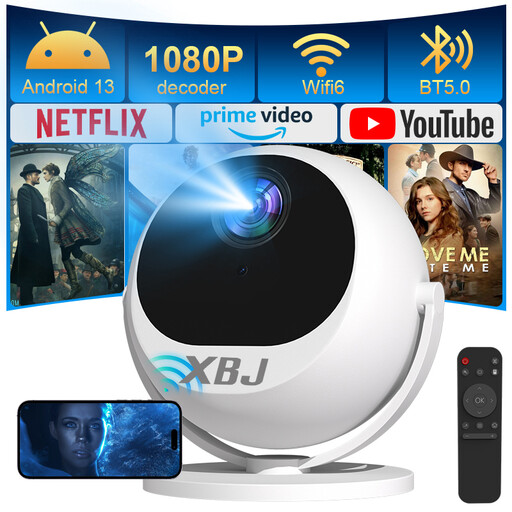
XBJ 360° portable projector, European Version
Its rotating design is worth considering if you want to aim the image at different surfaces; confirm the throw distance for your planned home-cinema screen.
The title states 1080p resolution, 500 lumens and automatic keystone correction. Check the brightness unit and usable output before comparing it with another model's figure.
View on Joybuy
 No image available
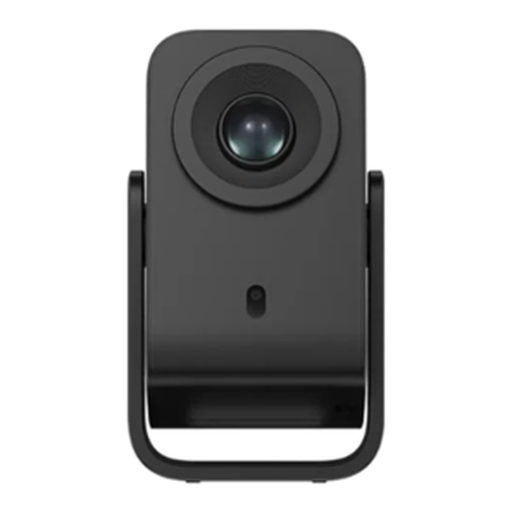
TCL C1 smart projector, 1080p FHD, grey
Consider this model if a smart projector suits your source setup, while checking that it can fill your intended screen from the available position.
The title states 1080p FHD and 4K support; support for 4K content does not establish native 4K projection.
View on Joybuy
 No image available
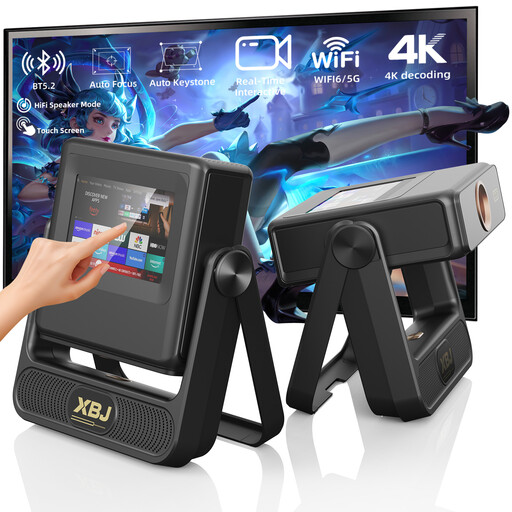
XBJ A5Pro projector with touch tablet, grey
Automatic focus and keystone correction may suit a setup that needs frequent image adjustment, but check the optical placement range for your screen.
The title states native 1080p and 4K support. Its title states 900 ANSI lumens while another listing field states 800 ANSI lumens, so confirm the exact brightness specification before comparing models.
View on Joybuy
 No image available
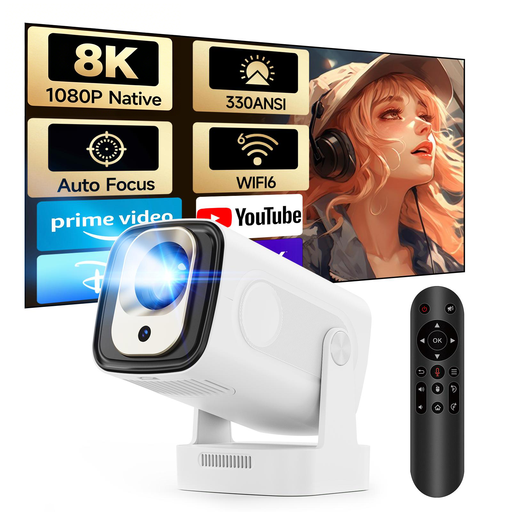
Magcubic HY310 projector, native 1080p
Consider this model if built-in sound and automatic focus suit your setup; confirm the image size and placement you need before ordering.
The title lists Android 14, a built-in speaker and 330 ANSI lumens. Its 4K support claim does not change the stated native 1080p resolution.
View on Joybuy
Frequently asked questions
Do I need a fully dark room for science documentaries?
No, but controlling light helps preserve perceived contrast in dark scenes. ProjectorCentral explains that ambient light brightens the projection surface; if space footage or night-wildlife scenes matter most, plan how you will darken the room as well as assessing projector brightness.
What should I measure before ordering a projector?
Measure the intended screen size, its position and the distance from the projector lens to the screen. Check those measurements against the exact model's throw and lens-adjustment specifications; ProjectorCentral identifies throw distance and screen size as core home-theatre selection factors.
Can I use a projector's built-in speaker for narration?
Only if the exact projector has a speaker that suits your setup. BenQ specifies no built-in speaker for the W5800 but lists eARC, so that model needs an external audio arrangement for documentary sound.


