Flatmates with a tight lounge layout
If a projector behind the seating would block a walkway or leave cables across the room, measure the available lens-to-wall distance before considering a short-throw or ultra-short-throw model.


Choose a portable projector if it must be put away after film night, a short-throw projector if the available projection distance is limited, or an ultra-short-throw model if it can stay on a unit close to the wall. For short films, check native resolution, the room’s lighting, a dependable source connection and whether dialogue will be clear at a considerate volume.
If a projector behind the seating would block a walkway or leave cables across the room, measure the available lens-to-wall distance before considering a short-throw or ultra-short-throw model.
A compact projector with straightforward alignment and audio may suit temporary screenings. Check how it connects to your film source, and plan to dim the room if choosing a lower-brightness portable model.
Subtitles, dark scenes and quiet speech make image detail, light control and audio arrangements worth checking before choosing the largest possible picture. Which? reports meaningful differences in projector picture and sound quality.
Decide where the projector can sit during a screening and whether it must be stored afterwards; then check the image and sound against the light and noise conditions in your flat.
Choose when: Film nights move between rooms or the lounge needs to be cleared afterwards.
Trade-off: Compact models still need a suitable projection position and light control; portability alone does not establish daytime picture quality.
Choose when: A projector farther back would obstruct seating or foot traffic, but there is space for one nearer the wall.
Trade-off: The shorter placement distance solves a layout problem, not picture or sound quality by itself.
Choose when: The projector can remain on a stable unit immediately in front of the projection wall.
Trade-off: This is a more permanent shared-room arrangement, so the unit, wall or screen must suit that placement.
| Concern | What to check | Who this matters to |
|---|---|---|
| Room placement | Measure the lens-to-wall distance and usable wall width. Check the exact model’s throw-distance guidance for your intended image size. | If the sofa and walkway leave little clear space, I need an image that fits without putting equipment in everyone’s way. Around 38% of consumers put room placement first. |
| Temporary setup | Check the stand or alignment controls and whether your intended laptop or streaming device can connect. | When film night ends, I want to disconnect the projector and give the shared room back to everyone. Around 31% of consumers prioritise easy setup and storage. |
| Picture and dialogue | Check native resolution, the light you can control and audio-output options. Full HD or 4K resolution and a 16:9 format are the specifications usually quoted for film use. | For shorts with subtitles or quiet speech, I care more about following the film than making the image as large as possible. Roughly 31% of consumers put picture and dialogue first. |
“Short throw” does not promise a particular image size at every distance. The projector still needs to fit the available wall, furniture and viewing position.
Measure the planned lens position and wall width, then use the exact model’s throw ratio or manufacturer calculator.
Depending on the layout, a stand, longer HDMI cable or screen may also be needed.
Room light and image size affect how a film looks, while quoted brightness figures do not always use the same measurement basis.
Decide when you will usually watch, compare figures stated on a comparable basis and check whether you can dim the room.
Light control may mean changing the room setup or using blackout blinds.
Speaker ratings describe hardware, not whether quiet speech will be understandable at a volume that suits flatmates and neighbours. Which? identifies sound quality as a point of difference between projectors.
Where possible, assess dialogue at a suitable volume and check the exact model’s headphone or external-audio options.
An external speaker, headphones or an audio accessory may be needed for your preferred arrangement.
The apps you use and their availability on a smart platform can change. A built-in interface also does not answer how you would connect another film source.
Check the exact apps, physical inputs and manufacturer support information for the model you intend to buy.
Its UK range includes portable models and the EH-LS800W ultra-short-throw projector, covering different room arrangements.
Its portable models are relevant when a projector needs to move between rooms or be stored after viewing.
The GT2000HDR is a short-throw model to consider where a conventional projector position would be awkward.
The short-throw TH690ST offers a reference point for buyers also considering HDMI-connected film or console viewing.
These projector listings offer different approaches to temporary film viewing and source connection in a shared flat. Check each model’s placement requirements before deciding whether it suits your room; the HY300 Pro’s native 720p resolution also differs from the Full HD listings.
 No image available
Consider this model if you want a temporary film setup with a stated HDMI connection. The listing names native 1080p resolution, 900 ANSI lumens, a rotating design and automatic keystone correction; check the image size at your available projection distance. Confirm battery operation, weight and the streaming apps you need before relying on it for room-to-room use.
 No image available
The rotating design may suit a setup that changes position between screenings. Its title lists Full HD 1080p, a 120-inch display, automatic keystone correction and HDMI; check the image size achievable at your measured distance. Confirm the available power arrangement if you intend to use it away from a socket.
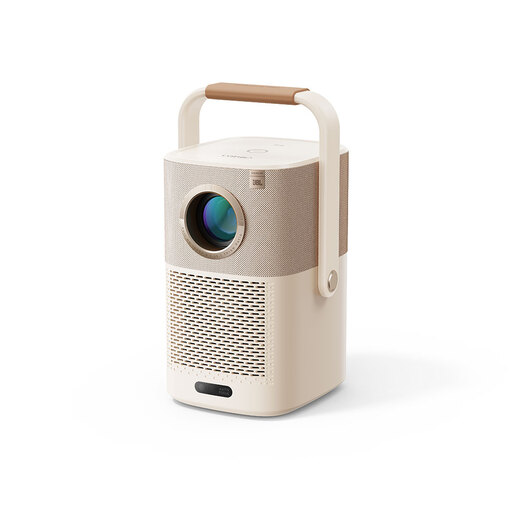 No image available
This is worth considering when the projector needs to be moved and a built-in battery matters. The title lists native 1080p, a built-in battery, JBL sound, Wi-Fi 6 and Bluetooth. Check its throw distance, the brightness you need in your room and how your film source will connect.
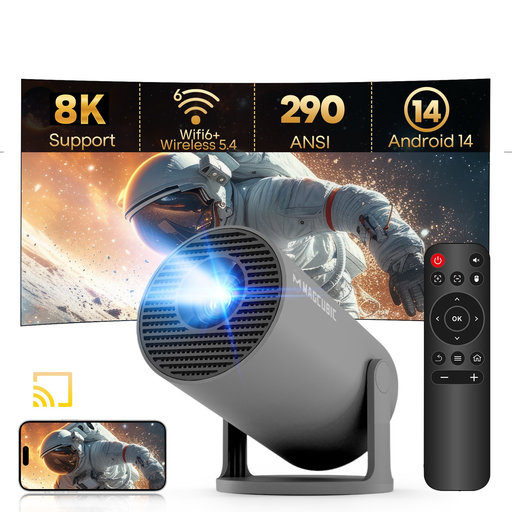 No image available
This compact option may suit an occasional setup if native 720p detail is acceptable for your films and subtitles. Its title lists 1080p support, rather than native 1080p, alongside automatic keystone correction and a 180° rotating stand. Confirm the focus method and the apps you need before buying.
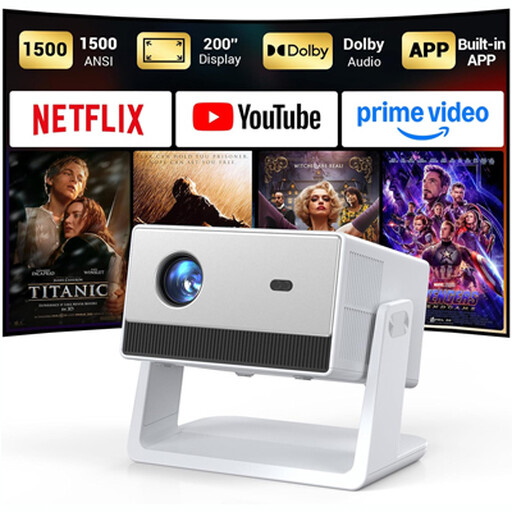 No image available
Consider this listing if native Full HD and built-in streaming suit your planned film source. Its title states native 1080p, Bluetooth, built-in apps and autofocus. Check the exact throw distance, whether the projector can be stored as you intend, and the bundle contents before ordering.
Measure from the planned projector position to the wall, then check the exact model’s throw ratio or distance calculator for your intended image size. A short-throw model needs less distance than a conventional placement, while an ultra-short-throw model can sit close to the wall; Optoma specifies a 0.496:1 ratio for the GT2000HDR, and Epson states that its EH-LS800W can make an 80-inch image from 2.3 cm away.
It depends on the light in your room and the image size you want, so plan for dimmed viewing unless the exact model meets your lighting needs. XGIMI specifies 450 ISO lumens for the MoGo 3 Pro; that figure alone does not establish how a film will look in your lounge or make differently measured brightness claims directly comparable.
No: a projector with a suitable HDMI input can take a compatible external film source instead. Built-in streaming may simplify setup, but check the exact apps and connections you intend to use because app availability can change.
Check that the equipment is supplied for your location by an identifiable retailer or manufacturer, and keep its documentation and warranty information. GOV.UK’s guidance on the Electrical Equipment (Safety) Regulations 2016 describes requirements for equipment placed on the Great Britain market; Northern Ireland has different provisions, so Great Britain guidance alone does not settle a Northern Ireland purchase.
Check the exact model’s network features, security-support information and the apps you intend to use. GOV.UK describes consumer connectable-product security rules for relevant products that can connect to the internet or a network, and identifies a Northern Ireland exception; an app logo alone does not establish which requirements apply to a particular product.