A 16:9 projector can suit a mix of silent films and modern widescreen viewing if the projector and playback source preserve the original 4:3 frame; the image will leave unused space at the sides of a 16:9 screen. If silent films are your main use, consider a 4:3 screen or masking, and check that the projector fits your room and viewing conditions before choosing by resolution or advertised contrast alone.
Who is this setup for?
Silent-film-first viewers
If you mainly watch silent-era films and near-4:3 restorations, preserving the frame may matter more to you than filling a widescreen screen. The British Film Institute describes 4:3, or 1.33:1, as a traditional film-frame ratio.
Mixed-format film collectors
If you alternate between older films and modern widescreen releases, you need a screen arrangement that shows each format without stretching or cropping it merely to fill the screen.
Dedicated dark-room viewers
If you can control room light and want to examine shadow detail in black-and-white films, consider the room alongside the projector. ProjectorCentral notes that ambient light can wash out darker projected imagery.
What matters when choosing?
16:9 screen
Choose it when: Silent films share viewing time with modern widescreen material.
Trade-off: An intact 4:3 image leaves unused space at the sides of the screen.
4:3 screen or adjustable masking
Choose it when: Near-4:3 films are your main reason for setting up the cinema.
Trade-off: A 4:3 screen is less naturally matched to widescreen films, while masking takes additional planning.
| Concern |
What to check |
Who this matters to |
| Original framing |
Check the projector and playback source’s aspect-ratio controls with a near-4:3 film. Decide whether a 16:9 screen, 4:3 screen or masking suits your viewing mix. |
I want to see the complete silent-film frame without stretching or cropping it. Around 31% of consumers would put intact framing first. |
| Shadow detail |
Assess room light and reflections; look for comparable image evaluations rather than relying on advertised contrast ratios alone. |
In dark black-and-white scenes, I want shadow tones to remain distinguishable. Roughly 31% of consumers would make tonal detail their primary concern. |
| Installation fit |
Measure lens-to-screen distance and screen size, then check the exact model’s throw range, zoom and lens-shift range. |
My screen and mounting position are fixed, so the image needs to fit that space. About 23% of consumers would prioritise placement. |
| Sources and sound |
Check the inputs needed for your film sources and how the soundtrack or accompaniment will reach your speakers. |
I want to connect my films and play their scores without repeatedly changing equipment. Around 15% of consumers would put playback connections first. |
Mistakes to avoid
-
Assuming a 4:3 film must fill a 16:9 screen
An intact 4:3 frame is narrower than a 16:9 screen. Filling the whole rectangle instead can mean changing the frame’s shape or cropping it.
Try a representative film with the source and projector’s aspect-ratio controls before settling on a screen arrangement.
Changing the screen or adding masking later takes further installation work.
-
Choosing by the advertised contrast ratio alone
ProjectorCentral cautions that contrast specifications do not, by themselves, tell you what you will see on screen; ambient light also affects the image.
Look for evaluations with clear viewing conditions and assess how well you can darken your own room.
-
Buying before checking projector placement
The intended image size must work at the available lens-to-screen distance. Zoom and lens-shift adjustments differ by model.
Measure the planned position and screen, then compare those measurements with the exact model’s installation specifications.
An unsuitable position may require a different mount, cable route or projector location.
-
Forgetting the soundtrack
Silent films can still have a score or other accompaniment, so the image source and speakers need a workable connection.
List your playback devices and audio equipment, then check the projector’s inputs and available audio route.
The chosen setup may call for additional cabling or an adapter.
Relevant brands to consider
Epson
Epson’s UK EH-TW7100 and EH-TW7000 pages provide model-specific installation details worth checking for a fixed home-cinema setup.
- Epson lists lens shift and optical zoom for both models, which can help when planning image placement.
- Check the precise model’s throw range and current availability before treating those features as a fit for your room.
BenQ
The BenQ W2700 is a 16:9 home-cinema model with published UK specifications.
- BenQ lists 4K UHD resolution and vertical lens shift for the W2700.
- Plan how a near-4:3 film will appear within a 16:9 setup; manufacturer colour claims are not independent cross-brand image comparisons.
JVC
JVC is relevant if you are considering a premium projector for a dedicated cinema room.
- ProjectorCentral discusses JVC LCoS models in its October 2026 premium home-theatre overview, including the DLA-NZ800.
- That US-facing overview does not establish whether a particular JVC model suits your screen, room or UK purchase arrangements.
Joybuy projector choices
These home-cinema and portable projector choices offer different playback and setup features. For silent films, check full-frame 4:3 handling and room fit on the exact model before choosing.
 No image available
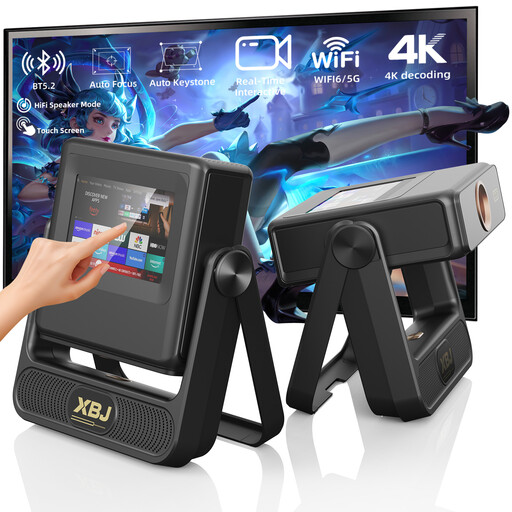
XBJ A5Pro projector, grey
For a home-cinema setup using film sources, this model lists native 1080p resolution and an Android system. Check whether its aspect-ratio settings preserve the complete 4:3 frame and whether its placement suits your screen.
View on Joybuy
 No image available
Magcubic HY350Max smart projector
For a portable home-cinema arrangement, this model lists native 1080p resolution, Android 14 and HDMI/USB compatibility. Confirm complete 4:3 playback and the image size achievable from your planned position.
View on Joybuy
 No image available
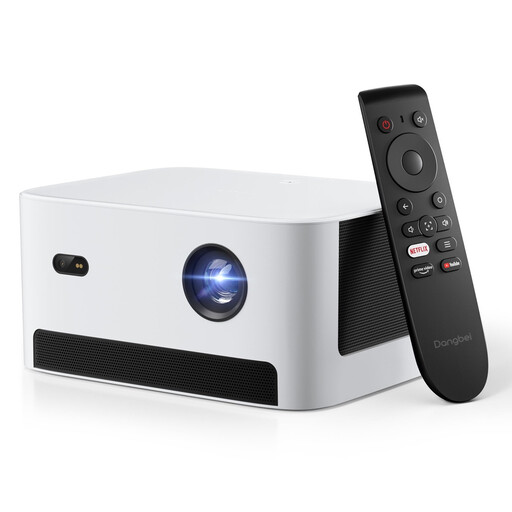
Dangbei Neo DLP projector
For a compact home-cinema setup, this model lists 1080p Full HD resolution, autofocus and keystone adjustment. Check its aspect-ratio controls with your film source and confirm that its throw range fits your screen.
View on Joybuy
 No image available
TCL C1 smart projector, grey
For a portable viewing arrangement, the TCL C1 lists 1080p FHD resolution. Before using it for silent films, check its full-frame 4:3 settings and the distance needed for your intended screen size.
View on Joybuy
Common questions
Do silent films require a 4:3 projector?
No: a 16:9 projector can show a 4:3 film intact if its playback settings preserve the source’s aspect ratio. Expect unused space beside the image on a 16:9 screen; consider a 4:3 screen or masking if older films dominate your viewing.
Why does room darkness matter for black-and-white films?
Ambient light can wash out darker projected imagery, as ProjectorCentral explains. Check window light and reflections near the screen as well as the projector’s image characteristics.
Can I choose by the advertised contrast ratio?
Not by that number alone. ProjectorCentral cautions that contrast specifications do not reliably describe what you will see on screen; seek comparisons with stated measurement and viewing conditions, and account for your room’s lighting.


