Dark-room film-detail seekers
You watch films regularly in a dedicated dark room and want to assess shadow detail, tonal contrast and the quality of your digital source. A fixed position may matter more to you than portability.


For digital silent films in a consistently dark room, start with the source material, picture controls and where the projector can sit, rather than choosing by advertised brightness alone. A portable Full HD model suits occasional viewing and quick setup; a home-cinema model with optical adjustment is worth considering when the projector will stay in place. Higher-resolution projection cannot restore detail missing from an older transfer.
You watch films regularly in a dedicated dark room and want to assess shadow detail, tonal contrast and the quality of your digital source. A fixed position may matter more to you than portability.
You set up for film nights in a bedroom or another temporary dark space and value straightforward alignment and playback over a permanent installation.
You need to fit the intended image around a particular shelf, ceiling position or lens-to-screen distance. Optical zoom and lens shift are worth checking before you commit to a location.
For digital silent-film viewing, decide whether picture detail, quick temporary setup or fitting an image into the room is your primary need. Then check the intended screen size and playback source against the exact projector.
| Concern | What to check | Who this matters to |
|---|---|---|
| Shadow detail and image | Check native resolution, film picture controls and how your digital source connects. A supported input resolution is not necessarily the projector's native resolution. | If I watch older transfers in a dark room, I want to judge darker scenes without assuming extra display pixels will reveal detail absent from the source. Around 50% of consumers put image and shadow-detail checks first. |
| Setup and portability | Check the stated brightness measure, automatic alignment features and whether your playback method works with the projector. | For occasional film nights, I want to set up and start watching without arranging a fixed installation. Quick, portable viewing is the primary need for around 30% of consumers. |
| Placement and image size | Measure lens-to-screen distance and mounting height; consult the model's throw guidance, optical zoom and lens-shift range. | With only one practical shelf or ceiling position, I need the intended image to fit from that spot. Around 20% of consumers place room fit ahead of the other concerns. |
For digital films in a dark room, resolution, picture controls, source quality and placement also affect what you can assess on screen. Manufacturers may state brightness using different measures, so the figures are not a stand-alone picture-quality ranking.
Set your intended screen size and viewing position first, then compare the exact brightness measure and picture controls stated for each model.
A projector's picture specifications do not establish that it can produce your intended image from the available position. Keystone correction is not a substitute for checking the model's placement requirements.
Measure the lens-to-screen distance and mounting height, then consult the model-specific throw chart, zoom and lens-shift guidance.
A position that does not work may call for changes to the screen, mount, cables or furniture.
A digital home projector is intended for a video source, not for feeding through an 8mm, Super 8 or 16mm print. Canyon Cinema's projection guidance distinguishes silent prints normally run at 16–18 frames per second from prints specifically marked for 24 frames per second.
If you own physical prints, confirm their gauge, marked speed and any soundtrack requirements with the film or distributor before choosing equipment.
Physical prints may require a separate film projector, suitable reels, maintenance and, where applicable, soundtrack equipment.
These examples illustrate different projector designs; the stated features apply to the named models, not every product from each brand.
BenQ positions the W4100i as a fixed home-cinema option with 4K imaging and dark-scene processing.
Epson's EF-61G illustrates portable Full HD viewing; its larger EH-TW7100 illustrates a home-cinema installation with optical adjustment.
ViewSonic's LX700-4KE RGB is a laser home-cinema model for buyers considering a fixed position with optical adjustment.
These portable models are options to examine for digital silent films in a dark room, particularly when temporary setup matters. Compare their native resolution, placement requirements and picture controls for your own source and screen; they are not substitutes for a projector that handles physical film reels.
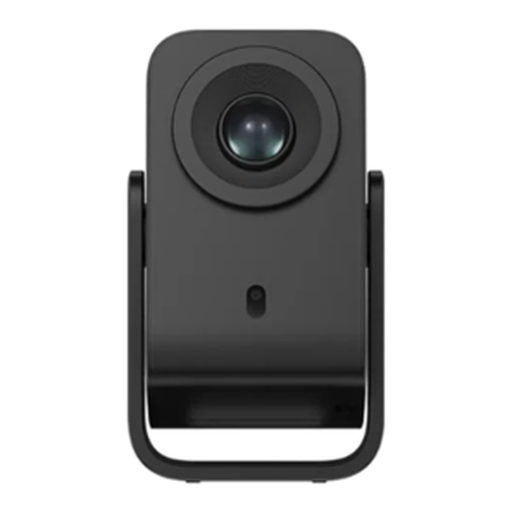 No image available
Consider this portable model if you want a temporary setup for digital films. Its stated native resolution is Full HD 1080p; support for a 4K input does not make the projected image native 4K.
Check the exact picture controls and the connections needed for your playback source before choosing it for dark scenes.
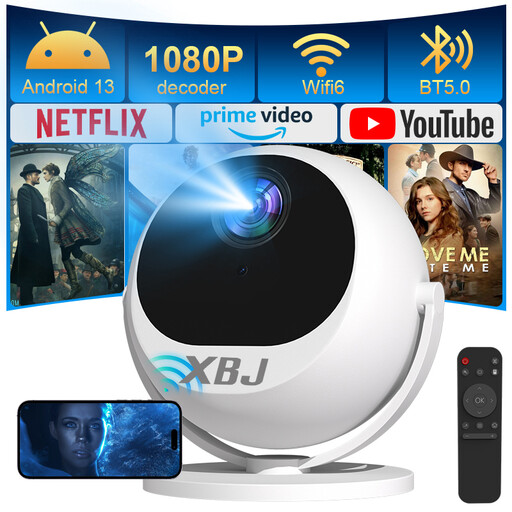
 No image available
This is a portable option if automatic image alignment matters for occasional digital-film viewing. The title states native Full HD 1080p, 900 ANSI lumens, 180° rotation and automatic keystone correction.
The advertised 8K support is not its native resolution. Check the image size you need from your available position and the picture controls you would use for darker films.
 No image available
Consider its rotating design if you need to try different positions for a temporary digital-film setup. The title states Full HD 1080p, 360° rotation and automatic keystone correction.
Before buying the European Version for use in the UK, check the supplied power lead and safety information. Confirm that your intended screen size works from the position available.
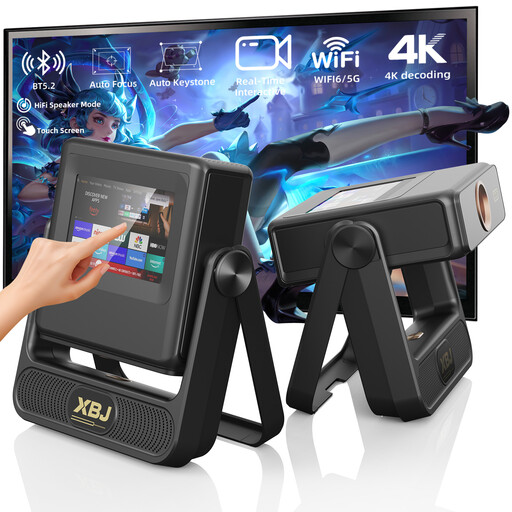 No image available
This model is worth examining if you want automatic focus and keystone adjustment for an occasional digital-film setup. The title states native 1080p and support for 4K input, rather than native 4K projection.
Check the usable image-size range against your room before purchase: the stated sizes differ within the listing. Confirm the picture controls you need for dark scenes.
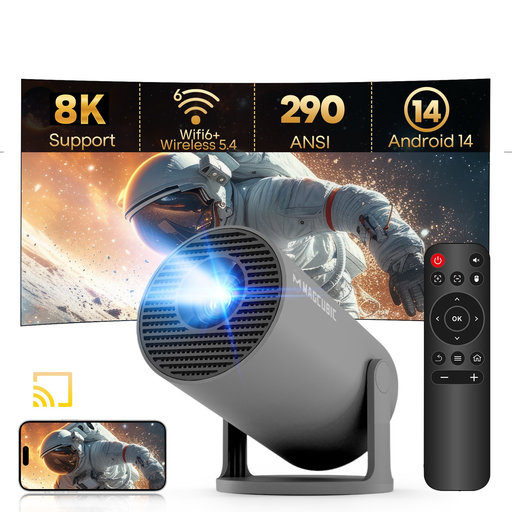 No image available
Consider this compact option if a temporary position matters more to you than native Full HD. It has native 720p resolution; the stated 1080p support describes an accepted input, not native projection.
The title lists automatic keystone correction and a 180° rotating stand. Focusing is manual, so allow for that adjustment when setting up.
No: native Full HD may suit digital silent-film viewing, while 4K-class projection is a choice to assess against your source, screen size and viewing distance. Extra display pixels cannot restore detail missing from an older digital transfer.
Choose equipment for the physical print rather than assuming a digital home projector can handle it. Confirm its gauge, marked projection speed and any soundtrack requirement with the film or distributor; Canyon Cinema's guidance notes that silent prints normally run at 16–18 frames per second unless specifically marked for 24.
Lens shift is worth checking when the projector cannot sit at the position needed to align the image with your screen. Epson lists lens shift and optical zoom for the EH-TW7100, as does ViewSonic for the LX700-4KE RGB; use the exact model's throw and adjustment guidance to see whether either fits your room.
Check the supplied version's power lead, safety instructions and applicable conformity information before buying. The Office for Product Safety & Standards describes requirements under the Electrical Equipment (Safety) Regulations 2016 for relevant equipment placed on the Great Britain market; Department for Business and Trade guidance dated 21 August 2026 says CE marking continues to be recognised alongside or in place of UKCA marking where applicable in Great Britain. A marking alone does not answer whether the supplied version suits your setup.