Daylight kitchen-diner viewers
You want to watch recordings before dark as well as in the evening. Light output, Full HD detail and a straightforward connection to your playback device matter more to you than portability.


For regular viewing, measure the lens-to-wall distance and work out how much light you can keep off the image before choosing a projector. A brighter Full HD model is a starting point for daytime use; choose short throw if placement is tight, or a portable model if you can dim the room and need to put it away. Keep the projector and its leads clear of water, heat and kitchen appliances.
You want to watch recordings before dark as well as in the evening. Light output, Full HD detail and a straightforward connection to your playback device matter more to you than portability.
The dining area leaves limited space between the lens and projection wall. You need to check throw distance and keep the projector and its image path clear of where people sit or walk.
You want to store the projector between sessions and value convenient streaming and onboard sound. You can mainly watch in a dimmed room rather than relying on it for daytime viewing.
Check room light and the required image position first, then decide how you will play recordings and hear dialogue. The percentages below express how consumers with this kitchen-diner use in mind might prioritise one concern over the others.
| Concern | What to check | Who this matters to |
|---|---|---|
| Image clarity with room light | Check native resolution and the manufacturer’s brightness specification; consider whether blinds or curtains can keep direct light off the image. | If I watch before dark, I need the stage and subtitles to remain readable without relying on a fully dark room. Around 36% of consumers would put image clarity with room light first. |
| Room fit and throw distance | Measure from the intended lens position to the wall; check the model’s throw range against your chosen image width. | A projector behind my dining table may interrupt the room or put people in the image path, so placement comes first for around 29% of consumers. |
| Playback and sound | Confirm the connection needed by your player or streaming device and the projector’s audio options. | When I settle down to a recording, I want to connect my source easily and follow the dialogue over ordinary household noise. Around 21% of consumers would make playback and sound their primary concern. |
| Storage and ongoing use | Check storage needs, light-source maintenance and software-support dates if you plan to use connected features. | I need to put the projector away after viewing and want its connected features to suit how long I expect to use it; storage and ongoing use would come first for around 14% of consumers. |
An advertised image diagonal does not tell you whether that size fits your room. ViewSonic specifies a 100-inch image at 1.5 m for the short-throw PX706HD, compared with 3.32 m for the PX700HDHE.
Measure the usable lens-to-wall distance, choose a practical image width and check the exact model’s throw range and image position.
Portability and light output answer different needs. BenQ specifies 500 lumens for the GV50P, while the brighter Full HD examples from Epson and ViewSonic have stated outputs of 3,000 and 3,700 lumens respectively; those figures alone do not predict the image in your room.
If you expect to watch with daylight in the room, assess light control and the exact projector’s brightness rather than choosing on portability alone.
London Fire Brigade cautions against putting power-hungry appliances such as kettles, toasters and microwaves on the same extension. A projector and its playback equipment add to a kitchen-diner’s electrical setup.
Keep leads away from water and heat, and do not share an extension with those cooking appliances.
HDMI playback and a projector’s built-in smart features are separate considerations. Epson lists 31 March 2025 as the security-update end date for the CO-FH02.
Before relying on built-in streaming, check the current support commitment for the exact model. Consider a compatible external streaming device if it better suits your plans.
Its UK home-cinema range includes Full HD and 4K PRO-UHD models with different installation options.
Its UK range includes conventional home projectors and portable smart models for different placement needs.
Its UK Full HD models include short-throw and brighter conventional-placement options.
These choices suit consideration for theatre recordings where you can dim the kitchen diner. Compare their placement requirements and connections before deciding; their stated brightness does not establish how the image will look in daylight.
 No image available
Consider this for a movable setup when you can dim the room. The product title states native 1080p, 900 ANSI lumens, Android 14 and 180° rotation; confirm the image width at your available lens-to-wall distance and check UK plug and voltage suitability.
 No image available
Consider this for recordings from a compatible playback device in a room you can dim. The product title states native 1080p, 1,200 ANSI lumens, vertical and horizontal keystone correction and dual speakers; check the image size at your intended position and confirm UK electrical suitability.
 No image available
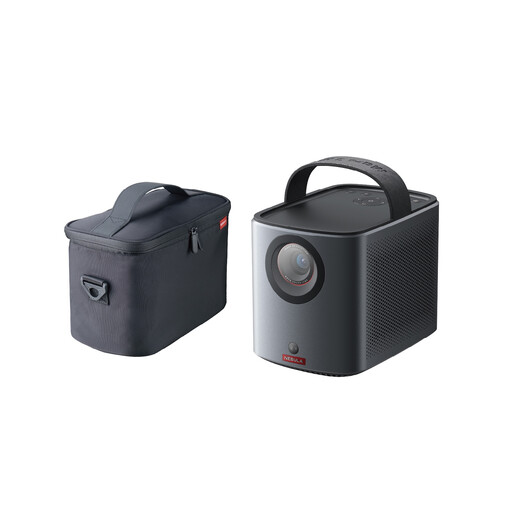
The carry case makes this bundle worth considering if you put the projector away after viewing. Check its image size at the available distance, whether its playback and charging arrangements suit a full recording, and UK plug and voltage suitability.
 No image available
Consider this for occasional viewing with flexible placement in a dimmed room. The product title states Full HD 1080p, 500 lumens, 360° rotation and HDMI; check throw distance, whether the sound suits your room, and the European Version’s plug and voltage arrangement for UK use.
Measure from the intended lens position to the projection wall, then compare that distance with the exact model’s throw range for your chosen image width. BenQ defines throw ratio as throw distance divided by image width; a screen-size claim for one model cannot be applied to another.
A portable projector is more suited to this choice when you can dim the room and storage matters most. BenQ specifies 500 lumens for the GV50P, while the brighter Full HD examples from Epson and ViewSonic have higher stated outputs; check light falling on your wall rather than treating any lumen figure as a guarantee of daytime clarity.
Avoid putting it on an extension shared with a kettle, toaster or microwave. London Fire Brigade warns against putting those power-hungry appliances on the same extension, and GOV.UK advises keeping electrical leads away from water.
Not necessarily: compare the exact projector’s audio connections and onboard speakers with the noise in your kitchen diner. Epson specifies 10 W stereo speakers for the EH-TW7100, while BenQ specifies an 18 W 2.1-channel system for the GV50P; neither specification alone tells you whether dialogue will be clear in your room.
Confirm the plug and voltage arrangement and check the seller’s product documentation for Great Britain. The Office for Product Safety and Standards states that electrical equipment placed on the Great Britain market must meet applicable safety requirements; a European-version label alone does not establish whether a particular projector meets your requirements.