Colour-first animation viewers
You want to assess colour coverage, tonal transitions and fine outlines, and have room for a conventional front-projection layout.


For animated films, choose a projector that fits your room and screen before comparing headline brightness figures. Colour specifications and HDR support matter when assessing the picture you want; a consistently dark room also makes contrast a priority, while a shared room may call for a different brightness and placement approach. Check throw distance, zoom and lens shift against your intended screen position before buying.
You want to assess colour coverage, tonal transitions and fine outlines, and have room for a conventional front-projection layout.
You can control the room light and place particular importance on black levels, shadow detail and HDR handling in darker scenes.
You use a multipurpose room where projector placement or ambient light makes a dedicated cinema layout difficult.
Decide where the projector and screen can go, then weigh colour and contrast against the light you expect in the room. These setups address different constraints rather than forming a single picture-quality ranking.
Consider it when: You can position a projector opposite the screen and want to compare published colour specifications for animated films.
Allow for: Limited mounting flexibility on some models; BenQ UK specifies a 1.0–1.3 throw ratio and just ±5% vertical lens shift for the W2720i.
Consider it when: You can darken the room consistently and care strongly about shaded scenes and HDR handling.
Allow for: A suitable screen and projector position remain important; a contrast specification alone cannot establish how a complete setup will look.
Consider it when: Placing a projector across a shared room is impractical.
Allow for: Careful alignment and a screen compatible with the chosen projector type, particularly if room light cannot be fully controlled.
| Concern | What to check | Who this matters to |
|---|---|---|
| Colour and fine detail | Look for a named colour-gamut standard and distinguish native display resolution from supported input resolution. | If animated outlines and deliberate colour palettes matter most to me, I want specifications I can compare rather than a brightness claim alone. Around 31% of consumers put colour and detail first. |
| Dark scenes and HDR | Check whether a contrast figure is native or dynamic, alongside HDR format support and room light control. | When I can darken the room, I care most about how shaded scenes and HDR are handled. Roughly 25% of consumers prioritise dark-scene contrast. |
| Placement and room light | Match throw distance and lens position to your screen; consider the screen type if ambient light remains. | If furniture or daylight limits where I can project, the image needs to fit the space before other features matter. Around 25% of consumers make room fit their primary concern. |
| Connections and ownership | Confirm source-device and audio-system compatibility, plus support terms for the exact model. | I want films to work with my existing sources and sound setup without making ownership awkward. Approximately 19% of consumers put integration and ongoing support first. |
A brightness figure does not describe colour, contrast or HDR handling, and it cannot tell you whether the projector suits your screen and room light.
Judge brightness against the intended image size and viewing conditions, then check the picture characteristics that matter to you.
Throw ratio, zoom and lens shift vary by model. For instance, BenQ UK specifies a 1.0–1.3 throw ratio and ±5% vertical lens shift for the W2720i, while Epson United Kingdom lists motorised optics and substantially wider lens shift for the EH-LS12000B.
Measure the lens-to-screen distance and mounting height, then check the intended image size against the exact model.
A placement mismatch may call for a different mount, longer cables or changes to the room layout.
ProjectorCentral notes that the projection surface is an important part of a home-theatre setup. A screen intended to manage ambient light also needs to suit the chosen projector type.
Choose the projector and screen together, and confirm screen compatibility before committing to an ultra-short-throw layout.
A separate screen adds another item to accommodate and install.
Its W2720i is a conventional home-cinema example for comparing published colour and placement specifications.
Its home-cinema range includes models addressing different placement needs, from long-throw installation to ultra-short-throw living-room layouts.
The DLA-NZ500 is a reference point for a dedicated, light-controlled cinema setup.
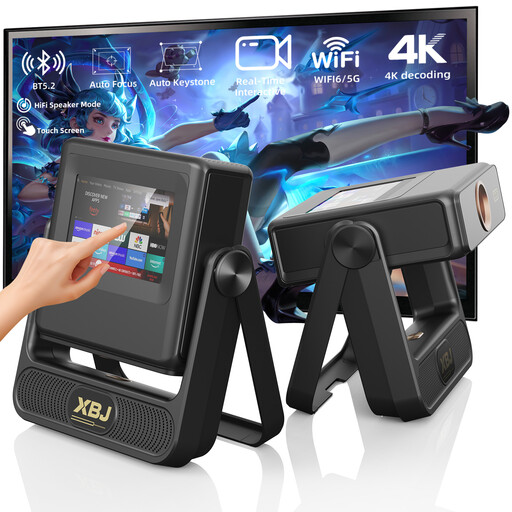
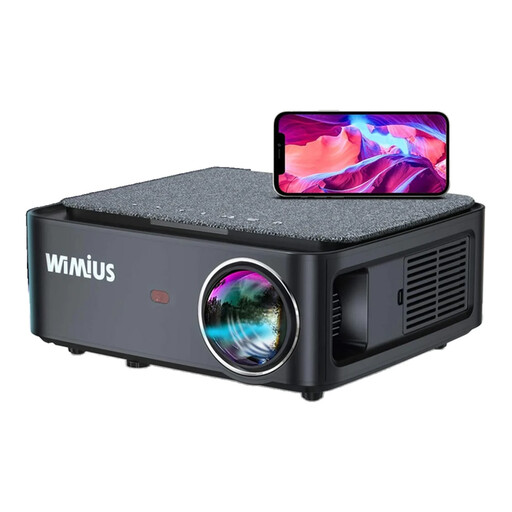
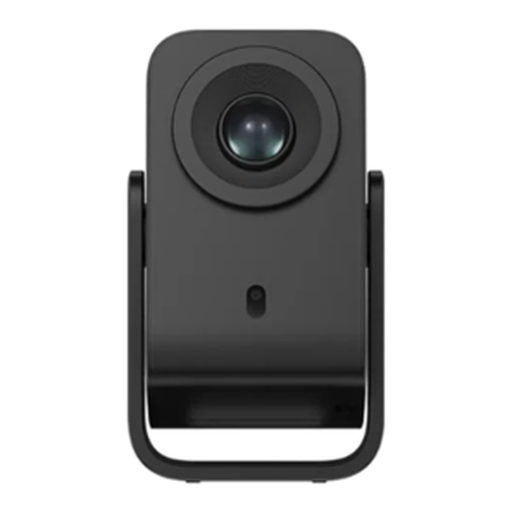
These Joybuy listings offer home-film viewing and compact or adjustable setups. Compare their stated display resolution with the input formats they accept, and check room fit and image characteristics for the exact model before choosing one for animated films.
 No image available
Consider it for a home-film setup where native 1080P display resolution meets your needs. The listing names 4K input support, auto focus, keystone adjustment and WiFi 6; confirm its brightness, colour-gamut standard and required screen position for your room.
 No image available
Consider it for a conventional film-viewing layout where Full HD is sufficient. The listing names 4K input support and horizontal and vertical keystone correction; check the image size achievable at your placement distance, along with HDR and contrast requirements.
 No image available
Consider it where a portable Full HD projector suits the room. Its listing names 4K input support; check the intended screen size against room lighting and placement, and confirm any colour-gamut or HDR requirements separately.
 No image available
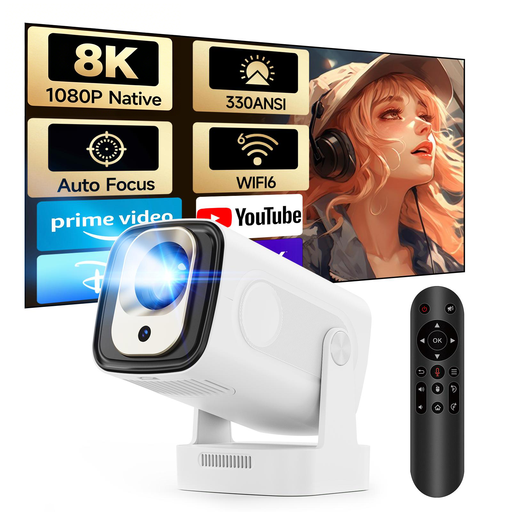
Consider it for app-based film viewing if native 1080P display resolution suits your screen. The listing also names 8K input support, Android 14 and auto keystone adjustment; input support is not native display resolution. Confirm the image size at your available distance and the picture specifications you need.
 No image available
Consider it if built-in smart functions and automatic focus matter to your setup. Confirm its native display resolution rather than relying on the listing’s combined 4K and 1080P wording, and check the screen size achievable in your room.
No: 4K is not a requirement for watching animated films. Compare native display resolution with your screen size and source material, then assess colour, contrast and HDR separately; accepting a 4K input does not by itself mean a projector displays native 4K.
Choose brightness for your room light and intended image size, not as a stand-alone measure of picture quality. A shared room with residual light presents different demands from a consistently dark cinema room, where contrast and black-level performance also deserve attention.
Measure the lens-to-screen distance, intended screen width and mounting height, then compare them with the exact model’s throw ratio, optical zoom and lens-shift range. Check that physical placement works rather than assuming digital keystone correction will resolve a mismatch.
Yes: the projection surface is part of the viewing setup. ProjectorCentral highlights its importance and discusses ambient-light-rejecting screens for rooms where lights remain on; confirm that any screen you consider suits your projector type, especially with ultra-short-throw projection.
Check the seller’s terms and the manufacturer’s warranty, repair route and software-support information for the exact model supplied. If you plan to use built-in smart functions, look for a stated update commitment rather than assuming it applies across a brand’s range.