Households sharing film nights and sport
A projected image can serve several viewers, provided the usual seating, windows and lamps leave a workable position for both the projector and the image.


A projector is a practical choice for film nights or sport if you can make room for the required projection distance, control some ambient light and plan how viewers will hear and access the content. For regular viewing in a shared room with limited floor space, check a short-throw or ultra-short-throw home model; for occasional viewing in a dimmable room, a portable model offers more flexibility. If the room stays bright or needs a display that is ready for everyday use without a projection setup, consider a TV upgrade instead.
A projected image can serve several viewers, provided the usual seating, windows and lamps leave a workable position for both the projector and the image.
Short-throw or ultra-short-throw models are worth examining when a conventional projector cannot sit far enough from the wall. The required distance still depends on the exact model and intended image size.
A portable projector suits a setup that moves between rooms or comes out for selected evenings, especially when the viewing space can be dimmed.
Start with the room at the time you normally watch, then check placement, sound and content connections on the exact model.
| Priority | What to check | Your needs |
|---|---|---|
| Room lighting | Compare stated brightness on the same measurement basis. Consider the intended image size and whether you can control light from windows and lamps; BenQ notes that ambient light can wash out colours. | I want the picture to remain usable at the times we actually watch, not just in a darkened demonstration room. |
| Placement | Measure the available projector-to-wall distance and choose an image size. Use the exact model's throw specifications or calculator: Epson says distance depends on the model, lens and desired image size. | There needs to be a sensible position for the unit without obstructing the shared room. |
| Group audio | Check the built-in speaker arrangement and, if you plan external sound, the model's audio output or compatible HDMI ARC/eARC connection. Allow for speaker position and cables. | Dialogue and sport commentary need to be clear to everyone watching, not only to someone sitting beside the projector. |
| Content access | Confirm the current UK availability of each app you use and the HDMI requirements of your existing devices. Google TV Help says casting needs the devices on the same Wi-Fi network and a compatible app or Chrome browser. | Our subscriptions, set-top box, console or phone content should have a connection route we can use. |
| Connected-device support | For a smart projector, check the manufacturer's declared security-update period and current support position. BenQ's TK705STi specifications list a guaranteed update date of 20 July 2025. | If the projector will stay connected for years, I want to understand its software support before relying on its built-in apps. |
An advertised maximum image size does not show what the projector can produce from your available shelf or cabinet position. Epson says placement distance varies with the model, lens and image size.
Measure the projection path and check the exact model's throw guidance for the image you want before deciding between conventional, short-throw and ultra-short-throw placement.
Room light and the projection surface affect the picture. BenQ notes that ambient light can make colours look washed out in a living space.
Assess a model for your normal viewing time and intended image size, and consider whether you can reduce light from windows and lamps.
Built-in apps and casting are different ways to access content; neither establishes that a particular service will work on every model. Google's casting guidance also requires a shared Wi-Fi network and compatible software.
Check your essential UK apps, existing HDMI devices and casting method on the exact projector. For a connected model, check its current security-update support as well.
Which? assesses projector sound separately from picture quality. A built-in speaker specification alone cannot tell you whether dialogue will suit your room and group.
Decide whether you need external speakers before buying, then confirm the projector and intended audio equipment have compatible connections.
External speakers may also require space, cables or adapters in the shared-room setup.
These model examples illustrate different setups; a brand name alone does not establish how a projector will perform in your room.
Epson's UK listings include the portable Lifestudio Pop Plus EF-62B and the EH-LS650W ultra-short-throw home projector.
BenQ offers conventional-throw and short-throw home-entertainment examples, including the GP520 and TK705STi.
Which? includes Anker Nebula among the home-projector brands it tests for UK readers.
These portable models are options for flexible film-night placement. Check each one against your room lighting, intended image size and content setup; this list does not cover the short-throw home-projector or TV routes.
 No image available
Consider its portable, rotating design if you move the film-night setup between positions. The listing states 900 ANSI lumens, Android 14, Wi-Fi 6, Bluetooth 5.4, auto keystone correction and HDMI/USB compatibility. Check the image at your intended size and lighting, and confirm the apps and update support you need.
 No image available
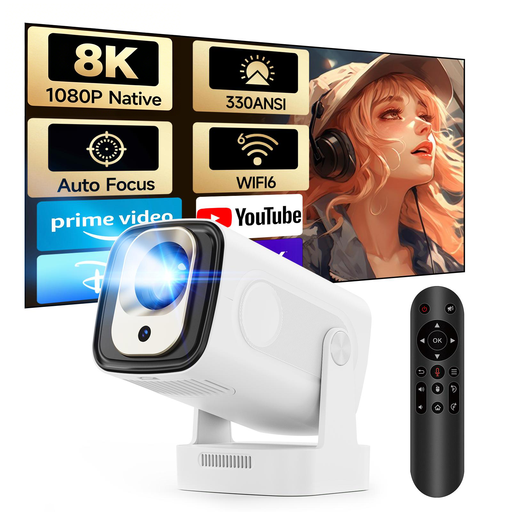
Autofocus and the listed built-in speaker may simplify an occasional setup. The title states 330 ANSI lumens and Android 14; assess it for dimmed-room viewing rather than assuming it will suit a bright living room. Confirm the required placement, UK apps and speaker suitability for your group.
 No image available
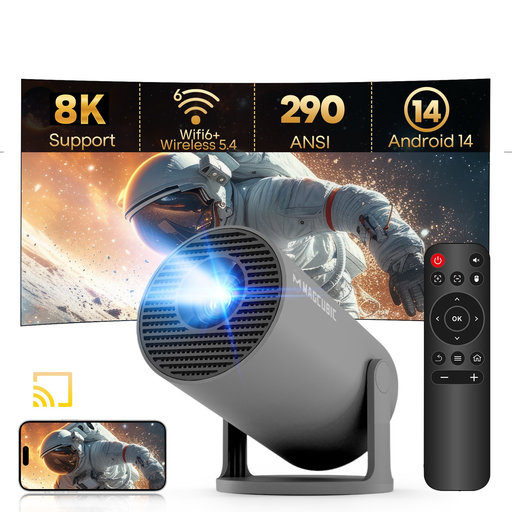
Its rotating stand suits flexible positioning for occasional viewing. The listing identifies native 720p resolution, 1080p support, Wi-Fi 6, Bluetooth 5.4 and automatic keystone correction; supported input resolution is not native resolution. Check the image in your usual lighting and expect to confirm focus adjustment, as the product information specifies manual focus.
 No image available
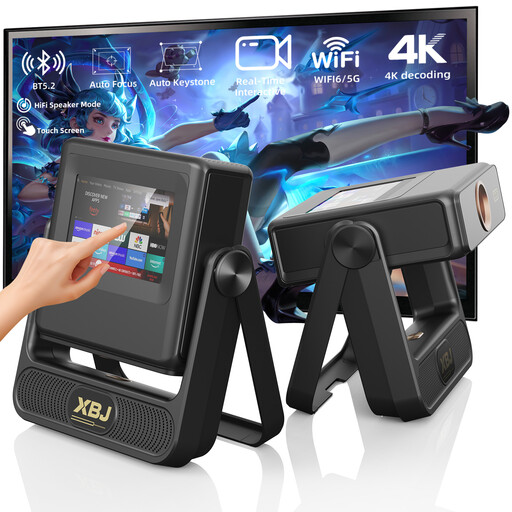
The listed autofocus, automatic keystone correction and rotatable base are relevant to a movable film-night setup. Its product information gives conflicting brightness figures of 800 and 900 ANSI lumens, so confirm the specification before judging its fit for a lit room. Also check the throw distance for your chosen image size and the services you intend to use.
Consider a projector when you have a clear projection area, a position that meets the model's throw requirements and enough control over room light for your usual viewing time. If those conditions are difficult to meet and the display is used throughout the day, a TV upgrade may involve less setup.
Choose the image size and possible projector position, then compare the available distance with the exact model's throw guidance. Epson notes that placement distance depends on the model, lens and image size, so an advertised maximum image size is not a room measurement.
Do not assume so from a brightness figure alone. BenQ notes that ambient light can wash out colours; assess the intended image size and the lights you normally use, and plan to dim the room if necessary.
No. Check the required service and account on the exact projector. Google TV Help says casting requires both devices on the same Wi-Fi network and a Chromecast-enabled app or Chrome browser; an HDMI source may offer another route if it meets the projector's connection requirements.
Yes, if you watch live TV through a channel or streaming service, or use BBC iPlayer. TV Licensing says these rules apply on any device, so using a projector does not change the requirement.