
24/7 全天候客户支持

免费退货

当日/次日达

品质保障

开启新人专享福利: 全场免邮 | 低至 2 折 | 免费试用 30 天 JoyPlus 会员
下载 Joybuy
Protective gloves can make household jobs more comfortable, but choosing the wrong type may leave you with poor grip, sweaty hands or inadequate protection. A thin disposable glove is not designed for hot cookware, while a soft household glove should not be treated as protection against strong solvents.
This guide explains what to check before buying protective gloves, from gardening gloves and household cleaning gloves to nitrile gloves, oven gloves and BBQ gloves.
Gloves are designed around particular hazards. Gardening gloves focus on grip, abrasion resistance and keeping out soil. Household cleaning gloves are intended for water, detergents and routine chores. Heat-resistant gloves use insulating materials, while disposable gloves prioritise hygiene and convenient changes.
Using the wrong type can shorten the glove’s life and create a false sense of security. Always match the glove to the task, temperature and substance involved.
A product described as chemical-resistant may resist some substances better than others. Household gloves are generally not intended for strong corrosive chemicals, industrial solvents or prolonged chemical exposure. Check the product information and any relevant resistance data before use.
For workplace tasks, consult the substance’s safety data sheet and select gloves specified for that chemical. For domestic cleaning, follow the cleaner’s label and avoid using gloves that are torn, degraded or visibly swollen.
A glove that is too loose can reduce dexterity and grip. One that is too tight may split at the fingers or become uncomfortable during longer jobs. Features such as an elasticated wrist, beaded cuff or rolled cuff can help keep the glove in place, but sizing still matters.
Reusable gloves should be rinsed and dried after use. Disposable gloves should be changed between tasks and discarded after use. Neither type should be stored while damp.
Textured palms and fingertips can help when handling wet plates, tools or oily food. However, increased thickness may reduce fine finger control. For pruning, planting and detailed work, flexible gardening gloves with a close fit are generally more practical than bulky gloves.
For food preparation, choose gloves labelled for food contact and use a fresh pair when changing between raw and ready-to-eat ingredients. Colour-coded options may also help separate tasks in busy kitchens or professional environments.
Oven gloves should cover the wrist and provide enough padding for the cookware you normally use. Double oven gloves can help when lifting larger trays, although grip and manoeuvrability still depend on the design.
For BBQ use, check whether the product is intended for handling hot utensils, trays or cookware. Do not assume that a general-purpose glove protects against direct flames. Keep heat-resistant gloves away from open flames unless the instructions specifically allow that use.
For professional settings, look for the relevant product markings, standards and instructions. Food-safe, medical, industrial and PPE requirements can differ, so do not rely on a general marketing phrase alone.
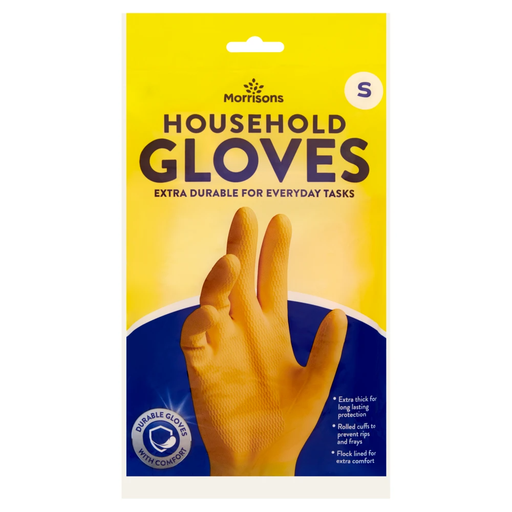
Why This Fits Their Persona: A reusable option for regular washing-up, bathroom cleaning and everyday household chores, with a small size for a closer fit.
The thicker construction and reinforced rolled cuffs address premature tearing and slipping during wet chores. It is clearly described for household use rather than strong solvents or high heat.
Soft flock lining, wet grip and availability in multiple sizes. Rinse and air-dry after use.
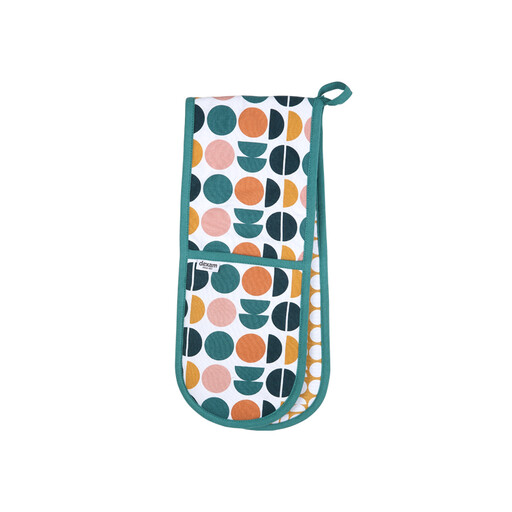
Why This Fits Their Persona: Suitable for home cooks and bakers who want reusable kitchen gloves with generous coverage and a decorative finish.
Its generous double-glove format provides more coverage than a short mitt. The care instructions and warning to avoid direct flames help set realistic use expectations.
100% recycled cotton construction, machine-washable care and an 18 cm x 85 cm total length.
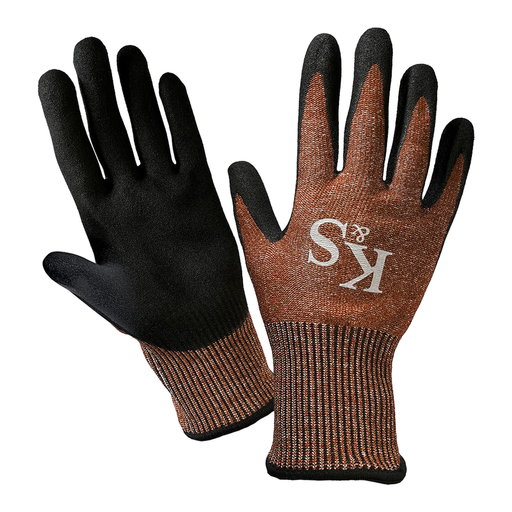
Why This Fits Their Persona: A practical match for frequent gardeners handling soil, tools, plants, pruning and weeding in changeable UK weather.
The nitrile coating and elasticated wrist address weak grip and dirt entering at the cuff. The stated abrasion, cut and tear resistance is more relevant to garden work than a thin disposable glove.
Lightweight flexible design, wet-and-dry grip and a straight thumb for detailed control. This small pair is not machine washable.
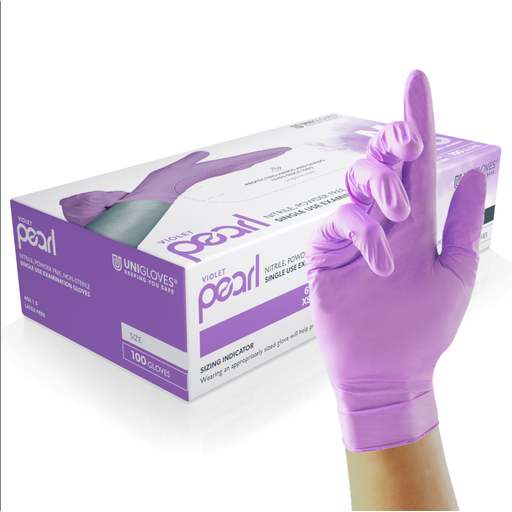
Why This Fits Their Persona: Designed for users who move between food preparation, cleaning, beauty, gardening or hygiene-sensitive tasks and need frequent glove changes.
The latex-free, powder-free design avoids two common selection errors. Its single-use instructions also reduce the temptation to reuse a disposable glove across different tasks.
Textured fingertips, touchscreen compatibility, beaded cuffs and a box of 100 powder-free nitrile gloves. Check the label for the precise approved uses.
We have compiled a complete, real-time list of products that fully satisfy these strict selection criteria and UK safety regulations.
Disposable nitrile gloves should be discarded after a single task or when contaminated, torn or removed. Washing and reusing them can compromise hygiene and fit.
Some nitrile gloves are labelled as suitable for food contact, while others are intended for different uses. Check the packaging or product information for the relevant food-contact statement. Choose powder-free gloves, change them between tasks and never use them for handling hot cookware.
Lifespan depends on frequency of use, exposure to detergents, sunlight and abrasion. A reusable glove may last through many household tasks when rinsed and dried correctly, but it should be replaced at the first sign of damage. Gardening gloves may wear faster when used with sharp tools, thorns or rough materials.
Do not assume so. Many household cleaning gloves are intended for water, detergents and routine domestic products, not concentrated acids, solvents or industrial cleaners. Read both the glove instructions and the chemical label, and use task-specific chemical-resistant gloves where required.