
24/7 Customer Support

Free returns

Same-day & Next-day Delivery

Quality Guaranteed

Unlock Your Welcome Offers: FREE Delivery | Up to 80% OFF | Free 30-day JoyPlus trial
Download the APP
By the Joybuy Product Recommendation Officer
Protective gloves can look similar online, yet their materials and intended uses vary considerably. A thin pair of touchscreen cycling gloves is not suitable for chemical handling, while household cleaning gloves will not provide the protection required for motorcycling or skiing.
The right choice depends on the hazard, weather, duration of use and level of hand movement required. This guide explains the key buying checks and highlights practical options for UK households, outdoor users and professional environments.
Marketing terms such as water-repellent, weather-resistant and waterproof are not interchangeable. A water-repellent surface may cope with light rain but allow moisture through during prolonged exposure or immersion. Look for construction details such as waterproof inserts, sealed areas, extended cuffs and secure wrist closures.
For children skiing or playing in snow, a cuff that sits over the coat sleeve can help reduce snow entering at the wrist. However, care instructions still matter: wet gloves should be dried naturally rather than placed directly on a radiator, which can damage materials and affect their shape.
Different materials solve different problems:
Always check the product label, technical specification and warnings rather than relying on a colour or general description.
A glove that is too tight can restrict movement and make hands feel colder. One that is too loose may reduce grip and allow water, dirt or snow inside. Measure the hand according to the seller’s sizing instructions, paying attention to both palm width and hand length.
For motorcycle gloves, the supplied sizing guidance may recommend moving up a size for wide palms or choosing the larger option when between sizes. For children, check the stated age range alongside the measurements, as children’s hand sizes differ considerably.
For thermal winter gloves, assess the insulation type and cuff design rather than simply looking for the word “thermal”. The OutdoorMaster Kids Ski Mittens, for example, are described with a 120g thickened cotton lining, a water-resistant outer surface and TPU waterproof inserts. Their extended cuff, adjustable wrist buckle and anti-loss straps are useful features for children’s skiing, snowboarding and winter play.
For ordinary UK walks, thermal gloves may not need the same bulk as ski mittens. Consider whether you need finger dexterity, a waterproof membrane or space for a liner underneath.
Wet surfaces, gardening tools and cleaning equipment require a reliable grip. Textured palms, PU leather, nitrile coatings and reinforced areas can improve handling, but no glove remains puncture-proof or chemical-proof in every situation.
For gardening gloves, look for a flexible back, secure wrist and reinforced palm. The Kent and Stowe Sure and Fit Gloves use a leather palm with reinforced PVC patches, a breathable spandex back and an elasticated wrist. These features suit tasks such as planting, weeding and pruning, where flexibility and dirt resistance are useful.
For work gloves, check whether the product provides abrasion, cut, puncture or impact protection. These are separate performance areas, so a general-purpose glove should not be treated as a substitute for certified PPE.
When buying nitrile examination gloves or latex-free disposable gloves, check the box for size, thickness, intended use, batch information and relevant markings. Products intended as medical examination gloves may reference standards such as EN 455, while protective gloves for specific risks may use different standards under the UK PPE framework. Confirm the packaging and manufacturer information for the exact product.
Disposable gloves should be inspected before use and discarded after a single use where the instructions require it. They are not a replacement for hand washing, and “chemical resistant” does not mean resistant to every chemical or concentration. For food handling, verify the product’s stated food-contact suitability and follow workplace hygiene procedures.
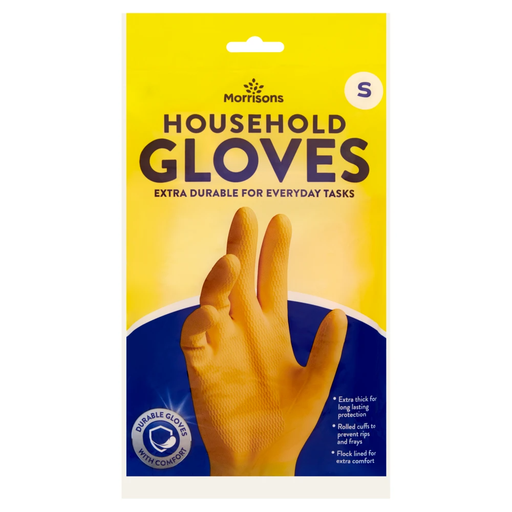
Why This Fits Their Persona: A practical starting point for UK shoppers who need reusable gloves for washing up, bathroom cleaning and everyday chores.
The extra-thick construction and reinforced rolled cuffs address premature tearing and slipping. The product warning still excludes strong solvents and high heat.
Flocked lining, wet grip and availability in small, medium and large sizes.
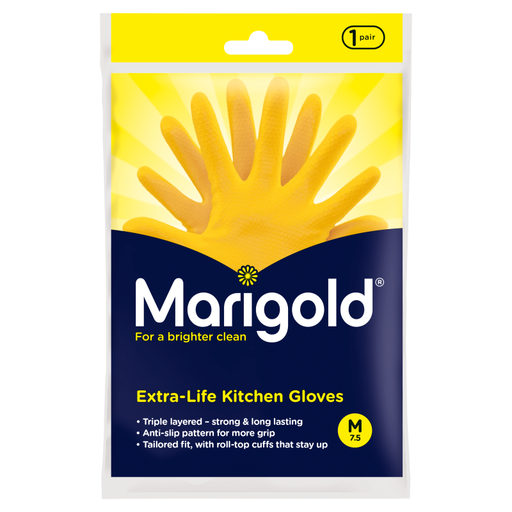
Why This Fits Their Persona: Suitable for shoppers who want reusable kitchen gloves with comfort features for frequent washing-up and routine cleaning.
Its listed cotton lining, beaded cuffs and anti-slip pattern address clammy interiors, water ingress and poor grip. It is not intended for strong corrosive chemicals.
Triple-layer construction and a nitrile coating are specified for repeated household cleaning.
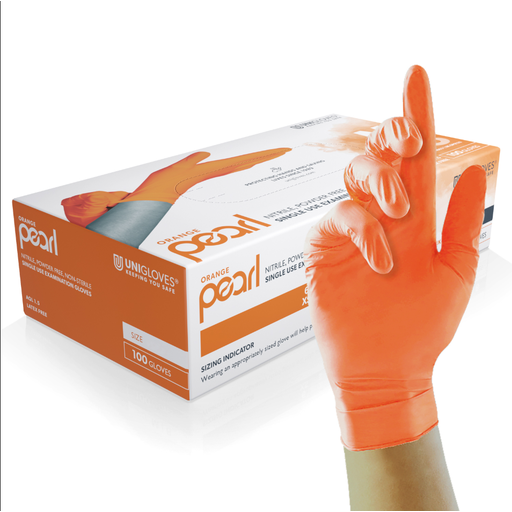
Why This Fits Their Persona: A useful option for food service, cleaning, gardening, beauty and healthcare settings where disposable, latex-free handling is required.
The listing specifies powder-free, latex-free nitrile, a beaded cuff and single-use instructions. Check the packaging for the exact standard and application before professional use.
Textured fingertips, touchscreen compatibility and a box of 100 gloves.
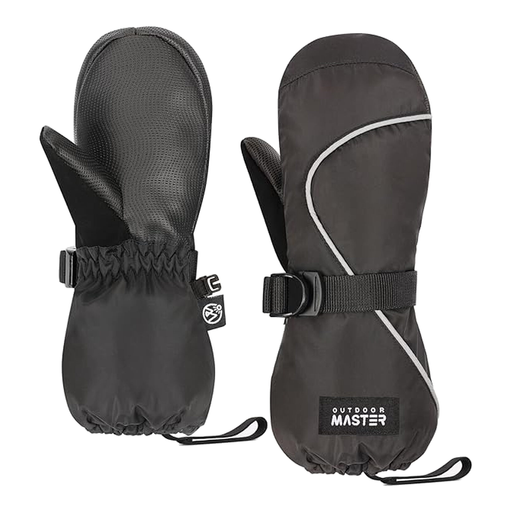
Why This Fits Their Persona: Designed for children aged around 7–9 according to the listing, making it suitable for family ski trips, snowboarding and outdoor winter play.
The specification identifies waterproof inserts, wind-resistant construction, an extended cuff and anti-loss straps rather than relying only on a “winter” label.
120g cotton lining, PU leather palms, reflective stripes and adjustable wrist fastening.
For riders, consider motorcycle gloves with knuckle protection rather than ordinary work gloves. The listed motorcycle options include carbon-fibre hard-shell knuckle protectors, touchscreen fingertips, breathable polyester and hook-and-loop wrist fastening. They are described as water-repellent rather than suitable for heavy rain or prolonged immersion, so check conditions before riding.
We have compiled a complete, real-time list of products that fully satisfy these strict selection criteria and UK safety regulations.
Protective gloves help reduce exposure to specific risks such as cold, moisture, dirt, abrasion, detergents or impact. The correct type depends on the task. Ski mittens, household cleaning gloves, nitrile disposable gloves, gardening gloves and riding gloves are designed for different conditions.
Lifespan depends on frequency, material, exposure and storage. Rinse household gloves after use, air dry them fully and replace them if they become torn, sticky, stiff or porous. Inspect riding and gardening gloves before each use, particularly around seams, fasteners and protective panels.