Regular 5k runners seeking portable snacks
Individually wrapped bars can fit a routine of snacks after training or between meals. Check how many bars are in the pack and whether you would use that particular flavour regularly.


Choose a protein-bar multipack for the way you plan to use it: a bar may fit a post-run or between-meal snack routine, but high protein alone does not establish that it suits you immediately before a 5k. UK Sports Institute guidance identifies compact carbohydrate foods as exercise-fuelling options; if you want a bar near a run, try it during training before committing to a larger pack. Compare bar count, portion size, the nutrition panel and the exact flavour’s ingredients.
Individually wrapped bars can fit a routine of snacks after training or between meals. Check how many bars are in the pack and whether you would use that particular flavour regularly.
If you plan to eat shortly before running, check the bar’s carbohydrate, fat and ingredients, and try it during ordinary training. UK Sports Institute guidance also identifies compact carbohydrate foods as options for fuelling exercise.
Read the label for the exact flavour before buying several bars. Ingredients and warnings matter particularly when a product contains an allergen you avoid or a sweetener you have not tried near a run.
Decide when you intend to eat the bars, then compare the portions and labels of packs that fit that use.
| Priority | What to check | Your needs |
|---|---|---|
| Pack size | Check the number of bars and the weight of each bar. Make sure the listed flavour and portion match the pack you intend to order. | I want enough portable snacks for my routine, without committing to a large case of a flavour I have not tried. |
| When you will eat it | Read protein and carbohydrate per bar, alongside fat and portion size. For food shortly before running, consider timing and try it in training; UK Sports Institute guidance also lists compact carbohydrate foods for exercise fuelling. | If I am packing food for before a 5k, I need to know whether that particular bar and timing work for me. A between-meal snack serves a different purpose. |
| Sweeteners and warnings | Read the ingredient list and any on-pack warning. Barebells Peanut Butter contains maltitol, and Barebells and PhD warn that excessive consumption may have laxative effects. | A low-sugar description might appeal to me, but I would try an unfamiliar bar on an ordinary day before eating it close to a run. |
| Allergens and dietary requirements | Check the exact flavour’s ingredients and emphasised allergen information, rather than relying on the wider product range. Check any dietary-suitability statement on that pack. | I need the bar I actually receive to fit my dietary requirements, particularly if I am ordering several at once. |
Protein content alone does not tell you how a bar will fit your timing or how you will tolerate it. UK Sports Institute guidance identifies compact carbohydrate foods as exercise-fuelling options.
If you want to eat a bar near a 5k, compare its carbohydrate, fat and ingredients, then try that timing during training.
Allergens and sweeteners can differ between products and flavours. Barebells Peanut Butter, for example, contains milk, peanuts and soy and carries a warning about excessive consumption.
Read the exact product label and consider a smaller pack if you have not tried the bar before.
A bar count does not show portion size or nutrition per bar: the products discussed here include 40g, 50g and 60g bars.
Compare the stated weight and nutrition for the specific variant before deciding which pack fits your snack routine.
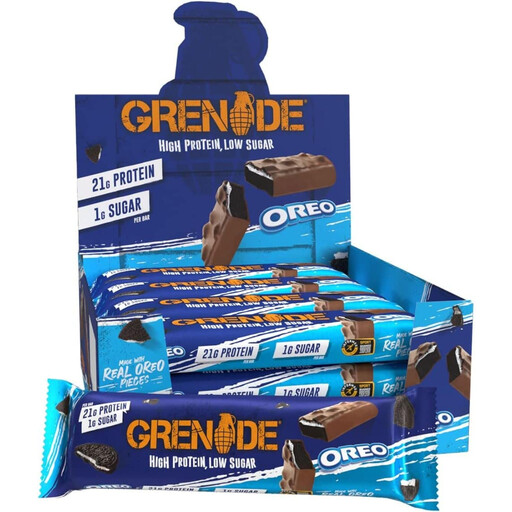
Grenade offers protein bars in several pack formats, including an OREO four-pack.
PhD offers Smart Protein Bars in a 12-pack for a regular snack routine.
Myprotein’s UK range includes layered bars, wafers, flapjacks and baked oatcakes.
Barebells offers a Peanut Butter protein-bar 12-pack.
Tesco lists a Nature Valley Protein Peanut & Chocolate 8 x 40g grocery multipack.
Quest describes a range of protein bars and variety packs.
These protein-bar multipacks offer different pack sizes and flavours to consider for snacks around a 5k training routine. Check each variant’s label and try an unfamiliar bar during training before relying on it close to a run.
 No image available
A 12-bar pack to consider if you want individually portioned snacks for a regular routine. Check the exact flavour’s ingredients and nutrition panel before eating one near a run.
 No image available
This four-bar pack is a smaller flavour commitment for portable snacks. Check the Salted Caramel Nut label itself rather than using nutrition or ingredient details from another Nature Valley flavour.
 No image available
This four-pack offers a smaller commitment than a 12-bar case. The Joybuy listing states more than 20g protein and less than 2g sugar per 60g bar; check its ingredients and try it during training if you plan to eat it near a run.
 No image available
A 12-bar Peanut Butter pack for shoppers planning repeated snacks. Read this variant’s allergen information and sweetener warnings before committing to the case or eating a bar close to a run.
 No image available
This four-bar Peanut and Chocolate pack offers a smaller quantity for portable snacks. Check the label of this four-pack rather than assuming every detail of a separately listed eight-pack applies to it.
No. UK Sports Institute guidance says a parkrun-style event does not call for fuelling as though it were a marathon, and identifies compact carbohydrate foods as options for exercise fuelling. A protein bar can instead be a snack after a run or between meals; try any food you plan to eat before running during training.
Not on protein content alone. If you want a bar shortly before a 5k, also check its carbohydrate, fat, ingredients and portion size, then try it at that timing during training. The protein amount may matter differently for a between-meal snack.
Compare the number and weight of bars, then read nutrition per bar for the exact flavour. For example, a 4 x 40g pack and a 12 x 60g pack differ in both the number of snacks and their portion sizes; neither bar count alone nor a range-wide nutrition claim tells you which fits your routine.
It can be for some people. Barebells Peanut Butter contains maltitol, and Barebells and PhD warn that excessive consumption of their specified bars may have laxative effects. A warning does not predict your individual response, so try an unfamiliar bar on an ordinary training day rather than just before an event.