What should you check before buying?
Decide what role the snack needs to play, then compare individual bars and pack formats rather than assuming every multipack serves the same purpose.
| Priority |
What to check |
Your needs |
| Protein per bar |
Read the grams per individual bar, not just a range-wide claim. For exercise lasting more than an hour, compare that figure with the British Heart Foundation’s cited 15–30g post-exercise range; consider when you will next eat. |
After a longer session, I may want one portable bar to contribute protein before my next meal. After a shorter session, my regular meals may cover that need. |
| Pack and flavours |
Check the bar count, portion size and whether flavours are fixed. Myprotein lists 12 bars across five flavours in its Layered Bar Variety Box and says nutrition can vary by flavour. |
A mixed box makes sense if several people want different flavours. If I have not tried the bars, a smaller pack limits the commitment to one flavour. |
| Ingredients and allergens |
Read each flavour’s ingredients, allergen information and any “may contain” statement. The Food Standards Agency explains that precautionary statements communicate possible unintended allergen presence. |
Before sharing, I need to know which specific wrappers suit each person’s dietary requirements; a mixed box is not one interchangeable product. |
| Whole-bar nutrition |
Compare serving size, energy, carbohydrate, sugars and saturates alongside protein. If quick recovery between training bouts matters, the British Dietetic Association advises carbohydrate-rich food and fluids for refuelling. |
I want the bar’s full nutrition panel to fit the snack I have in mind, rather than choosing on a protein or low-sugar claim alone. |
Protein bar multipacks on Joybuy
These packs cover larger single-flavour boxes and smaller four-packs for post-gym snacking or sharing. Compare the nutrition and ingredients of the exact bar before deciding whether its pack size works for you.
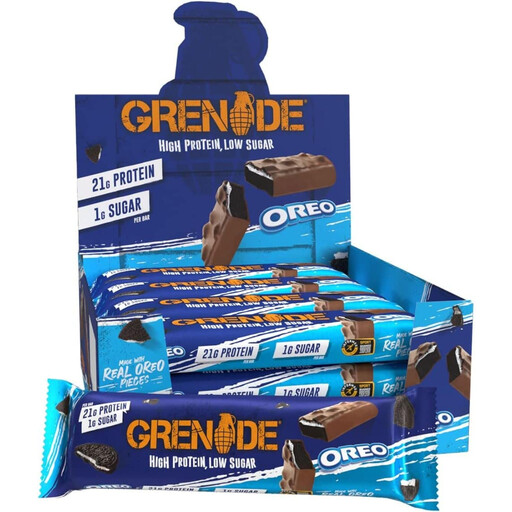 Image unavailable
Grenade Oreo Protein Bars, 12 x 60g
This 12-bar, single-flavour pack suits someone who already knows they want the Oreo variant for regular snacking or sharing.
Check its per-bar protein and the exact wrapper’s ingredients before using it as a post-exercise snack or offering it to others.
View on Joybuy
 Image unavailable
PhD Smart Protein Chocolate Peanut Butter Bars, 12 x 64g
This 12-bar box is a single-flavour option for someone who expects to use the same snack repeatedly.
Check the Chocolate Peanut Butter variant’s own nutrition and allergen label; figures for another PhD flavour should not be assumed to apply.
View on Joybuy
 Image unavailable
Grenade Oreo Protein Bars, 4 x 60g
The four-bar format offers a smaller commitment to the Oreo flavour than a 12-bar box and can be divided between a few people.
The Joybuy product title specifies four 60g bars. Check each bar’s nutrition and allergen information for the intended use.
View on Joybuy
 Image unavailable
Grenade Soft Core Double Chocolate Bars, 12 x 50g
This 12-bar Double Chocolate box is another single-flavour format for regular use or sharing.
Each bar is described as 50g in the product title. Compare its own per-bar nutrition and ingredients with other packs rather than assuming all Grenade ranges have the same formulation.
View on Joybuy
 Image unavailable
Nature Valley Protein Salted Caramel Nut Bars, 4 x 40g
This four-bar pack is a smaller-format snack option when a large box would be more than you need.
The product title specifies four 40g bars. Read the exact pack’s protein figure and allergen information before choosing it for a post-gym snack or sharing it.
View on Joybuy
Common questions
Do I need a protein bar after every gym session?
No. The British Heart Foundation says regular meals containing protein are the focus if you exercise for less than an hour. After a session lasting more than an hour, it says extra protein can be useful and cites a 15–30g range; whether a bar is useful also depends on what and when you will next eat.
Which figures should I compare on a multipack label?
Start with serving size and protein per individual bar, then compare energy, carbohydrate, sugars, saturates and salt for the exact flavour. Read the ingredients and allergen statement too: a protein claim alone does not answer whether the bar suits everyone sharing the box.
Does low sugar mean I can eat several bars at once?
No. PhD and Grenade warn that excessive consumption of the cited bars may cause laxative effects, while Quest says tolerance of sugar alcohols in its bars varies. Follow the guidance on the exact pack rather than treating a low-sugar description as a serving recommendation.
Can I share a variety box with someone who has a food allergy?
Check the exact wrapper for every flavour before sharing. Grenade lists allergens and possible traces for its selection box, and the Food Standards Agency explains that “may contain” statements indicate possible unintended allergen presence. A box-level flavour description is not a substitute for the individual bar’s label.
Does a vegan protein bar necessarily provide as much protein as other bars?
No; compare the individual products. Tesco lists 7.6g protein per bar for its vegan nākd Peanut Butter multipack, while Barebells lists 15g for its Vegan Salty Peanut bar. Those figures describe different bars and do not establish the nutrition or multipack format of other vegan products.


