What should you check before choosing?
Start with the amount in one bar, then check whether its dietary information and storage instructions fit the rest of the lunch.
| Priority | What to check | Your needs |
|---|
| Protein per bar |
Compare protein and energy for one bar, not just per 100g or per multipack. Nature Valley lists 10.2g protein per 40g Peanut & Chocolate bar; TREK lists 9g per 50g Cocoa Oat flapjack. |
I want to know what the bar adds to my lunch without assuming that every product named “protein” has the same nutritional profile. |
| Dietary suitability |
Read vegan, gluten-free and dairy-free statements for the exact flavour and pack. Check the ingredients as well as any may-contain statement. |
For a vegan or gluten-free lunch, I need the claim on the bar I will actually pack, not an assumption about its brand. |
| Whole-bar nutrition |
Use the per-bar figures for sugars, saturated fat and kcal. A “no added sugar” statement does not give the total sugars figure: the UK retailer listing for nākd. Cocoa Hazelnut states 13g sugars per 45g bar. |
If the bar is an addition to lunch, I want to compare the portion I will eat rather than judge it by one front-of-pack phrase. |
| Lunch storage |
Follow the bar’s storage instructions and check use-by dates and storage directions on chilled foods separately. GOV.UK food-business guidance distinguishes chilled-food temperature control from ambient storage. |
A wrapped bar may be convenient to carry, but I still need to keep cheese, cooked meat, eggs or prepared salad cold when their instructions require it. |
Which brands are relevant?
These brand references describe particular products or published brand information; compare the label on the flavour and pack you intend to buy.
Nature Valley
Its Peanut & Chocolate protein bar lists 10.2g protein per 40g bar, making it a useful reference for a protein-focused lunch choice.
- The Peanut & Chocolate bar is described as gluten free and suitable for vegetarians.
- That bar contains peanuts, soy and milk, may contain tree nuts, and lists 6.9g sugars per bar.
TREK
The Cocoa Oat Protein Flapjack is a vegan, gluten-free 50g option with 9g plant protein, according to TREK.
- Its stated vegan and gluten-free suitability may help when planning a lunch around those requirements.
- Cocoa Oat contains soy and may contain peanuts, nuts and milk; check the wrapper if allergens matter.
nākd.
Cocoa Hazelnut is a fruit-and-nut protein bar described in its UK retailer listing as vegan, gluten free, dairy free and made without added sugar.
- The listed 45g bar provides a distinct option when those dietary statements matter more than protein grams alone.
- The listing states 13g sugars per bar; the bar contains peanuts and hazelnuts and may contain soy and other nuts.
Eat Natural
Eat Natural’s Dark Chocolate & Peanut bar is a nut-led 40g option; its UK product information lists 7.8g protein per bar.
- The manufacturer describes this product as gluten free and a source of protein.
- Its peanut and soy ingredients and may-contain statements need checking against individual allergy requirements.
Graze
Graze describes its snacks as providing at least one of plant protein, fibre or an essential vitamin or mineral.
- The individual snack label lets you check which of those attributes applies to the bar you are considering.
- Check protein per bar before comparing a particular Graze snack with a named protein bar.
Alpen
Alpen is a cereal and muesli brand whose product range has also included bars.
- A current pack provides the serving size and nutrition needed to assess any Alpen bar offered for lunch.
- Alpen identifies some older bar products as discontinued; do not use an older product name as a substitute for checking a current pack.
Joybuy bars for a ploughman’s lunch
These Joybuy listings cover peanut-and-chocolate bars, oat flapjacks and other nut-flavoured bars that could be added to a packed ploughman’s lunch. Check the individual pack’s nutrition and allergens before choosing between flavours.
 Image unavailable
Nature Valley Protein Peanut & Chocolate Bar, 4 x 40g
For a protein-focused addition to lunch, the Peanut & Chocolate bar lists 10.2g protein per 40g bar. It is described as gluten free but contains peanuts, soy and milk and may contain other nuts; check the wrapper before sharing.
View on Joybuy
 Image unavailable
Nature Valley Protein Salted Caramel Nut Bar, 4 x 40g
This salted caramel nut flavour offers another 40g bar format for a packed lunch. Check its own protein and allergen information rather than assuming it matches the Peanut & Chocolate flavour.
View on Joybuy
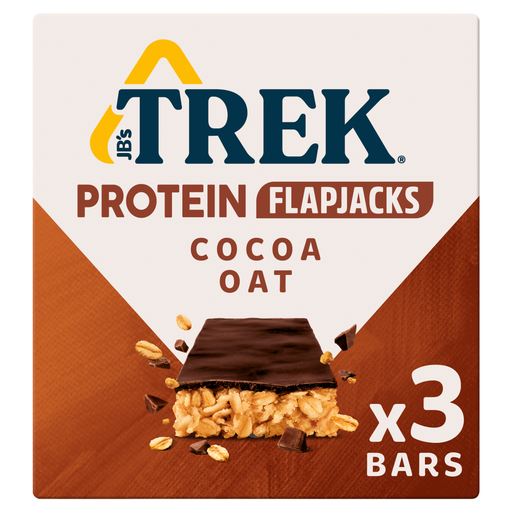 Image unavailable
TREK Cocoa Oat Protein Flap Jacks, 3 x 50g
For a vegan, gluten-free oat option, TREK states that Cocoa Oat provides 9g plant protein per 50g flapjack. It contains soy and may contain peanuts, nuts and milk, so check the individual wrapper for allergy requirements.
View on Joybuy
 Image unavailable
TREK Salted Caramel Protein Flapjacks, 3 x 50g
This salted caramel oat flapjack comes in a 3 x 50g pack. Compare its own per-bar protein and sugars figures with Cocoa Oat, and check the wrapper for dietary and allergen information.
View on Joybuy
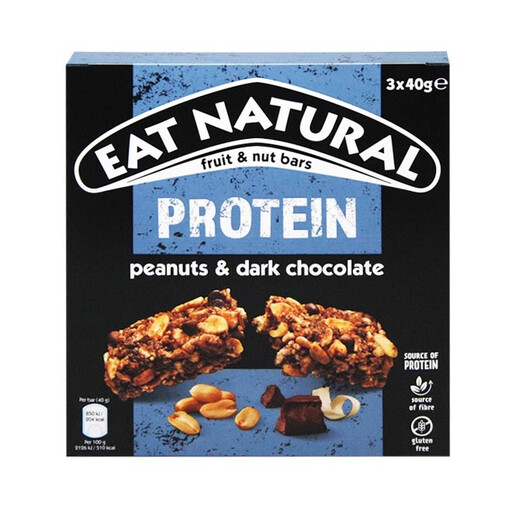 Image unavailable
Eat Natural Protein-Packed Peanuts and Chocolate Bar, 3 x 40g
A peanut-and-chocolate bar for a nut-led addition to lunch, supplied as three 40g bars. Check this pack’s ingredients, allergens and nutrition before applying figures from another Eat Natural listing or recipe.
View on Joybuy
Frequently asked questions
How do I judge a bar labelled “protein”?
Check protein and energy for the individual bar rather than deciding from its name. A high-protein claim concerns the proportion of energy supplied by protein, as set out in legislation.gov.uk’s published criterion, so protein grams alone do not settle that question.
Should a protein bar replace the rest of a ploughman’s lunch?
Treat the bar as an addition when planning this lunch, not as a reason to ignore the other foods. The NHS Eatwell Guide describes balancing food groups over a day or week rather than requiring every meal to provide that balance on its own.
Which named options are vegan and gluten free?
TREK Cocoa Oat is described as vegan and gluten free, while the UK retailer listing for nākd. Cocoa Hazelnut describes it as vegan, gluten free and dairy free. Check the exact wrapper as well: TREK Cocoa Oat contains soy and may contain peanuts, nuts and milk; nākd. Cocoa Hazelnut contains peanuts and hazelnuts and may contain soy and other nuts.
How do I pack a wrapped bar alongside cheese or meat?
Follow the bar’s storage instructions, but manage cheese, cooked meat and other foods requiring refrigeration separately. Check their storage and use-by instructions and provide suitable cold storage; an ambient bar does not change those requirements.
Can I rely on an older listing for ingredients and allergens?
Check the physical pack before buying or eating, especially when an allergen or dietary statement matters. Nature Valley advises checking pack information because products may be reformulated, and the same precaution helps when comparing different flavours or listings.


