People who need a portable snack after training
If a meal is delayed, a bar can provide a convenient serving of protein. Compare the grams per bar with what you plan to eat later, rather than relying on the words ‘high protein’.


Choose a post-workout protein bar by the protein in the serving you will eat, rather than by a front-of-pack claim alone. A bar with around 20 g protein can be a convenient option when a meal is delayed, but the right choice also depends on whether you want carbohydrate, need a vegan product or must check particular ingredients and polyols.
If a meal is delayed, a bar can provide a convenient serving of protein. Compare the grams per bar with what you plan to eat later, rather than relying on the words ‘high protein’.
Check both the protein per serving and the vegan declaration for the exact flavour. A plant-based bar can still contain ingredients such as soya or peanuts that matter to individual shoppers.
Ingredients and sweeteners can differ between bars and flavours. Read the current pack label if an allergen or sensitivity to polyols affects your choice.
Start with the amount in one bar, then compare the rest of its label against your training situation and dietary requirements.
| Priority | What to check | Your needs |
|---|---|---|
| Protein per bar | Read the grams per serving and the bar size. A 2013 review in the Nestlé Nutrition Institute Workshop Series discusses approximately 20 g of protein consumed during or immediately after exercise in its reviewed setting; it is not a personal target. | I want to know how much protein the bar itself contributes, especially if it will be some time before my next meal. |
| Other nutrition | Compare carbohydrate, energy, sugars, saturates and fibre using the same serving basis. Myprotein lists 20 g carbohydrate alongside 20 g protein for its 60 g Layered Protein Bar in Triple Chocolate Fudge. | After this session, do I want a bar that also supplies carbohydrate, or mainly a convenient protein-containing snack until I eat? |
| Ingredients | Check the exact flavour’s vegan declaration, ingredients, highlighted allergens, polyols and any pack warnings. PhD lists 16 g polyols per 64 g Smart Plant Salted Caramel bar; the Myprotein Layered Protein Bar page warns that excessive consumption may produce laxative effects. | If I avoid animal-derived ingredients or need to account for allergens or polyols, the label for the bar I am buying decides whether it suits me. |
| Pack claims | Use claims alongside the nutrition declaration, not instead of it. The Food Standards Agency’s UK criterion for a ‘high protein’ claim is that at least 20% of the food’s energy comes from protein; it does not specify grams per bar. | A prominent protein or low-sugar claim catches my eye, but I still want to compare the actual serving and the rest of its nutrition panel. |
The Food Standards Agency’s UK high-protein criterion concerns the proportion of energy from protein, not a fixed number of grams per serving.
Compare the protein stated for one bar. Tesco’s TREK High Protein Choc Caramel listing states 12 g per 44 g bar, while PhD lists 21 g per 64 g Smart Plant Salted Caramel bar.
A sugar figure does not tell you the serving’s carbohydrate, energy, saturates or polyol content.
Read the full nutrition declaration on the same per-bar basis before deciding which combination fits your next meal and training session.
Recipes and precautionary allergen statements can differ by flavour or change over time. A vegan declaration also does not mean a product is free from other allergens.
Check the current pack for the precise flavour and pack size, particularly when an allergy or sensitivity affects your purchase.
A bar is a portable way to obtain some of the food you want after training; it does not settle what else you may want to eat or drink.
If a normal meal is available, compare the convenience of a bar with what that meal provides. If the meal is delayed, consider the bar alongside your wider food plans rather than assuming its protein figure answers every need.
These references describe particular ranges or products, not every bar sold under each name.
Grenade UK presents Carb Killa and Soft Core among its protein-bar range, with several flavours and formats.
PhD offers Smart Bar and vegan Smart Plant bars as distinct routes.
Its Layered Protein Bar is an option to examine when both protein and carbohydrate per serving matter.
Barebells provides flavour-specific nutrition information for its protein bars.
Quest describes protein bars in its international product range, including bars containing sugar alcohols.
Tesco is a retailer, not a protein-bar manufacturer; its listings provide information for individual products.
These Grenade multipacks offer different flavours and bar sizes for a portable protein snack after training. Compare the nutrition and ingredients of the exact flavour before choosing; the multipack description alone does not give the amount of protein in one bar.
 No image available
A four-bar pack for keeping individual snacks to hand after training. Check the Oreo flavour’s per-bar protein, carbohydrate, ingredients and polyols if those affect your choice.
 No image available
A 12-bar pack if you want to keep this flavour available for later training days. Check the per-bar nutrition and the exact pack’s peanut and other allergen information before buying.
 No image available
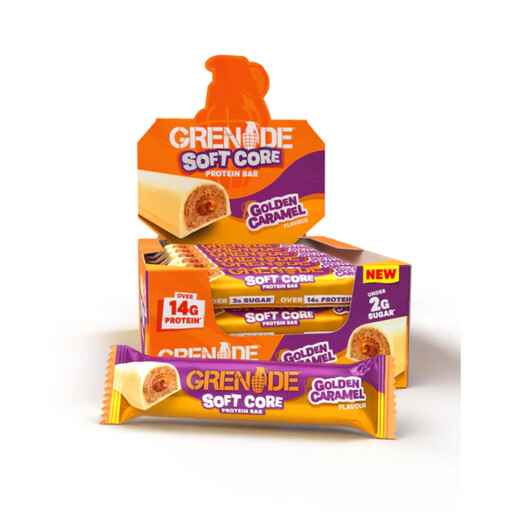
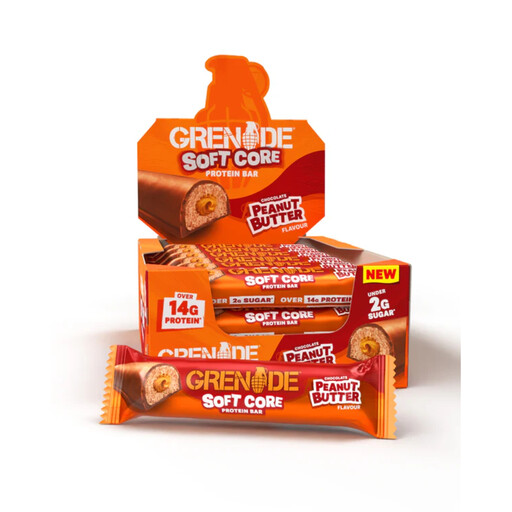
This Soft Core variant contains twelve 50 g bars. Compare protein and other nutrition per 50 g bar—not per 100 g—with the 60 g options, and check its ingredients for dietary suitability.
 No image available
A Golden Caramel option in a pack of twelve 50 g bars. Use this flavour’s own label to compare protein per bar, carbohydrate, polyols and ingredients with the other packs.
 No image available
This Peanut Butter variant comes as twelve 50 g bars. Check its protein per bar against the serving you want, and read the current allergen and ingredient information if peanuts or other ingredients affect your choice.
Compare grams per bar with what you expect to eat at your next meal. A 2013 review in the Nestlé Nutrition Institute Workshop Series discusses approximately 20 g consumed during or immediately after exercise in its reviewed setting, but that figure is not an individual target; a bar with less protein can still contribute alongside other food.
No bar is required simply because you have finished training. A bar is worth considering when it offers a convenient way to eat while a normal meal is delayed; assess it as part of what else you plan to have.
No. The Food Standards Agency’s UK criterion for a ‘high protein’ claim requires at least 20% of the food’s energy to come from protein, rather than a fixed number of grams in each bar. Read the nutrition declaration for the actual serving amount.
Yes, if its serving size, protein amount and ingredients fit what you are looking for. PhD lists 21 g protein per 64 g Smart Plant Salted Caramel bar and identifies it as suitable for vegans; its nutrition also lists 16 g polyols per bar, so check the exact pack if ingredients or polyols matter to you.
Read the current ingredients, highlighted allergens, precautionary statements and any polyol warning on the exact flavour and pack. Formulations differ: PhD’s cited Smart Plant Salted Caramel nutrition lists 16 g polyols per bar, while Myprotein’s Layered Protein Bar information warns that excessive consumption may produce laxative effects.