What should you compare?
Decide when you will eat the bar, then read its per-bar figures alongside the rest of your food and drink that day.
| Priority | What to check | Your needs |
|---|
| Post-run carbohydrate |
Compare carbohydrate and protein per bar. Myprotein UK lists 23 g carbohydrate for its High-Protein Bar and over 30 g from oats for its Oat Flapjack; neither figure describes an entire post-run meal. |
After a long run, I want a snack that contributes carbohydrate as well as protein while I arrange a meal. The UK Sports Institute advises eating food containing both after running. |
| Snack purpose |
Read protein, carbohydrate and sugar as separate label figures. Check the serving size and flavour before comparing bars. |
If my planned meals and running fuel already cover carbohydrate, I may be choosing a convenient protein snack rather than my main post-run food. |
| Tolerance near running |
Check the ingredient list, serving size and any polyol-related laxative-effect warning. Try the exact bar and timing during ordinary training. |
I would rather learn whether a bar suits me on a training day than try it for the first time near a race. The UK Sports Institute notes that pre-run eating times vary between people. |
| Dietary suitability |
Read the exact pack’s ingredients, highlighted allergens and may-contain statement. Check the protein source if you avoid animal-derived ingredients. |
I need the flavour I buy to meet my own dietary requirements; a vegan description does not establish that it is free from allergens. |
Brand and product-line references
These examples show why the individual product and flavour matter more than a brand-wide description.
Myprotein
Myprotein UK lists bars with different carbohydrate contributions: its High-Protein Bar has 23 g carbohydrate per bar, while its Oat Flapjack has over 30 g from oats.
- Compare these formats when choosing between a protein-focused bar and an oat-based snack after running.
- Check the chosen flavour’s label and account for the rest of your post-run food; a bar is only one part of it.
PhD
PhD lists 21 g protein and 23 g carbohydrate per 64 g Choc Brownie Smart Bar. Its separately formulated Smart Plant range provides a vegan option.
- The two ranges give shoppers different ingredient formulations to compare.
- PhD warns that excessive Smart Bar consumption may cause laxative effects. Vegan Smart Plant products still require an allergen check.
Grenade
Grenade UK lists 21 g protein and 1.5 g sugar for its Caramel Chaos bar, and 20 g protein and 2 g sugar for White Chocolate Salted Peanut.
- These flavour-level figures help compare protein and sugar when choosing a snack.
- Sugar is not the same measure as total carbohydrate. Both product pages also carry laxative-effect warnings for excessive consumption.
Barebells
Barebells lists 20 g protein and 15 g carbohydrate per 55 g Salty Peanut bar.
- Its per-bar figures allow a direct check of what that flavour contributes as a snack.
- Barebells advises checking each product’s allergen label; nut and milk-related declarations can vary across its bars.
Tesco
Tesco lists several protein-bar and flapjack brands in its UK grocery category, including Barebells and Trek.
- Its listings offer individual products and multipacks to compare by exact name and pack size.
- A shared retail category does not make the products nutritionally equivalent; compare each bar’s own label.
Joybuy product options
These Joybuy options include protein bars and a flapjack to consider for snacks around marathon training. Match any choice to when you plan to eat it, and check the exact pack’s nutrition and allergen information.
 No image available
Grenade High Protein Low Sugar Bar, Oreo, 4 × 60 g
For a snack after a run, compare this flavour’s per-bar carbohydrate and protein with the food you plan to eat later. Read the Oreo pack’s allergen information and any polyol warning before taking it near a run.
View on Joybuy
 No image available
PhD Smart Protein Nutrition Bar, Salted Caramel, 12 × 64 g
If you need a snack between meals, compare the Salted Caramel bar’s per-serving figures with your planned food. Check this exact flavour’s ingredient and allergen declarations rather than assuming they match another PhD bar.
View on Joybuy
 No image available
PhD Smart Protein Nutrition Bar, Chocolate Peanut Butter, 12 × 64 g
When considering this bar after a hard run, check carbohydrate as well as protein on its own pack. Review the Chocolate Peanut Butter flavour’s allergen statement and any advice about excessive consumption.
View on Joybuy
 No image available
Trek Biscoff Flapjack, 3 × 50 g
A flapjack format to compare with protein bars when choosing a portable post-run snack. Read the carbohydrate and protein figures per 50 g bar, together with this flavour’s ingredient and allergen information.
View on Joybuy
 No image available
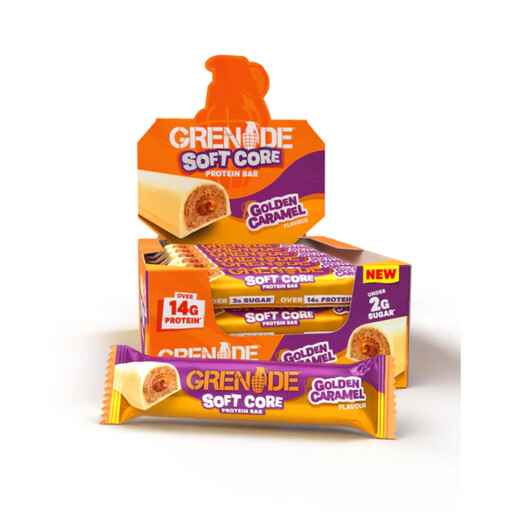
Grenade Soft Core Protein Bar, Golden Caramel, 12 × 50 g
For a between-meal bar, compare the Golden Caramel flavour’s protein, carbohydrate and sugar figures separately. Check its allergen declaration and any polyol warning if you plan to eat it close to a run.
View on Joybuy
Frequently asked questions
Should I have a protein bar before a long run?
Do not choose one solely for its protein content. The UK Sports Institute says pre-run eating times vary between people and notes that many athletes eat one to three hours beforehand. Test the exact bar, portion and timing during training, including how you tolerate its ingredients.
Is one protein bar enough after a long run?
Do not treat a single bar as your entire post-run food plan. The UK Sports Institute advises eating food containing carbohydrate and protein after running; check what the bar provides and what you will eat or drink afterwards.
Does low sugar tell me whether a bar suits post-run refuelling?
No: sugar and total carbohydrate are different label figures. Compare total carbohydrate and protein per bar with the rest of your post-run food. For example, Myprotein UK lists over 30 g carbohydrate from oats for its Oat Flapjack, while its High-Protein Bar lists 23 g carbohydrate.
How do I check a protein bar for allergens?
Read the exact flavour’s current ingredient list, highlighted allergens and may-contain statement. GOV.UK explains that food businesses must provide information when any of the 14 regulated allergens are ingredients; a claim elsewhere on the pack does not replace that check.
Can a vegan protein bar still contain allergens?
Yes. Vegan does not mean allergen-free. PhD’s Smart Plant Vanilla Fudge bar is a plant-based example with soya and peanut ingredients and a may-contain statement for sulphites, sesame and nuts; check the particular bar and flavour you intend to buy.


