What should you compare?
Start with fat on a common per-100-g basis, then check the portion, protein and ingredients of the particular flavour you intend to buy.
| Priority | What to check | Your needs |
|---|
| Fat content |
Compare fat per 100 g across bars, then fat per bar for your portion. The nutrition-claims annex published by legislation.gov.uk sets the ‘low fat’ condition for solids at no more than 3 g per 100 g. |
I want to distinguish a bar with less fat than another bar from one that meets the stated ‘low fat’ condition. Myprotein lists 8.6 g fat per 100 g for Lean Layered. |
| Protein and portion |
Read protein, fat and energy for the whole bar; serving weights differ. Myprotein lists 15 g protein per 40 g Lean Layered bar, while PhD lists 21 g per 64 g Choc Brownie Smart Bar. |
For a break between meetings, I want to know what the bar I will actually eat provides, not just which pack has the larger protein figure. |
| Flavour and format |
Check the nutrition panel for the chosen flavour rather than applying another flavour’s figures. Consider trying a single bar or smaller pack before buying a multipack. |
A flavour and texture I will eat at work matter to me, especially if I am considering a box of the same bars. |
| Ingredients and warnings |
Read the current ingredients, declared allergens, precautionary ‘may contain’ statements and any consumption warning on the pack. |
If I have a dietary restriction or share snacks with colleagues, I need the information for the exact bar. I also want to see any warning about excessive consumption before keeping a multipack at my desk. |
Brand and product-line references
These product-line examples illustrate different label checks; a brand name alone does not establish the fat content or dietary suitability of every flavour.
Myprotein
Myprotein lists both Lean Layered and standard Layered Protein Bars.
- Myprotein lists 8.6 g fat per 100 g and 15 g protein per 40 g Lean Layered bar, compared with 10 g fat per 100 g for its standard Layered Bar.
- Lean Layered exceeds the 3 g-per-100-g ‘low fat’ condition published by legislation.gov.uk; Myprotein also marks it as unsuitable for vegetarians.
PhD
PhD presents its Smart Bar range as a between-meal protein snack.
- Its Choc Brownie panel lists 21 g protein per 64 g bar.
- The same bar lists 9.2 g fat, so its protein figure should not be mistaken for a lower-fat specification.
Grenade
Grenade describes its OREO protein bar as providing 21 g protein.
- The stated protein amount gives shoppers a per-bar figure to consider alongside the selected pack’s nutrition panel.
- Grenade warns that excessive consumption may cause laxative effects. Check the exact flavour’s ingredients and fat figures before buying.
Barebells
Barebells offers a Vegan Fudge Brownie protein bar.
- Barebells lists 15 g protein per 55 g Vegan Fudge Brownie bar.
- The bar lists 9.0 g fat and contains wheat and soya; vegan status does not establish lower fat or allergen suitability.
Quest
A UK specialist retailer lists Quest Birthday Cake protein bars.
- Predator Nutrition lists 21 g protein and 6 g fat per 60 g bar.
- Confirm the nutrition panel and ingredients on the current UK pack for the flavour you choose.
Joybuy protein-bar options
These Grenade and PhD multipacks are options for keeping protein bars at work. Their listing names identify the flavours and pack sizes; check each selected flavour’s current fat figures and ingredients before choosing one for a lower-fat snack.
 No image available
Grenade Soft Core Double Chocolate, 12 × 50 g
A multipack of 50 g bars for office snacks. Compare the Double Chocolate pack’s fat per 100 g and per bar, and check its allergen information before bringing it to work.
 No image available
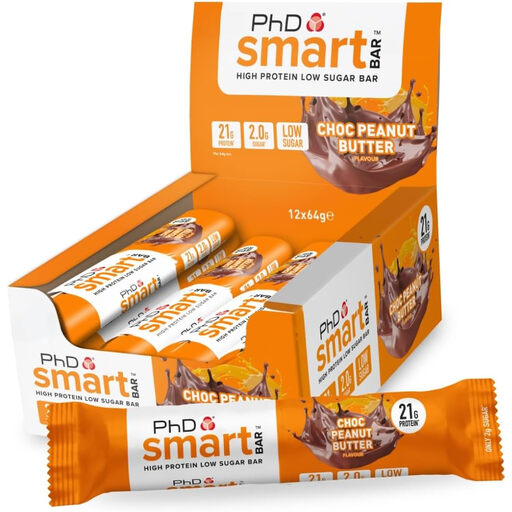
PhD Smart Chocolate Peanut Butter, 12 × 64 g
The listing names 64 g bars for between-meeting snacks. Confirm the flavour and its nutrition on the pack before ordering: the accompanying description refers to White Chocolate Blondie rather than Chocolate Peanut Butter.
 No image available
Grenade Soft Core Golden Caramel, 12 × 50 g
This pack contains 50 g bars for keeping at work. Read the Golden Caramel nutrition panel rather than applying another flavour’s figures, particularly if fat per bar is your deciding measure.
 No image available
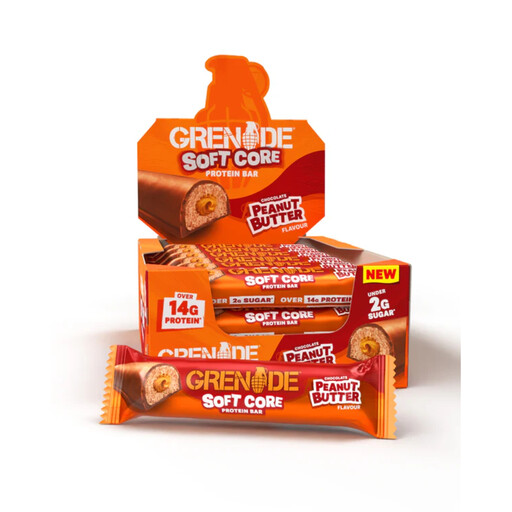
Grenade Soft Core Peanut Butter, 12 × 50 g
A 12-pack of 50 g Peanut Butter bars. If colleagues may share your office snacks, check the exact pack’s allergen declaration as well as its fat per 100 g and per bar.
 No image available
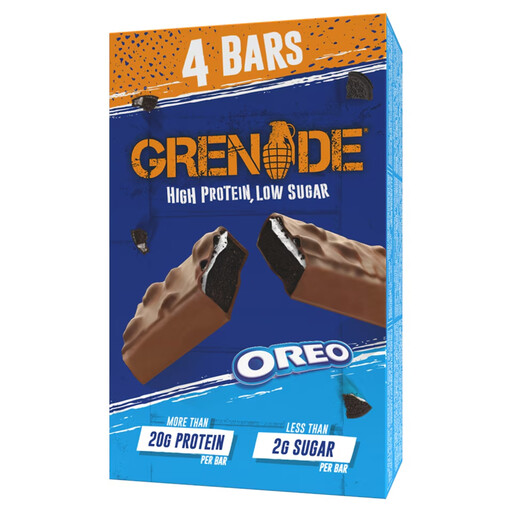
Grenade OREO Flavour, 4 × 60 g
This four-pack offers 60 g bars rather than the 50 g Soft Core format above. Check the OREO Flavour panel for both fat per 100 g and the amount in a whole bar; read its ingredients and consumption warning too.
Frequently asked questions
Does a lower-fat protein bar count as ‘low fat’?
Not necessarily. The nutrition-claims annex published by legislation.gov.uk gives no more than 3 g fat per 100 g as the ‘low fat’ condition for solid foods. Myprotein lists 8.6 g per 100 g for Lean Layered, so its lower figure relative to the brand’s standard Layered Bar does not meet that condition.
Can I use a protein bar instead of lunch at work?
Do not assume that a protein figure makes a snack bar a meal replacement. If you are buying something to replace lunch, check that the product is sold and labelled for that purpose rather than choosing solely by protein per bar.
Is a vegan protein bar free from common allergens?
No. Barebells lists wheat and soya in its Vegan Fudge Brownie bar and provides precautionary allergen information. Check the current wrapper for the particular flavour; vegan labelling and allergen suitability are separate matters.
What should I check before taking a multipack into a shared office?
Check the exact bars’ current ingredients, allergen declaration and ‘may contain’ statement before eating or sharing them. The Food Standards Agency explains that precautionary allergen labelling communicates possible unintended allergen presence.
Why do some protein bars carry an excessive-consumption warning?
Some manufacturers, including Grenade, warn that excessive consumption of particular bars may cause laxative effects. Read and follow the warning on the flavour you buy, especially before stocking a multipack for repeated office snacking.


