Hosts planning a protein-aware buffet
You want dried fruit on the table but need to decide whether another item should provide the protein-focused choice.


Choose plain dried fruit for the fruit part of a Boxing Day buffet, not as its protein option: ASDA figs and dried mango list 3.3g and 2.6g protein per 100g respectively. If protein is a particular consideration, compare the amount per serving on a fruit-and-nut mix or protein bar; the bars checked at Sainsbury's and Tesco list 6.2g and 10.4g per bar respectively, but their ingredients and allergens also need checking.
You want dried fruit on the table but need to decide whether another item should provide the protein-focused choice.
You may want a bar with a stated protein amount while also checking whether its peanuts, nuts, soya or other ingredients suit you.
You need guests to be able to identify what is in each bowl or bar before choosing, particularly when fruit, nuts and products containing sulphites are served together.
Decide what role each item has on the table, then compare its stated serving size, ingredients and allergen information.
Choose it when: you want fruit for a platter or dessert and have planned the protein-focused food separately.
Bear in mind: the checked plain-fruit products have modest stated protein amounts, and some contain sulphites or other added ingredients.
Choose it when: you want fruit and nuts together and the guests eating it can have the ingredients in that particular mix.
Bear in mind: protein amounts depend on the blend; nuts do not make an unlabelled mix suitable for guests with nut allergies.
Choose it when: you want a portioned option with a protein amount stated per bar.
Bear in mind: the checked bars contain peanuts and other ingredients that may not suit every guest; they are not interchangeable with plain fruit.
| Priority | What to check | Your needs |
|---|---|---|
| Protein per serving | Compare the stated grams of protein and the serving size, rather than comparing a per-100g figure with a per-bar figure. ASDA lists 1.1g per stated serving of figs and 1.0g per stated serving of dried mango; Sainsbury's lists 6.2g per 45g nākd bar and Tesco lists 10.4g per 40g Eat Natural bar. | I want to know which item has a stated protein amount per portion, rather than treating every dried-fruit snack as equivalent. |
| Allergens | Read the exact pack for peanuts, tree nuts, milk, soya and sulphites. Keep the packaging available and identify the contents of separate bowls. | Guests need to recognise what they can choose before taking food from a shared spread. |
| Portions and timing | The NHS says 30g of dried fruit counts as one 5 A Day portion and advises eating it at mealtimes rather than between meals to reduce the risk of tooth decay. | I would rather serve dried fruit with the Boxing Day meal than leave it as the only all-day grazing option. |
| Ingredients | Check the full list for juice concentrate, syrups, chocolate and preservatives. Marks & Spencer lists concentrated apple juice and sunflower oil in its dried cherries; a fruit-based name does not describe every ingredient. | Some guests may be looking for fruit alone, while others may be happy with a mix or bar. The pack helps me tell those choices apart. |
ASDA lists 3.3g protein per 100g for its figs and 2.6g per 100g for its dried mango. Those figures serve a different buying purpose from the per-bar protein amounts stated for the checked Sainsbury's and Tesco bars.
If protein matters to the buffet plan, compare labelled portions and provide a separately identified protein-focused food rather than relying on fruit alone.
The checked bars include peanuts and other allergens, while sulphites appear in some dried-fruit products. Guests cannot identify the ingredients of loose pieces by appearance alone.
Keep original packs available, identify each bowl and check any plain-fruit alternative against its own allergen statement.
Marks & Spencer lists concentrated apple juice and sunflower oil in its dried cherries. Mixes and bars can have still different ingredient lists.
Read the full list when a guest wants fruit without added ingredients, rather than judging from the product category or front of pack.
The NHS uses 30g as one 5 A Day portion of dried fruit and advises having it at mealtimes rather than between meals to reduce the risk of tooth decay.
Put out manageable portions with the main buffet food and offer other choices for later grazing.
These examples show how much products within the dried-fruit and snack categories can differ; check the particular pack you intend to serve.
Whitworths makes dried-fruit and nut mixes as well as dried-fruit products.
Tesco lists fruit-and-nut protein bars alongside dried-fruit, nut and seed products.
Sainsbury's lists both dried fruit and fruit-and-nut bars, which serve different roles on a buffet.
ASDA's checked figs and dried mango are examples of fruit for the buffet rather than a dedicated protein-bar choice.
The checked Marks & Spencer dried cherries are a fruit-focused addition to a platter or dessert spread.
These are chocolate and nut protein bars to consider if the buffet needs a separately identified protein-focused snack. They are not substitutes for the plain dried-fruit component, and their ingredients should be checked for each guest.
 No image available
A chocolate protein-bar option for guests seeking a separate snack rather than dried fruit. The listed bundle contains twelve 50g bars; check the current pack for protein per bar, ingredients and allergens, including milk and soya.
 No image available
A caramel-flavoured protein-bar option to put alongside, not in place of, the fruit selection. The listed bundle contains twelve 50g bars; compare the labelled protein per bar and check the ingredients and allergens, including milk and soya.
 No image available
This peanut-butter variant needs especially clear identification on a shared buffet. The listed bundle contains twelve 50g bars; check protein per bar and the current allergen statement for peanuts, milk and soya.
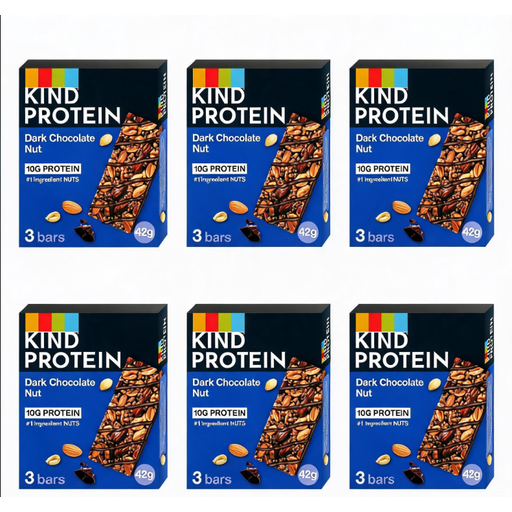 No image available
A dark-chocolate nut-bar choice for guests who can have the ingredients in the exact pack. The listing specifies 42g bars; check the pack configuration, protein per bar and allergen statement, particularly for peanuts, almonds and soya.
 No image available
A peanut-and-chocolate bar to keep identifiable alongside any plain fruit. The listing specifies four 40g bars; compare protein per bar and check the current pack for peanuts, soya, milk and other allergen information.
Not among the checked plain-fruit examples. Marks & Spencer lists 1.0g protein per 100g for its dried cherries, while ASDA lists 2.6g for dried mango and 3.3g for figs. Serve fruit for its place on the spread and choose a separately labelled option if protein is a particular consideration.
Compare protein per stated bar and its ingredient and allergen list. Sainsbury's lists 6.2g per 45g nākd Cherry Fruit & Nut Protein Bar, and Tesco lists 10.4g per 40g Eat Natural Fruit & Nut Protein Bar; both checked products contain peanuts, and their other ingredients differ.
The NHS says 30g of dried fruit counts as one portion of 5 A Day. It also advises eating dried fruit at mealtimes rather than between meals to reduce the risk of tooth decay, so the main Boxing Day buffet is a more suitable time to put it out than an all-day snack table.
Keep the original packaging available, identify what is in each bowl and separate products with different ingredients. Check even the plain-fruit packs: the Food Standards Agency notes that sulphur dioxide or sulphites are often used in some dried fruits, and the checked ASDA dried mango lists sulphites.