Calorie-budgeted top-up shoppers
If you want a portable sweet snack between meals, the energy in the complete bar may matter more to you than getting the most protein from one serving.


For a calorie-led top-up, compare the energy and protein in the whole bar rather than choosing by a front-of-pack description. Myprotein UK lists 96 kcal and 5.9g protein for its 30g Crispy Square; Barebells UK lists 190 kcal and 20g protein for a 55g Cookies & Cream bar. The larger bar supplies more protein, so the choice depends on what you want from this snack as well as the portion you plan to eat.
If you want a portable sweet snack between meals, the energy in the complete bar may matter more to you than getting the most protein from one serving.
A small bar and a full-size protein bar can contribute quite different amounts of protein. Compare both grams of protein and kcal per bar before deciding which portion fits your plan.
If allergens, dietary ingredients or sweeteners affect your choice, check the label for the exact flavour and pack size rather than relying on the range name.
Start with the portion you will eat, then weigh its protein against its energy and check the ingredients that matter to you.
| Priority | What to check | Your needs |
|---|---|---|
| Whole-bar energy | Read kcal per bar as well as per 100g. Note the bar weight: Myprotein UK lists 96 kcal per 30g Crispy Square, while Barebells UK lists 190 kcal per 55g Cookies & Cream bar. | For a small top-up, I want to know the energy in the portion I will actually eat. |
| Protein per portion | Compare grams of protein with kcal for the same whole bar. Myprotein UK lists 5.9g protein at 96 kcal; Barebells UK lists 20g at 190 kcal. PhD lists 21–22g at 247–250 kcal for two named 64g Smart Bar flavours. | If protein is the main reason for buying the bar, I may prefer a larger portion; if I only want a small snack, fewer grams may be enough for my purpose. |
| Sugar and sweeteners | Check sugars and energy separately, then read any sweetener warnings. Grenade UK lists 2g sugar for its White Chocolate Salted Peanut bar; that figure alone does not tell you its kcal. | I want to compare sugar without mistaking it for a measure of the bar’s total energy. |
| Ingredients and allergens | Read the ingredients, highlighted allergens and any ‘may contain’ statement on the exact flavour. Check dietary ingredients separately from the protein and energy figures. | A flavour needs to fit my ingredient requirements, even if its portion size and nutrition figures suit me. |
Per-100g values put products on a common weight basis, but a 30g snack and a 55g or 64g bar are different portions.
For the snack you intend to eat, compare kcal and protein per complete bar, then use the bar weight to understand the difference.
Sugars and energy are separate nutrition measures. Grenade UK lists 2g sugar for its White Chocolate Salted Peanut bar, which does not establish its kcal.
Check the energy value on the nutrition panel before treating any low-sugar bar as a calorie-led choice.
Barebells UK and PhD warn that excessive consumption of the reviewed bars may have laxative effects. Quest Nutrition says tolerance to sugar alcohols can vary.
Read the warning and serving information for the exact product before buying several bars.
Ingredients and precautionary allergen statements can differ between products and flavours, so a familiar range name is not enough to establish suitability.
Check the current label for the exact flavour and pack size against your requirements.
Its Crispy Square is an example of a smaller protein snack rather than a full-size bar.
Cookies & Cream shows what a larger protein portion can look like alongside a higher whole-bar energy figure.
The named Smart Bar flavours provide examples for shoppers placing more weight on protein per bar than on a small portion.
Its Carb Killa range includes bars for shoppers comparing protein and sugar, but those figures should not replace an energy check.
Quest Nutrition describes a protein-bar range that includes gluten-free bars and sugar alcohols.
Tesco is a grocery-shopping reference rather than a single protein-bar formulation.
These Joybuy listings cover Grenade bars and a KIND nut bar that could be considered for a top-up shop. Several are multipacks: check the nutrition per individual bar when comparing portions, and check the exact pack’s ingredients and warnings before buying.
 No image available
The 50g bar size lets you compare a single portion with the smaller and larger bars discussed above. Check kcal and protein per bar, alongside the exact pack’s allergen and sweetener information.
 No image available
This is another 50g Soft Core flavour in a 12-bar pack. Compare its own per-bar nutrition and ingredient label with Double Chocolate rather than assuming the flavours are identical.
 No image available
Compare the nutrition for one 50g bar with the other Soft Core flavours. If peanuts or other allergens affect your purchase, read this flavour’s current ingredient and allergen label before buying.
 No image available
At 60g per bar, this is a larger stated portion than the 50g Soft Core listings. Check its kcal and protein per complete bar before deciding whether it fits a calorie-led top-up; the low-sugar wording in its name does not answer that question.
 No image available
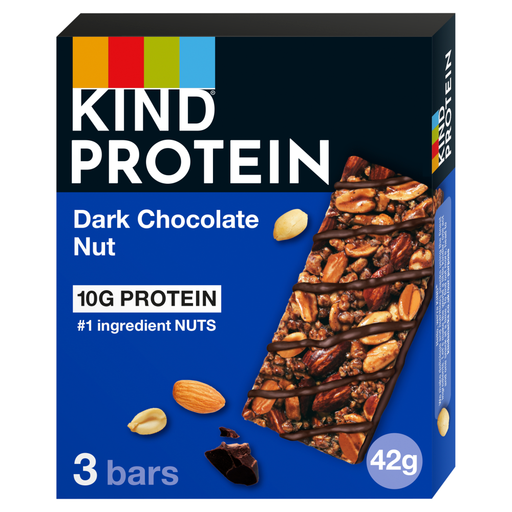
The listed portion is a 42g bar, sold in a pack of three. Compare its per-bar energy and protein with the Grenade bars, and check the ingredient and allergen label if nuts affect your choice.
Compare kcal for the complete bar, then its weight and protein. Myprotein UK lists 96 kcal and 5.9g protein per 30g Crispy Square; Barebells UK lists 190 kcal and 20g protein per 55g Cookies & Cream bar. The smaller portion has a lower energy figure but also supplies less protein.
Not solely on that figure. If you want a small top-up, compare protein with the kcal and size of the bar; if protein per snack matters more, a larger portion may fit your purpose. PhD lists 21–22g protein and 247–250 kcal for two named 64g Smart Bar flavours.
No: sugar and energy are different measures on the nutrition panel. Grenade UK lists 2g sugar for its White Chocolate Salted Peanut bar, but that figure does not establish its kcal. Check the energy value for the whole bar separately.
Yes, if an ingredient or allergen affects your purchase. Check the current ingredients, highlighted allergens and any ‘may contain’ statement for the exact flavour and pack size; do not assume another bar in the same range has the same label.
Some reviewed product information links that warning to excessive consumption of bars containing sweeteners such as polyols. Barebells UK and PhD carry excessive-consumption warnings, while Quest Nutrition notes that tolerance to sugar alcohols varies. Read the warning and serving information on the bar you choose.