What should you check before buying?
Start with protein per wrapped serving, then check the exact flavour’s label and whether you can store and offer the bars in their original packaging.
| Priority |
What to check |
Your needs |
| Protein per bar |
Read the grams of protein and the serving size for one bar. Compare like-sized servings where possible; a pack claim does not tell you the amount in each portion. |
I want visitors to see how much protein they get in the bar they are buying. If around 20g per bar is my selection aim, I need to check each flavour rather than assume every product from a brand reaches it. |
| Nutrition and flavour |
Compare the exact flavour’s per-bar and per-100g nutrition information, including energy, sugars and saturated fat. Read the ingredients alongside any low-sugar or no-added-sugar wording. |
There should be flavours people might choose as a snack, but I do not want a protein or sugar claim to stand in for the full nutrition panel. |
| Dietary labels and allergens |
Check vegan or vegetarian labelling separately from the ingredients and allergen declaration. Keep the original wrapper readable, including any precautionary allergen wording. |
Someone asking for a plant-based bar may still need to avoid soya or peanuts. I need the exact pack available for them to inspect, not an assumption about the whole range. |
| Sweeteners and polyols |
Read the ingredient list and any on-pack consumption warning for the chosen flavour. The NHS notes that some polyols can have a laxative effect when consumed in large amounts. |
If I offer a low-sugar bar, I want buyers to be able to check its sweeteners and warnings for themselves, especially when buying several bars. |
| Packaging and storage |
Check that individual wrappers are intact and legible, and follow each product’s storage instructions. Check best-before dates and the condition of stock before the event. |
I need bars I can keep in the conditions stated on their packs throughout the sale, rather than leaving stock exposed to heat or damp. |
| Selling arrangements |
Establish whether your activity is a food business before trading. Check organiser conditions and the applicable registration and allergen-information requirements; packing food yourself can change the labelling duties. |
If I am selling refreshments rather than only buying a snack for myself, I need to settle the trading and labelling arrangements before the event. |
Which brands are relevant?
These references describe particular ranges or products, not a guarantee that every flavour has the same ingredients or nutrition values.
Grenade
Grenade’s Carb Killa and Soft Core names cover different bars, so compare the precise flavour and serving rather than treating them as interchangeable.
- Tesco Groceries lists 21g protein per 60g bar for Carb Killa Chocolate Chip Salted Caramel.
- That listed flavour contains milk and soya and may contain gluten-containing cereals, peanuts and nuts; check the pack of any other flavour separately.
Myprotein
The Layered Protein Bar is a separate option for comparing protein per bar and flavour-level labelling.
- Myprotein describes the Layered Protein Bar as providing 20g protein per bar.
- Its product information warns that excessive consumption may produce laxative effects; inspect the chosen flavour’s ingredients and suitability information.
PhD
Smart Plant provides a labelled vegan and vegetarian route distinct from PhD’s other protein bars.
- PhD lists 21g protein per 64g Smart Plant bar and labels the range suitable for vegans and vegetarians.
- Smart Plant Salted Caramel includes soya and peanut paste. Its plant-based label is not an allergen-free claim.
Barebells
Barebells offers original, soft and vegan protein-bar ranges, with details that differ by product.
- The Joybuy listing for Banana Dream states 16g protein per 55g bar.
- Barebells says other products in its range contain lactose or may contain traces of it; check each vegan or non-vegan flavour individually.
Quest
Quest is a comparison reference when reading protein amounts across bar ranges.
- Quest Nutrition says its original protein bars contain up to 21g protein per bar, not that every flavour has that amount.
- Check the exact product’s ingredients and UK-facing label before considering it for a sale.
Tesco
Tesco is a retailer reference for checking individual protein-bar listings, rather than a protein-bar manufacturer.
- Its protein-bar category has included products from Grenade, Barebells, Trek and Nature Valley.
- A category listing does not establish that a particular flavour is in stock for your event; check the current product listing and pack.
Protein bars on Joybuy
These Grenade multipacks offer Oreo and Soft Core flavours for a car boot sale selection. Their pack sizes and named bar weights differ; check each exact flavour’s wrapper for protein, allergens, sweeteners and storage instructions before offering individual bars.
 No image available
Grenade Oreo flavour protein bars, 4 × 60g
The four-bar pack offers an Oreo flavour in 60g bars. For sale as individual refreshments, check that each wrapper shows the nutrition and allergen information buyers need.
View on Joybuy
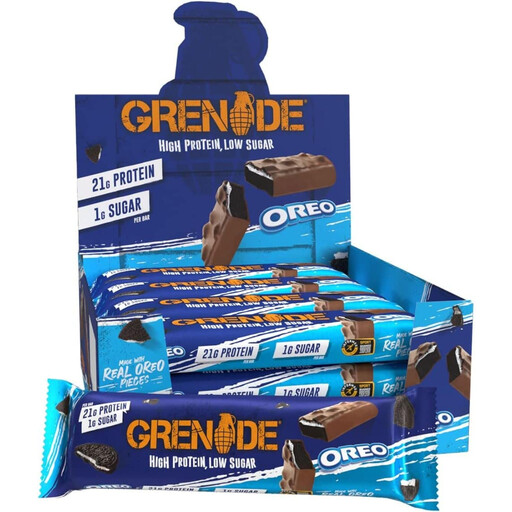 No image available
Grenade Oreo flavour protein bars, 12 × 60g
This is a larger pack of Oreo flavour 60g bars. Compare the individual bar’s label and your storage capacity before choosing a quantity for the event.
View on Joybuy
 No image available
Grenade Soft Core Double Chocolate, 12 × 50g
Double Chocolate provides a Soft Core flavour in 50g bars. Because this serving size differs from the 60g Oreo bars, compare protein per individual bar rather than pack size alone.
View on Joybuy
 No image available
Grenade Soft Core Golden Caramel, 12 × 50g
Golden Caramel adds another flavour in the 12-bar Soft Core pack size. Read its own ingredients and per-bar nutrition panel instead of assuming they match Double Chocolate.
View on Joybuy
 No image available
Grenade Soft Core Peanut Butter, 12 × 50g
This 12-bar pack has a Peanut Butter flavour and 50g bars. Keep its original allergen declaration visible and do not present the flavour name as a substitute for the full ingredient list.
View on Joybuy
Frequently asked questions
Do I need to register to sell protein bars at a car boot sale?
If your activity is a food business, Food Standards Agency guidance says to register at least 28 days before trading or starting food operations. Whether your particular activity falls within that requirement depends on its circumstances; check with the relevant local authority and the event organiser before the sale.
Should I keep protein bars in their manufacturer wrappers?
Keeping sealed bars in their original wrappers lets buyers read the manufacturer’s ingredients, allergens and storage instructions. If you pack food before a customer selects it and sell it from the same location, including an applicable temporary outlet, prepacked-for-direct-sale rules can apply. GOV.UK guidance identifies requirements including the food name and a full ingredients list; check the labelling duties for your activity before repacking.
Is a vegan protein bar suitable for someone avoiding allergens?
Not necessarily. PhD labels Smart Plant suitable for vegans and vegetarians, but its Salted Caramel bar includes soya and peanut paste. Check the exact flavour’s ingredients and allergen declaration with the buyer.
Does low sugar settle the choice between protein bars?
No. Compare protein and serving size alongside the exact bar’s energy, sugars, saturated fat and ingredients. In its 2025 UK snack-bar product audit, Action on Salt & Sugar reported that 64% of assessed bars were classified as ‘less healthy’ under the Government’s Nutrient Profiling Model; a single front-of-pack claim does not describe the full nutrition panel.
Why check the sweeteners in a protein bar?
Some low-sugar bars use polyols. The NHS says some polyols can have a laxative effect when consumed in large amounts, and Myprotein’s Layered Protein Bar information warns about excessive consumption. Keep the chosen bar’s ingredients and on-pack warnings available for buyers to inspect.


