What should you check?
Start with when you intend to eat the bar. Then compare values per whole bar and read the ingredient statement for the flavour you would buy.
| Priority |
What to check |
Your needs |
| Fuel during a long ride |
Read carbohydrate per bar and plan how it fits with other ride food and fluids. British Cycling’s event-day guidance gives a general carbohydrate rule based on bodyweight per hour; a bar’s protein figure does not answer that fuelling question. |
I need food I can include in a carbohydrate and hydration plan while riding, rather than relying on one low-sugar protein bar. |
| A snack after riding |
Compare protein and carbohydrate per whole bar. British Cycling prioritises protein after rides longer than 90 minutes; UK Sports Institute guidance also includes carbohydrate and fluids after intense or prolonged exercise. |
If a meal is delayed after a long ride, I want a portable option with both values clearly stated, while still making time for food and drink afterwards. |
| Ingredients and tolerance |
Read fibre, polyols or sugar alcohols where declared, along with serving size and any consumption warning. Tesco lists 17 g polyols per 60 g Grenade OREO bar. |
Before packing a bar for a ride, I want to know its ingredients and whether I am comfortable eating that particular product. |
| Allergens and dietary fit |
Check the exact pack’s ingredients, allergen statement and any ‘may contain’ wording. Do not apply one flavour’s or range’s dietary status to another. |
I need the flavour I buy—not just the brand—to fit my ingredient and dietary restrictions. |
Brand and range references
These examples describe specific bars and ranges, not every flavour a brand makes or the products listed on Joybuy below.
PHD
PhD’s Smart Bar range includes the Chocolate Brownie variant, listed by PhD at 21 g protein and 23 g carbohydrate per 64 g bar.
- Those per-bar figures let you assess it as a portable snack after riding.
- Check the chosen flavour’s ingredients and warning; the Chocolate Brownie figures should not be transferred to another variant.
Myprotein
Myprotein lists its Layered Protein Bar with 20 g protein and 20 g carbohydrate per bar.
- Both values are stated, making the bar easier to assess for a between-meal or post-ride snack.
- Check the flavour-specific label for ingredients, dietary suitability and consumption warnings.
Grenade
Tesco lists the 60 g Grenade OREO bar at 21 g protein and 20 g carbohydrate.
- The cited bar’s per-serving values can be compared with your intended snack or ride-food plan.
- Tesco also lists 17 g polyols per bar; check the exact pack for ingredients and allergens.
Barebells
Barebells lists its Cookies & Cream protein bar at 20 g protein and 17 g carbohydrate per 55 g bar.
- The stated serving size and nutrient values help distinguish this bar from other Barebells formats.
- Check the exact product’s allergen statement; figures and ingredients for Cookies & Cream do not describe the whole range.
Quest
Quest Nutrition lists its S'Mores bar at 21 g protein and 23 g total carbohydrate per 60 g serving on its US product page.
- The stated serving values offer a product-label comparison with the other cited variants.
- Its US listing does not establish a UK purchase option. Quest also lists 7 g sugar alcohols for this variant; check the pack and ingredients if considering it.
Protein bars on Joybuy
These Grenade and PhD packs are options to consider for a portable protein-led snack between meals or after a ride. Check the exact flavour and pack details before treating any of them as part of a ride-fuelling plan.
 No image available
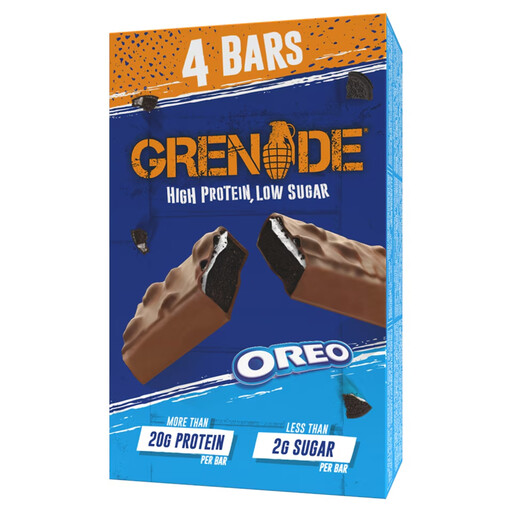
Grenade OREO Protein Bars, 4 × 60 g
A protein-led snack to consider when a meal is delayed after riding, not a complete long-ride fuel plan. Tesco lists the OREO variant at 21 g protein, 20 g carbohydrate and 17 g polyols per 60 g bar. Check the pack’s ingredients and allergen statement before eating it.
View on Joybuy
 No image available
Grenade White Chocolate Salted Peanut Protein Bars, 12 × 60 g
This multipack is a between-meal or post-ride snack option if the flavour suits you. Compare protein and carbohydrate per bar on the exact pack, and check its peanut and other allergen information before purchase.
View on Joybuy
 No image available
PhD Smart Bar Salted Caramel, 12 × 64 g
The listing title says Salted Caramel, but its description identifies a different flavour. Confirm the flavour, ingredients and nutrition information for the pack before deciding whether it fits a post-ride snack plan.
Purchase link unavailable
 No image available
PhD Smart Bar Chocolate Peanut Butter, 12 × 64 g
This 12-pack offers individually sized bars to consider when a meal is delayed after riding. Check protein and carbohydrate per bar on this flavour’s pack; do not apply the Chocolate Brownie variant’s figures to it. Read the peanut and other allergen information before purchase.
View on Joybuy
 No image available
Grenade Soft Core Double Chocolate, 12 × 50 g
The 50 g Soft Core format is another between-meal snack option. Compare its own per-bar protein and carbohydrate values with your needs rather than using figures from Grenade OREO, and check its ingredients before taking it on a ride.
View on Joybuy
Questions about protein bars for cycling
Can a high-protein bar be my main food on a long ride?
Do not assume it can. British Cycling’s event-day guidance centres on regular carbohydrate intake while riding, whereas the cited protein bars contain between 17 g and 23 g carbohydrate per bar. Assess any bar as part of a broader food and fluid plan, and choose something familiar for an event.
When does a protein bar fit after cycling?
A bar can be a portable interim snack when a meal is delayed after a long ride. British Cycling prioritises protein after rides longer than 90 minutes, and UK Sports Institute guidance includes carbohydrate and fluids after intense or prolonged exercise. Check what the bar provides, then plan the meal and drinks that follow.
Which cited bars state both protein and carbohydrate per bar?
PhD lists its Chocolate Brownie Smart Bar at 21 g protein and 23 g carbohydrate per 64 g bar. Myprotein lists 20 g of each for its Layered Protein Bar; Tesco lists the 60 g Grenade OREO bar at 21 g and 20 g respectively; and Barebells lists Cookies & Cream at 20 g and 17 g per 55 g bar. Check the exact flavour and current pack rather than transferring these figures to another variant.
Do allergens and sweeteners need checking for each flavour?
Yes. Ingredient and allergen statements apply to the exact bar, not automatically to every product in its range. The cited Grenade OREO bar lists polyols as well as milk, wheat and soya; check the pack’s full statement and any consumption warning before choosing a flavour.


