What should you check first?
Decide when you intend to eat the bar, then check its serving information and ingredients against that plan.
Carbohydrate-first ride food
Choose when: You need regular food during a long or demanding ride.
Bear in mind: One bar may provide only part of the carbohydrate you have planned across food and drink.
Carbohydrate-and-protein bar
Choose when: You want a portable snack after a hard ride and cannot eat a meal promptly.
Bear in mind: The bar is a stopgap, not a replacement for everything you intend to eat afterwards.
Protein-focused snack bar
Choose when: You want a convenient snack for a commute bag or after a ride, rather than your main on-bike carbohydrate supply.
Bear in mind: Check carbohydrate and sweeteners for the particular flavour before relying on it during a ride.
| Priority |
What to check |
Your needs |
| Ride carbohydrate |
Read carbohydrate per bar. For big rides, compare all planned food and drink with British Cycling’s guidance of 0.5–1 g per kg of body weight per hour, spread over 2–3 feeds every 20–30 minutes according to intensity. |
I need food I can eat regularly on a long ride, rather than assuming a protein claim tells me how much ride fuel the bar provides. |
| Post-ride snack |
Check both carbohydrate and protein per bar, plus the serving size. For example, Myprotein lists 32 g carbohydrate and 22 g protein for its Re-Fuel Bar. |
There may be a wait before my next meal after a demanding ride, so I want one portion containing both nutrients. |
| Sweetener tolerance |
Read the ingredients and any polyol declaration on the exact flavour. PhD and Barebells warn that excessive consumption of some bars may have laxative effects; Quest says tolerance of sugar alcohols varies. |
I would rather try an unfamiliar bar during an ordinary training ride than discover how I respond to it at an event. |
| Ingredients and dietary fit |
Check the exact wrapper for allergens, precautionary statements and vegetarian or vegan labelling. PhD labels Smart Plant Vanilla Fudge vegan, but its ingredients include soya and peanut paste. |
My grab bag needs to meet my dietary requirements, even if its bars are different flavours from the same brand. |
Protein bars on Joybuy
These Grenade multipacks offer individual bars for a commute bag or a post-ride snack. Check each flavour’s carbohydrate, ingredients and serving label before deciding whether it also fits your on-bike food plan.
 No image available
Grenade Oreo protein bars, 4 × 60 g
The four-bar pack gives you individual portions to put in a commute bag or keep for after a ride. Check the Oreo flavour’s carbohydrate per bar, ingredients and allergen statement before packing it.
View on Joybuy
 No image available
Grenade White Chocolate Salted Peanut protein bars, 12 × 60 g
This multipack provides separate bars for post-ride snacking. Check the peanut flavour’s ingredient and allergen information, and compare its carbohydrate per bar with what you plan to eat during a ride.
View on Joybuy
 No image available
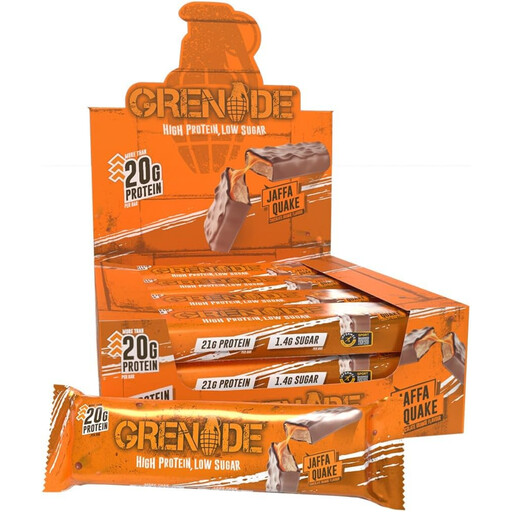
Grenade Jaffa Quake protein bars, 12 × 60 g
Choose this chocolate-and-orange flavour if you want individual bars for a commute or after cycling. Read its serving nutrition and sweetener information before treating it as part of a longer ride’s food plan.
View on Joybuy
 No image available
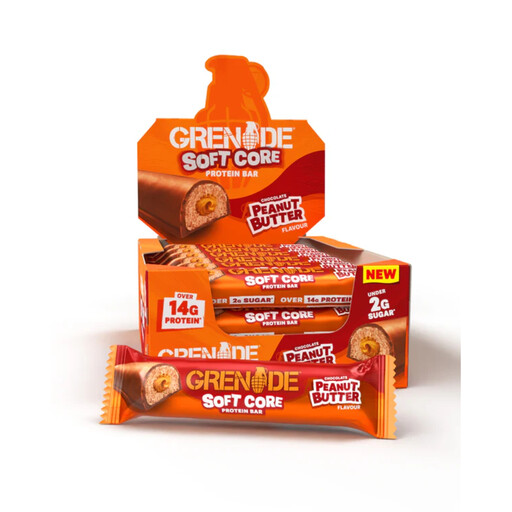
Grenade Soft Core Peanut Butter protein bars, 12 × 50 g
This Soft Core variant has 50 g bars rather than the 60 g bars in the other packs shown here. If you are comparing portions for a ride or post-ride snack, use the nutrition and ingredient information for this Peanut Butter variant.
View on Joybuy
Cycling protein-bar questions
Can a protein bar fuel a long bike ride?
It can contribute carbohydrate, but do not assume one bar covers the whole ride. For big rides, British Cycling advises 0.5–1 g carbohydrate per kg of body weight per hour, depending on intensity, spread over 2–3 feeds every 20–30 minutes. Compare the bar’s carbohydrate per serving with the food and drink you plan to take.
When does a protein bar make sense after cycling?
A bar containing both carbohydrate and protein can be a portable snack when a meal is delayed after a demanding ride. Check both amounts on the label rather than choosing by protein grams alone; British Cycling also advises planning prompt food after big rides.
Should I try a low-sugar bar before a sportive?
Yes—try the exact bar and portion during ordinary training before taking it to an event. PhD and Barebells warn that excessive consumption of some bars may have laxative effects, and Quest says tolerance of sugar alcohols varies.
How do I check a mixed bag for allergens?
Read the ingredients and allergen statements on every flavour’s wrapper, rather than relying on the brand name. Barebells Cookies & Cream contains milk proteins and may contain gluten, soya, peanuts and nuts; PhD Smart Plant Vanilla Fudge contains soya and peanut paste.
Can a vegan protein bar go in a cycling grab bag?
Yes, if the exact bar meets your dietary needs and its carbohydrate amount fits when you intend to eat it. PhD labels Smart Plant Vanilla Fudge vegan and lists 21 g protein and 21 g carbohydrate per 64 g bar, but it contains soya and peanut paste. It is not, by itself, a long-ride carbohydrate plan.


