Choose a protein bar by the total carbohydrate in the portion you will eat, rather than its sugar claim alone. Diabetes UK advises particular care with carbohydrate counting if you adjust insulin, because how to count polyols is not straightforward; for a free-from requirement, also check the exact flavour’s ingredients and precautionary allergen wording.
Who needs to check what?
People counting carbohydrates
If you track carbohydrate intake, compare the total carbohydrate for the amount of bar you intend to eat. Diabetes UK says carbohydrate counting is particularly helpful for people using basal and bolus insulin; ask your diabetes team how to handle polyols if you adjust insulin doses.
People avoiding a specific allergen
A bar must fit both your carbohydrate plan and your particular exclusion. Check the exact flavour’s ingredients, emphasised allergens and any “may contain” statement; a vegan or low-sugar description does not settle those questions.
Shoppers comparing dairy bars with free-from options
Decide which requirements the bar must meet before comparing protein figures. The Grenade and nākd. varieties listed by Tesco illustrate why low sugars, dairy-free status and protein quantity need separate checks; neither variety covers every allergen exclusion.
What matters when choosing a bar?
Start with the portion’s total carbohydrate, then check the ingredients against your specific exclusions. Compare protein amounts only among bars that meet those requirements.
| Priority | What to check | Your needs |
|---|
| Total carbohydrate |
Find total carbohydrate per bar and check whether the stated serving is one whole bar. Read sugars and any declared polyols separately; Diabetes UK advises using total carbohydrate rather than the sugar figure alone. |
I need to know how much carbohydrate is in the portion I will eat, even if the front of the wrapper highlights low sugar. |
| Specific allergens |
Read the exact flavour’s ingredients, emphasised allergens and precautionary wording. Check each ingredient you need to avoid rather than treating “vegan”, “dairy-free” or “gluten-free” as a blanket allergy statement. |
A free-from claim helps only if this particular bar also fits my other allergen exclusions. Tesco lists peanuts and hazelnuts in its vegan, gluten-free and dairy-free nākd. Cocoa Hazelnut bar. |
| Polyols |
Look for the polyol quantity where declared and any consumption warning. Diabetes UK says it is unclear how people adjusting insulin should count polyols, so seek advice from your diabetes team rather than applying a standard deduction. |
If I adjust insulin or am sensitive to polyols, a low sugar figure on its own will not answer my question about this bar. |
| Protein and dietary fit |
Compare protein per bar alongside carbohydrate and the exact free-from declarations. Tesco lists 21g protein and 20g carbohydrate in a 60g Grenade Chocolate Chip Salted Caramel bar, versus 7.2g protein and 15g carbohydrate in a 45g nākd. Cocoa Hazelnut bar. |
Am I choosing primarily for a particular protein amount, or do dairy-free and gluten-free requirements determine which bars I can consider? |
| Flavour and pack |
Confirm the nutrition panel and allergen wording for the flavour being ordered, then compare them with the wrapper received. Myprotein notes that nutrition information can vary by flavour. |
Before committing to a multipack, I want to check that its exact variant meets my ingredient and carbohydrate requirements. |
Common buying mistakes
-
Choosing the lowest sugar figure
Low sugars do not establish low total carbohydrate. Tesco lists 1.3g sugars but 20g carbohydrate in its 60g Grenade Chocolate Chip Salted Caramel bar; PhD lists 1.2g sugars but 23g carbohydrate in a 64g Choc Brownie Smart Bar.
Compare total carbohydrate for the portion first, then use the sugar and polyol figures to understand what makes up that total.
-
Assuming “free from” covers every allergen
Tesco describes its nākd. Cocoa Hazelnut bar as vegan, gluten-free and dairy-free, but lists peanuts and hazelnuts as ingredients and warns that it may contain soya and other nuts.
Match the exact flavour’s full ingredient and precautionary allergen statements to the ingredients you need to avoid.
-
Ignoring polyols because they are not sugars
Diabetes UK says polyols contain carbohydrate and that it is unclear how people adjusting insulin should count them. Tesco lists 18g polyols in its 60g Grenade Chocolate Chip Salted Caramel bar; PhD warns that excessive consumption of its Smart Bar may cause laxative effects.
Check the declared polyol amount and consumption warning. If you adjust insulin using carbohydrate counts, discuss polyols with your diabetes team rather than changing your calculation by a general rule.
-
Assuming every flavour has the same label
Myprotein notes that nutrition information can vary by flavour. A figure or ingredient list for one variant should not be carried over to another.
Check the chosen flavour’s listing and its physical wrapper, particularly before buying a multipack.
Brand and range references
Grenade
Grenade’s Carb Killa range includes high-protein bars positioned around low sugars. Figures and allergens need checking by flavour.
- Tesco lists 21g protein, 1.3g sugars, 20g carbohydrate and 18g polyols per 60g Chocolate Chip Salted Caramel bar.
- That Tesco-listed flavour contains milk and soya and may contain gluten-containing cereals, peanuts and nuts.
PhD
PhD offers Smart Bar in full-sized and half-sized formats; compare the nutrition figures for the format and flavour selected.
- PhD lists 21g protein, 23g carbohydrate and 1.2g sugars per 64g Choc Brownie bar.
- PhD warns that excessive consumption may cause laxative effects. Check the selected flavour’s allergen declaration.
Myprotein
Myprotein offers several protein-bar formats with different nutrition profiles.
- Myprotein lists 30g protein and 23g carbohydrate for a serving of its Performance High-Protein Bar.
- Myprotein says nutrition information may vary by flavour and warns that excessive consumption may cause laxative effects.
Quest
Quest describes its protein bars as gluten-free and says they contain sugar alcohols; the cited Quest range information is from its US-market site.
- Quest says bars in its original range contain up to 21g protein per bar.
- Check the current UK pack’s recipe, nutrition and allergens rather than applying US-market range information to a particular bar.
Barebells
Barebells UK offers original, soft and vegan protein-bar ranges and says its bars contain no added sugar.
- The vegan range gives shoppers a distinct format to assess against their ingredient requirements.
- Barebells says its Vegan Caramel Peanut bar contains wheat protein, while other products contain or may contain lactose. Check each bar rather than treating vegan or no added sugar as a wider free-from claim.
Protein bars on Joybuy
These listings cover Grenade bars and a Nature Valley peanut and chocolate protein bar. Check each selected flavour’s current carbohydrate figures and allergen information against the pack before deciding whether it fits your requirements.
 Image unavailable
Grenade Oreo Protein Bars, 12 × 60g
A low-sugar-labelled multipack to assess by total carbohydrate per 60g bar, not the sugar claim alone. Check the Oreo variant’s polyols and allergen statement on the current pack.
View on Joybuy
 Image unavailable
Grenade Soft Core Double Chocolate Protein Bars, 12 × 50g
For this 50g-bar multipack, check total carbohydrate and any declared polyols per bar. Read the Double Chocolate flavour’s ingredients and precautionary allergen wording before choosing it for a free-from requirement.
View on Joybuy
 Image unavailable
Grenade Soft Core Golden Caramel Protein Bars, 12 × 50g
Check the Golden Caramel wrapper for total carbohydrate, sugars and polyols per 50g bar. Its own ingredient and allergen statements determine whether this flavour fits an exclusion.
View on Joybuy
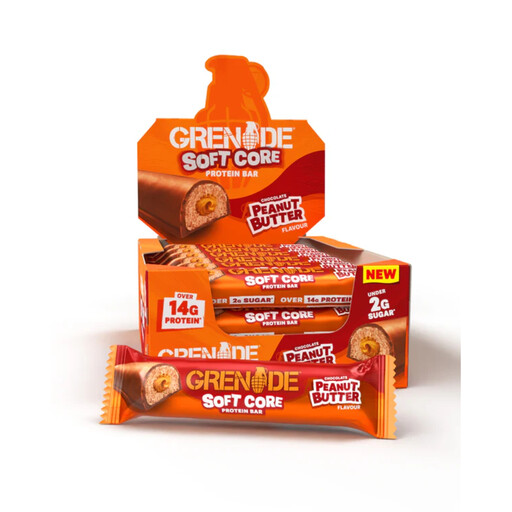 Image unavailable
Grenade Soft Core Peanut Butter Protein Bars, 12 × 50g
The Peanut Butter flavour needs particular scrutiny if you avoid peanuts or other allergens. Check its current ingredients, precautionary wording and total carbohydrate per 50g bar.
View on Joybuy
 Image unavailable
Nature Valley Protein Peanut & Chocolate Bars, 4 × 40g
This four-bar pack has a different bar size from the Grenade listings. Check carbohydrate per 40g bar and the full allergen statement; “Peanut & Chocolate” does not describe every ingredient or possible cross-contact warning.
View on Joybuy
Questions about carbs and allergens
Is a low-sugar protein bar automatically suitable if I have diabetes?
No. Diabetes UK advises checking total carbohydrate rather than sugars alone. Compare the portion you will eat with your own carbohydrate plan, and consider any polyols separately if you adjust insulin.
How should I count maltitol or other polyols when adjusting insulin?
Do not use a general deduction rule. Diabetes UK says it is unclear how polyols should be counted by people adjusting insulin; ask your diabetes healthcare team for advice that applies to your plan.
Does no added sugar mean a bar is low in carbohydrate?
No. Tesco lists 15g carbohydrate and 13g sugars per 45g nākd. Cocoa Hazelnut bar despite its no-added-sugar description. Read the total carbohydrate figure for the exact bar and serving.
Is a vegan protein bar suitable for a nut, soya or gluten allergy?
Not on the strength of a vegan label alone. Tesco lists peanuts and hazelnuts in its vegan nākd. Cocoa Hazelnut bar and warns that it may contain soya and other nuts; Barebells says its Vegan Caramel Peanut bar contains wheat protein. Check the exact bar’s ingredients and precautionary wording against the allergens you avoid.


