Who needs a closer look at the label?
A bar’s protein figure is only one part of the decision: the portion, carbohydrate and ingredients matter for different reasons.
People who count carbohydrate
If carbohydrate counting forms part of your plan, look for the total carbohydrate and protein in the amount you intend to eat. Diabetes UK explains that some people with diabetes use carbohydrate counting to match food intake with an individual insulin plan.
Shoppers comparing low-sugar claims
Check total carbohydrate per bar as well as the “of which sugars” line. A low-sugar or no-added-sugar description does not, by itself, describe the bar’s total carbohydrate.
Shoppers checking sweeteners and allergens
Read the ingredients, allergen declaration and any on-pack warning before choosing a flavour or multipack. Some of the named bar examples contain polyols and carry warnings about excessive consumption.
What should you compare?
Start with the nutrition values for the portion you will actually eat, then use the ingredient list to narrow the choice.
| Priority |
What to check |
Your needs |
| Total carbohydrate |
Find total carbohydrate per bar or serving. If the panel gives values per 100g, check the bar’s weight before comparing it with another product. Diabetes UK advises looking beyond front-of-pack information for carbohydrate values. |
I need to account for the portion I will eat, not just the sugar figure printed prominently on the wrapper. |
| Protein and sugars |
Compare protein, total carbohydrate and “of which sugars” on the same per-bar basis. Tesco Groceries lists 21g protein, 23g carbohydrate and 1.2g sugars for its 64g PhD Chocolate Brownie bar: those figures answer different questions. |
A higher protein figure matters to me, but I do not want to mistake low sugars for low total carbohydrate. |
| Ingredients |
Read the sweetener and polyol information, allergen declaration and any laxative-effect warning. Check the current pack for the exact flavour, particularly when choosing a multipack. |
Before buying several bars, I want to know whether their ingredients and warnings suit my requirements. |
| Portion and snack role |
Confirm whether the nutrition panel describes one whole bar or another serving size. Compare saturated fat and fibre per serving alongside carbohydrate and protein, rather than using one figure to stand for the whole product. |
I want to decide where a bar fits among my planned snacks, rather than treating its high-protein description as an unrestricted portion. |
Brand and retailer references
These named examples show why it helps to compare exact bars and flavours, rather than assuming a brand’s range shares one nutrition profile.
Grenade
Grenade’s Carb Killa range includes Chocolate Chip Salted Caramel, a 60g bar listed by Tesco Groceries.
- Tesco Groceries lists 21g protein and 20g total carbohydrate per bar.
- The same listing gives 18g polyols per bar. Check the ingredients and allergens for this flavour rather than applying its figures to other Grenade bars.
PHD
The PhD Smart Protein Bar Chocolate Brownie is a 64g bar listed by Tesco Groceries.
- Tesco Groceries lists 21g protein per bar.
- It also lists 23g total carbohydrate and 1.2g sugars per bar, and warns that excessive consumption may have laxative effects.
Myprotein
Myprotein UK offers Layered Protein Bars among its protein snacks.
- Its Layered Protein Bar nutrition information lists 20g protein, 20g carbohydrate and 6.6g fibre per 60g bar.
- Myprotein UK says nutritional content may vary by flavour, so check the panel for the one you choose.
Barebells
Barebells UK lists Cookies & Cream as a 55g protein bar.
- Barebells UK gives 20g protein and 17g total carbohydrate per bar.
- Its product information lists milk as an allergen, identifies possible cross-contact allergens and warns about laxative effects with excessive consumption.
Quest
An iHerb UK listing describes Quest White Chocolate Raspberry as a 60g protein bar.
- The listing gives 20g protein per bar.
- Its 4g net-carb calculation is separate from the listed 23g total carbohydrate per bar; use the figure relevant to your carbohydrate-counting approach.
Tesco
Tesco Groceries provides product-specific nutrition listings for the named Grenade and PhD examples.
- Its per-bar figures make it possible to compare protein, total carbohydrate and sugars for those exact products.
- Check the current packaging before use, particularly when comparing another flavour or a product whose formulation may differ.
Protein-bar options on Joybuy
These options include Grenade multipacks and a Nature Valley peanut-and-chocolate multipack. Compare the current pack’s per-bar nutrition before choosing: the flavours, bar sizes and pack sizes differ, and a product name alone does not establish its carbohydrate or protein content.
 No image available
Grenade High Protein Low Sugar Oreo Flavour, 4 × 60g
For a planned snack, check the carbohydrate and protein values for one 60g bar, along with the ingredients for this Oreo Flavour variant. The pack contains four bars.
View on Joybuy
 No image available
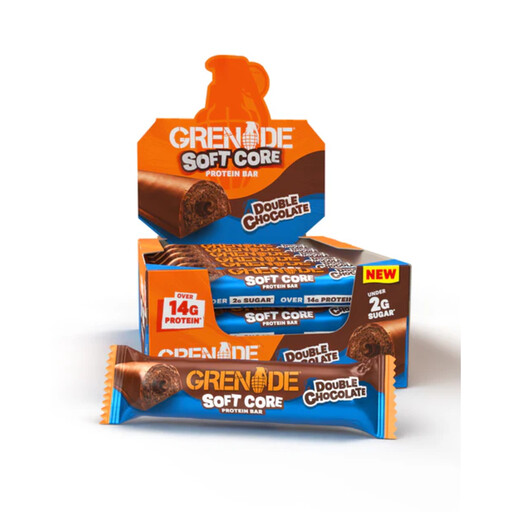
Grenade Soft Core Double Chocolate, 12 × 50g
Each bar in this Double Chocolate multipack is 50g. Compare its per-bar total carbohydrate and protein with the portion you have planned, and read the current ingredient and allergen information before buying twelve.
View on Joybuy
 No image available
Grenade Soft Core Golden Caramel, 12 × 50g
This Golden Caramel pack contains twelve 50g bars. Use the label for this flavour to compare carbohydrate, protein and sugars per bar; check its sweeteners and allergen declaration as well.
View on Joybuy
 No image available
Grenade Soft Core Peanut Butter, 12 × 50g
For this Peanut Butter flavour, check the current peanut and other allergen declarations before choosing the twelve-bar pack. Each bar is 50g; compare its own per-bar carbohydrate and protein figures rather than using another Soft Core flavour’s panel.
View on Joybuy
 No image available
Nature Valley Protein Peanut & Chocolate, 4 × 40g
These bars are 40g each, rather than the 50g or 60g bars elsewhere in this selection. Check protein and total carbohydrate for one 40g bar when comparing portions, and read the peanut and other allergen information on the current pack.
View on Joybuy
Questions about choosing a bar
Can a protein bar fit into an eating plan for someone with diabetes?
It may fit, depending on the portion’s total carbohydrate and the person’s individual plan; its protein or low-sugar description cannot settle that question alone. Diabetes UK explains that the total amount of carbohydrate eaten has the biggest effect on glucose levels after eating.
Should I compare “sugars” or total carbohydrate?
Use total carbohydrate when assessing the carbohydrate in a portion, rather than substituting the “of which sugars” figure. Diabetes UK advises checking the detailed nutrition panel, including its per-100g values, when comparing similar foods; also check any per-bar value and serving size.
Why can a low-sugar bar still contain carbohydrate?
Sugars are only part of the total-carbohydrate figure. For example, Tesco Groceries lists 1.2g sugars but 23g total carbohydrate in one 64g PhD Chocolate Brownie bar, so the low sugar figure does not describe the whole carbohydrate amount.
Do sweeteners and polyols matter when choosing a multipack?
Check them alongside any on-pack warning before committing to several bars. Tesco Groceries’ PhD Chocolate Brownie listing and Barebells UK’s Cookies & Cream information warn that excessive consumption may have laxative effects; warnings and ingredients need to be checked for the exact product.
Does “diabetic friendly” establish that a bar is suitable?
No: that description does not replace a check of the portion’s carbohydrate, ingredients and fit with an individual plan. Diabetes UK advises against treating foods labelled “diabetic” as offering a special benefit; compare the specific nutrition values instead.


